Ending child labour in mica: the example of Jean-Claude
Since February 2023, Jean Claude has been one of the suppliers of the Ankaroka school canteen in brèdes and vegetables thanks to support based on literacy classes
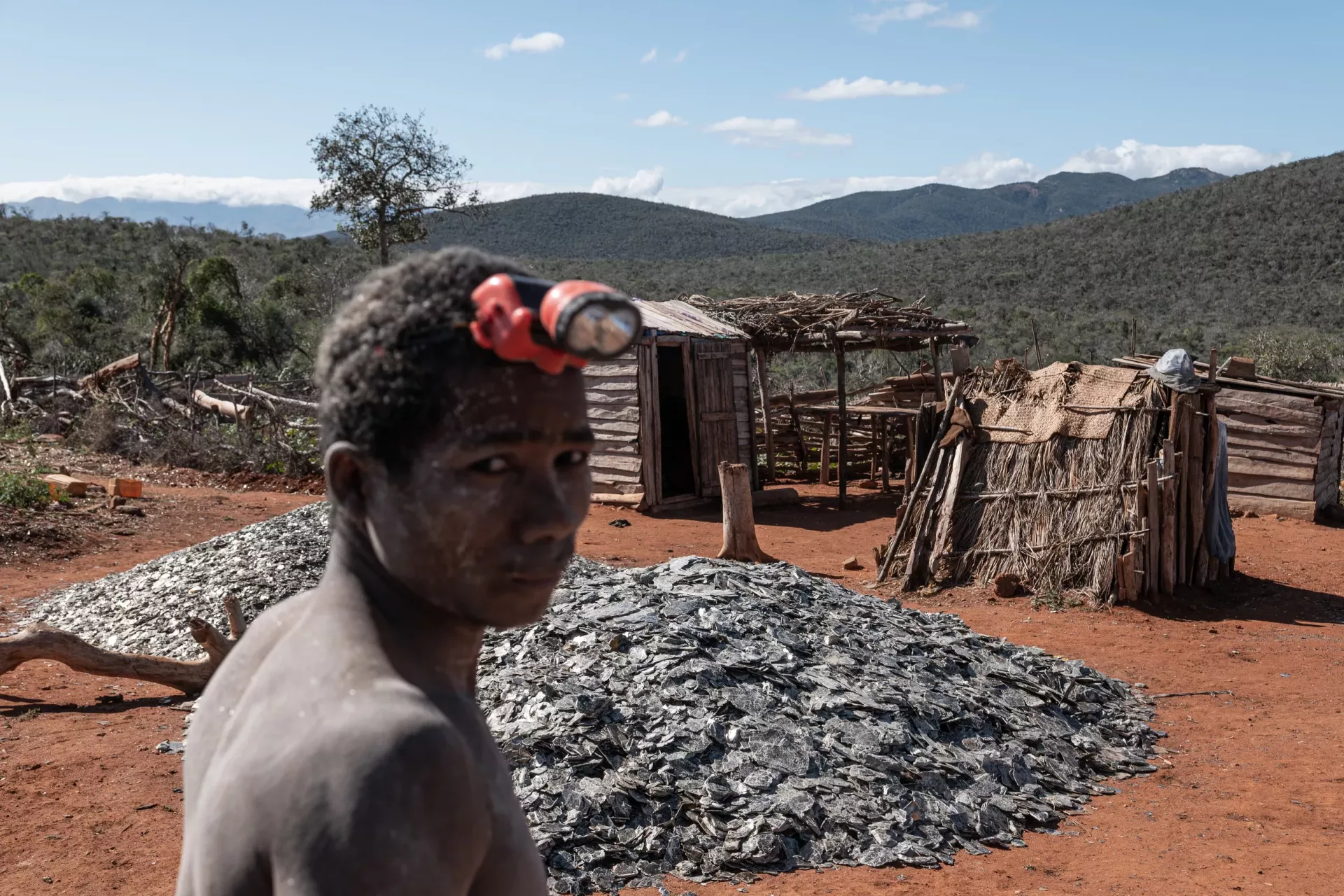

Jean Claude, a 16-year-old boy, is the first child
in a family of six. Fatherless, he lives with his mother
and four other siblings in Ankaroka, in southern
Madagascar.
Jean Claude was used to occupying a bench in
the preparatory class of the Public Primary School in
Ankaroka. The death of his father forced him to drop
out of school because to feed all the siblings, he had
to help his mother. She fed the family with the onion
crop, which was seasonal. She also worked in the
mica extraction sites and Jean-Claude supported her to have more yields. "The work
was hard because I had to fill a bucket, even on an empty stomach. I had to do this
because I was the perfect size to go down the holes. If I didn't, my family had nothing
to eat." he recalls. In fact, mica is a silicate mineral. Whether white, black or amber, it
is widely used in the automotive, telephone, aeronautics, cosmetics and paint
industries, due to its resistance to high heat.
A team from the Ministry of Population visiting Ankaroka in July 2022, had
spotted Jean Claude and inquired about his situation. The Social Worker in charge of
his psychosocial support referred him for a literacy course with the Faravehivavy
NGO, an implementing partner of the "project to combat child labour in the mica
sector in Madagascar". At the end of the four-month course, he received support to
set up his business plan and was provided with the minimum equipment and inputs to
start an income-generating activity. He has chosen to grow vegetables.
Currently, Jean Claude is one of the suppliers of green leaves and vegetables
to the school canteen in Ankaroka. He also sells some of his products at the
municipal market. "I never thought I'd be able to get out of the mica hole one day and
make a living like I do today. Even my mother has stopped working in mica, she
helps me in my business which saves me 20,000 Ariary ($4.5) a week. "I hope that
one day, the other children of Ankaroka will also find a way out and stop breathing
mica," he shares.