Cyclone Gamane: solidarity and resilience in northern Madagascar
This photo report highlights how, despite the many logistical challenges, aid was delivered to the population, illustrating the cohesion between humanitarian actors and the inhabitants in the face of the disaster.


In Ambilobe, the Mahavavy broken bridge – damaged after Cyclone Gamane – left several cities isolated, thus limiting the movement of people and trade in April 2024.

Transhipment has become unavoidable for the transportation of people and goods to other locations.

The UNHAS aircraft, operated by WFP, transported the first aid provided by humanitarian actors, including UNICEF. Given the road cuttings, the most efficient way to transport inputs was by air.

Emergency education kits provided by UNICEF are transported to school district offices by small boats, thereby providing the fastest means to reach these communities.
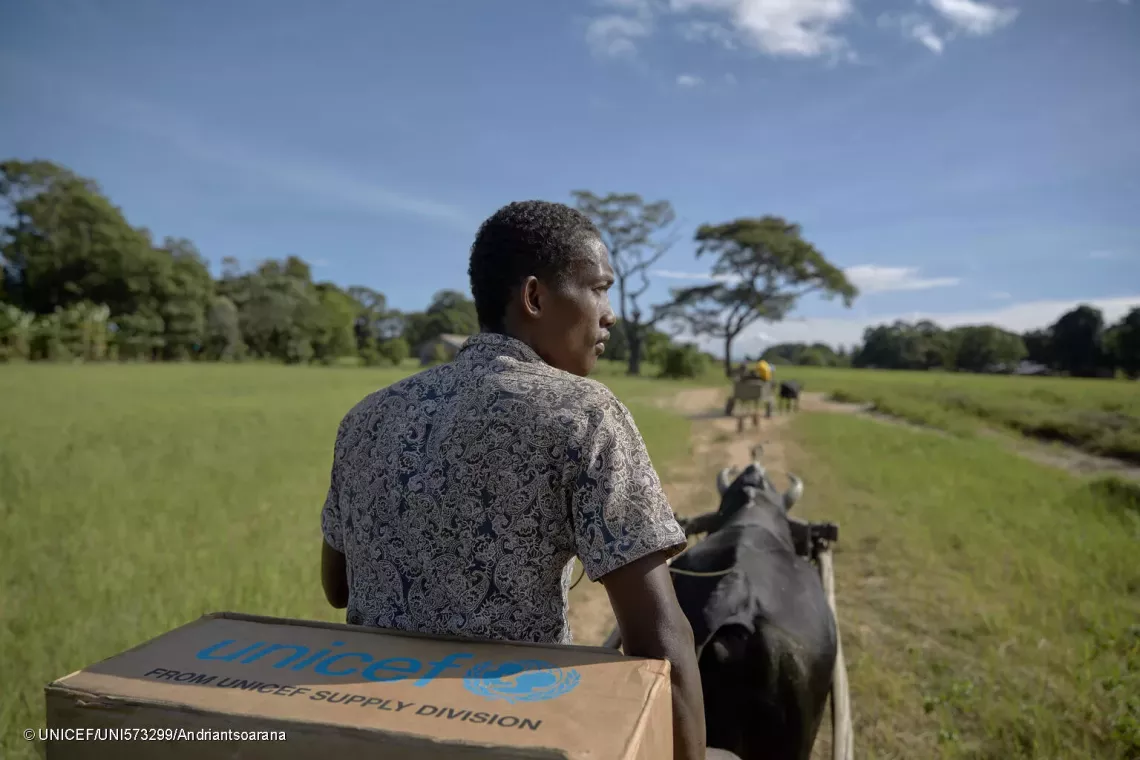
Then, they are transported by traditional carts to the most isolated places to ensure a fair chance for all students to benefit from these aids.

Students at Matiakoho Public Primary School are curious to discover the contents of the boxes filled with supplies, which arrived about two weeks after Gamane had hit.

The kits include essential school supplies, allowing students to quickly resume classes after the disruptions.

UNICEF education specialist, Josias Ratsimbazafy, along with partners, distribute school kits to students. In addition to the temporary classrooms, these kits ensured continuity of education for 11,500 students in the SAVA region.
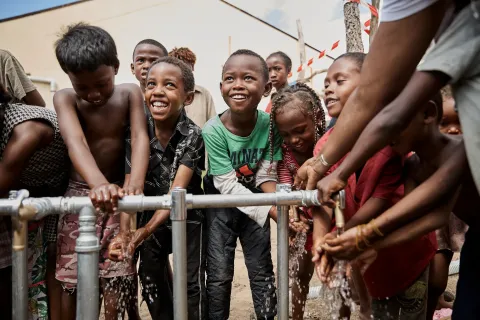
To ensure optimal hygiene, inputs related to water, sanitation and hygiene were also transported by boat from the city of Toamasina; those include water purifiers, wash basins, bowls, soaps, etc.

Following the cyclone, cleaning of wells and water purification with chlorine were carried out within the communities. This initiative helps prevent the spread of diseases caused by water contamination.

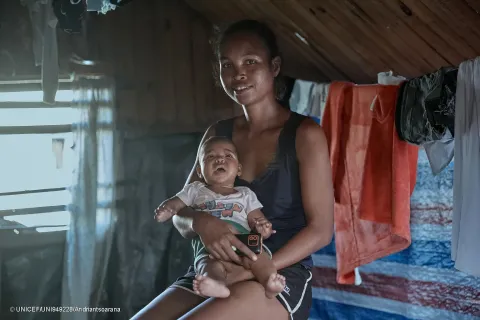
A team of social workers accompanied by UNICEF agents were touring through the neighbourhoods to provide psychosocial support to victims. More than two weeks after the cyclone, the water level still reached the leg.

As a result of stagnant water in these places, many people suffer from itching and foot sores caused by the lack of protective equipment, such as boots.

A social worker from a local non-governmental organization tries to comfort a child who is probably psychologically affected by the recent events.

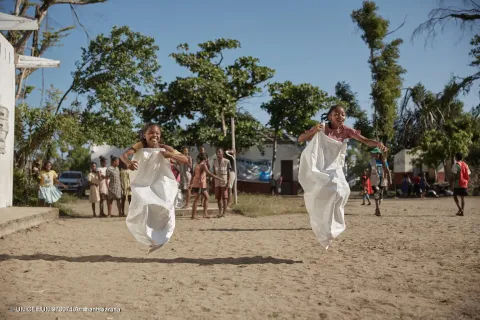
Public primary school students recover their joyful smile after receiving their school kits. Despite the temporary interruption of their education, they enthusiastically return to school.
Note: les UNICEF’s response to Cyclone Gamane was financially supported by the Central Emergency Response Fund (CERF) and the Today Tomorrow Initiative (TTI).