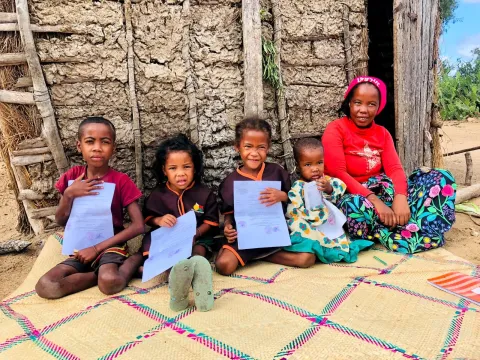
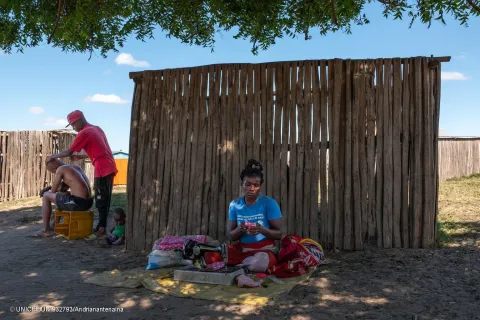
Best practices for families thanks to the accompanying measures of the ZARA MIRA programme
In the Fitovinany region of south-eastern Madagascar, vulnerable families adopt new practices thanks to the ZARA MIRA cash allocation programme

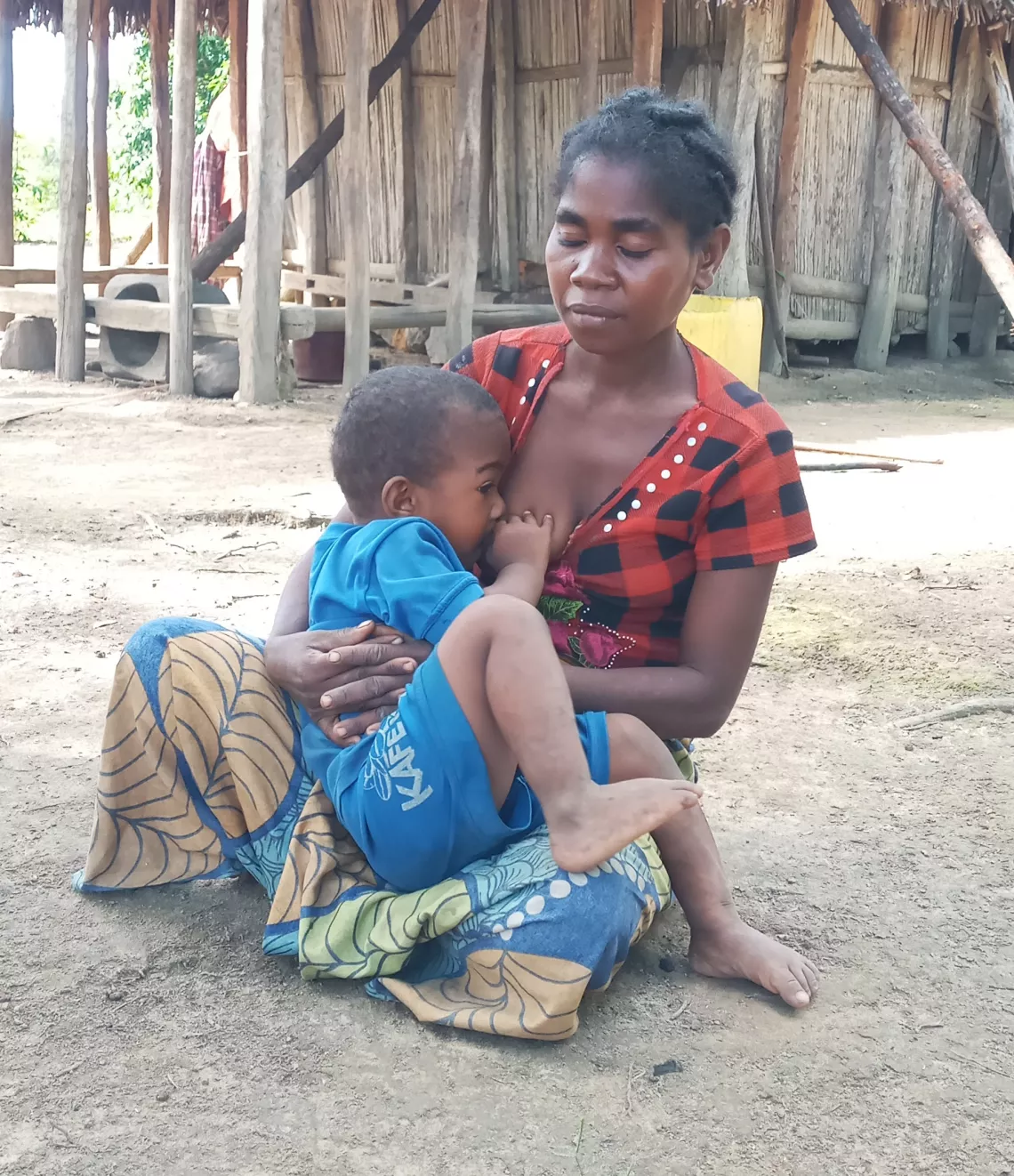
Babao Nirina, 25, lives 18 kilometres from the town of Manakara with her husband and her two children. A farmer, she has been a beneficiary of the ZARA MIRA programme since its implementation in 2022.
In addition to the cash allowance, the Zara Mira programme also includes various activities to support young parents. Several issues such as maternal and child health, nutrition, hygiene and sanitation, education, early childhood development, gender equality, child protection… are raised through home visits, regular listening or exchange groups among beneficiary parents.
Babao particularly retained the sensitizations on having her own toilet. This allowed her to realize the possible risks that open defecation can represent for young children. Since then, she and her husband have set up a toilet a few meters from their house.
The adoption of new behaviours is not limited to Babao. Rosiane, another beneficiary of the programme – mother of 6 children – regularly attends meetings organized by community stakeholders. She testifies about her more serene everyday life since she has taken took into account the practices promoted.
One of the topics discussed during the awareness meetings is the importance of having a birth certificate for each child in order to have an identity and thus continuously benefit from the Zara Mira programme. Rosiane and her husband were quick to declare their two-month-old baby from birth. So they could get a copy of the baby’s birth certificate which will ensure his eligibility until the end of the programme.
The ZARA MIRA programme has been implemented in Tataho since January 2022 and is currently funded by the Findel Foundation; it covers 1,500 households including 4,800 children.