🏆 Tamby, champion of nutrition to ensure the healthy development of children
Tamby, 26, is a nutrition community worker in the rural commune of Ambanitsena, 20km from the capital Antananarivo

- Français
- English
Razoeliarinala Tamby, 26, is a nutrition community worker in the rural commune of Ambanitsena, 20km from the capital Antananarivo (Analamanga Region). Pregnant for 8 months, she lives with her husband and lives from the trade of different kinds of vegetables and fruits along National Road 2. Since receiving training on chronic malnutrition, Tamby has been trying to eat healthy, varied and diversified foods such as green vegetables, meat, dairy products and fruit on a daily basis.
"Being a community worker has given me some knowledge about nutrition and eating these foods will ensure my child's healthy development and growth" Tamby says with confidence.
In the region of Analamanga, community workers and health workers work hand in hand to provide mothers and children with adequate health and nutrition counselling and services. As a result, 5,042 community workers received training on chronic malnutrition in this region with UNICEF support and funding from Takeda.
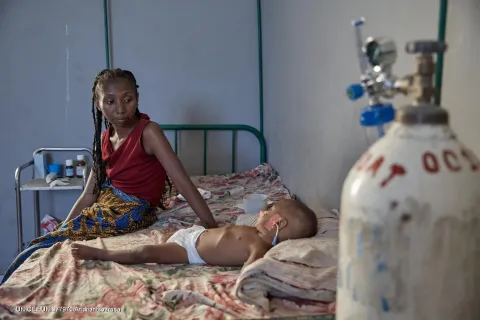
In Madagascar, about one in two children (47%) is chronically malnourished (or stunted), which means that they are small in relation to their age. Stunting is not just a child who is too small for his or her age, it is a child who is more likely to get sick and more likely to die. It is a child who will suffer from an irreversible reduction in cognitive development and a reduction in school performance.

Serving the community to fight chronic malnutrition
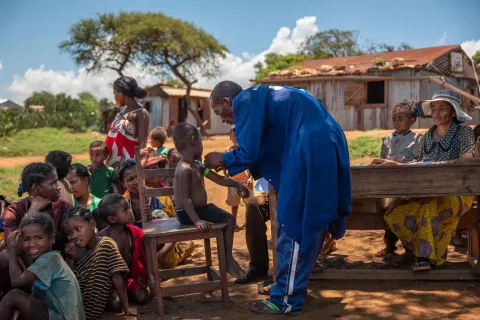
Tamby doesn't keep her nutritional knowledge to herself. Despite being young, Tamby fully assumes her responsibilities as a future mother and community leader. Together with her partner, she regularly organizes awareness sessions at the Ambanitsena nutrition centre set up by the government. This centre, which is present at the community level, is a meeting point for mothers. There are several activities at the centre level, including nutrition and health awareness sessions, cooking demonstrations and malnutrition screening.
"We use different colours to categorize the different types of foods to be consumed daily. To ensure the child's healthy growth, you need to eat at least foods in five of the seven colour categories," says Tamby.
The period between the beginning of pregnancy and the first 24 months of a child's life provides a unique window of opportunity in the life cycle to effectively combat malnutrition in the short and long term.
After the age of 2 years, growth retardation can no longer be caught up. Good infant and young child feeding (IYCF) practices and good maternal nutrition are essential to reduce the burden of disease and death among infants and young children.
The best way to achieve the fight against the scourge of chronic malnutrition is to adopt a multisectoral approach with interventions that include health, nutrition, water, sanitation and hygiene (WASH) and early childhood development in the essential niche of the first 1000 days of life.
Thanks to Tamby and other community workers, many mothers are trying to follow the various nutrition tips and good practices. "The mothers who come to the nutrition centre are now starting to put our advice into practice because they know it will benefit their children and the whole community," says Tamby.