Stopping Mpox at the Doorstep:
How Early Detection Protected a Child in Slipway
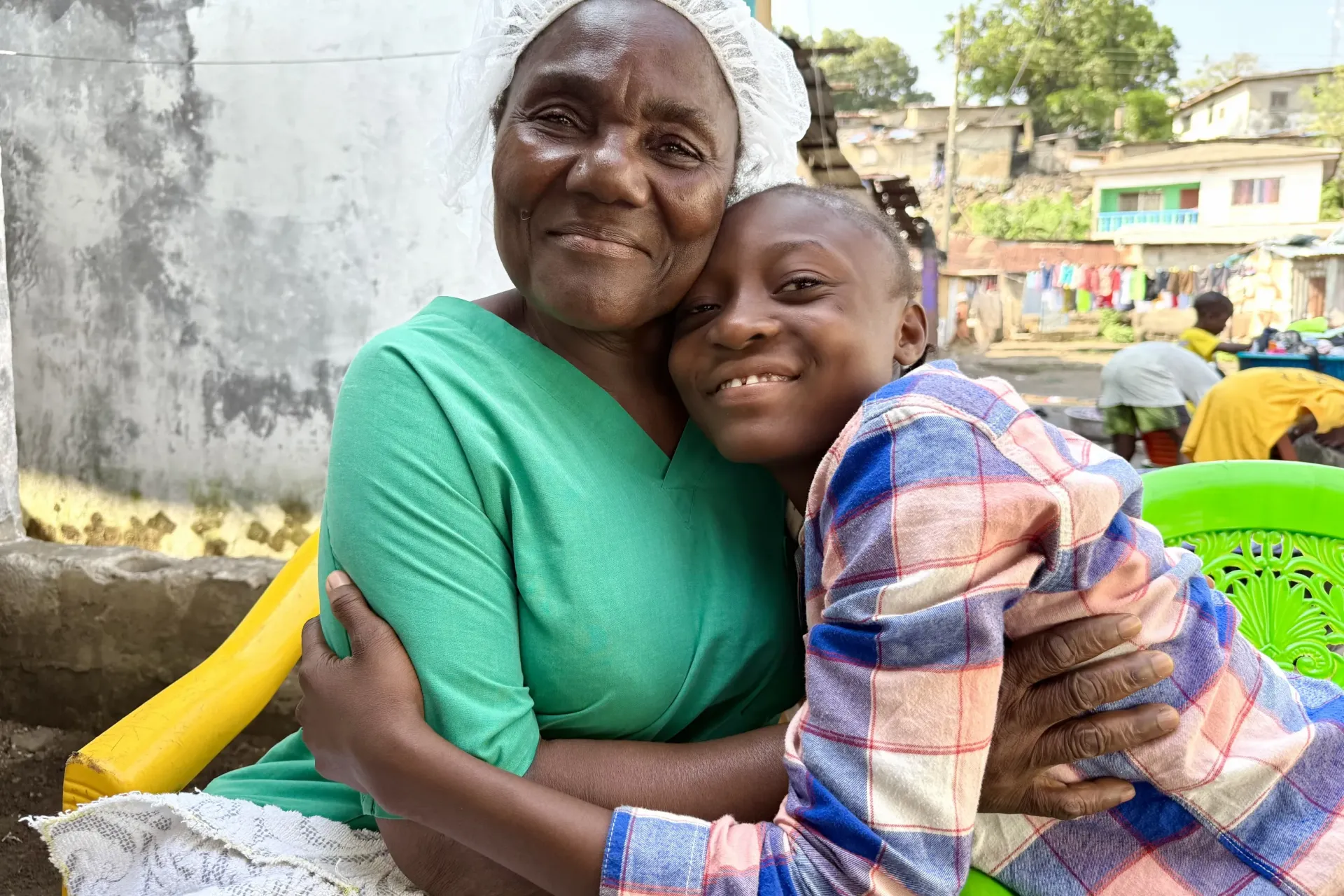
The Slipway community sits in the heart of Monrovia, just beyond the bustle of Broad Street. Homes press closely together, forming narrow pathways where daily life unfolds in full view. In the early mornings, mothers hang freshly washed clothes on lines strung between zinc roofs. Children weave through the alleyways in play, while booming speakers carry the rhythm of local songs across the neighborhood. Nearby drainage channels remain open, and water scarcity is a constant challenge. The surrounding swamp land, strained by limited sanitation infrastructure, also serves as an informal dumping ground for household waste. Yet despite these pressures, Slipway remains a vibrant home for families and children.
In communities like this, where families live in close proximity and access to clean water and sanitation is limited, preventing the spread of infectious diseases depends heavily on early detection, trusted health services, and community awareness.
A Grandmother the Community Trusts
Less than five hundred feet from Slipway Clinic, fourteen-year-old Esther lives with her grandmother, known affectionately as “Ma Anna.” In the neighborhood, Ma Anna is something of a local celebrity. After more than two decades as a nurse aide and trained traditional midwife, nearly everyone knows her.
“Everyone here is my family,” she says warmly. “This community is all we have, so we stick together, good or bad. These children in our community, we have to take their future seriously. I make sure to keep a close eye on Esther. She’s my baby.”
Esther has lived with her grandmother since birth. Ma Anna delivered her herself. Her daughter was young when Esther was born, and the bond between grandmother and granddaughter has grown deep over the years.
For Ma Anna, what began as a profession entered with hesitation became a lifelong calling.
“I didn’t have much interest at first in nursing,” she reflects. “But I thank God, because He led me here. I can’t read and write well, but I know how to take care of people.”
That faith and experience were tested in June of 2025.
Esther became unusually withdrawn. Soon, small rashes appeared on her skin that resembled chickenpox. Then came cold chills and a rising fever. From her experience during the Ebola outbreak and the intensive training she received in infection prevention, Ma Anna knew she had to act quickly and carefully.
“She’s my granddaughter,” she explains. “I knew that while I observed her, I also had to protect myself. God chose me. I was a tracer during Ebola, and I delivered over two thousand babies with no fear. God protects me first, and then I protect myself second. I trust God’s work in my life.”
From Early Action to Recovery
After three days of careful observation and isolation at home, Ma Anna brought Esther to Slipway Clinic. There, Dorothy Massaquoi, the facility’s Monkeypox (Mpox) focal person and an experienced nurse, examined Esther and recognized that the signs were consistent with Mpox.
“This does not look like chickenpox,” Dorothy told her. “We need to act quickly.”
An ambulance was immediately called so Esther could receive treatment and observation.
“Even though hearing an ambulance can create fear,” Dorothy explains, “it should also reassure communities that health workers are not hesitating to do the right thing to get care for identified cases. I am so happy the vaccine is arriving in our community this week.”
Liberia’s Mpox Picture—What Communities Need to Know
Mpox is a viral infection transmitted through close physical contact or exposure to contaminated materials. Common symptoms include fever, chills, swollen lymph nodes, body aches, and a characteristic rash. The incubation period generally lasts between two and seven days, highlighting the importance of early identification and prompt isolation to reduce the risk of further spread.
As of 30 December 2025, Liberia has reported a total of 2,833 suspected mpox cases, with 1,514 confirmed. Among the confirmed cases, 1,484 patients have recovered and eight have died, resulting in a case fatality rate (CFR) of 0.6%. The outbreak remains concentrated, with Montserrado County accounting for 57% of all active cases. The national vaccination campaign, which began in April 2025, has administered 10,800 initial doses prioritized for frontline workers and known contacts. Genomic sequencing has confirmed the circulation of both Mpox Clade IIa and Clade IIb in the country.
Based on the latest data, here is what Liberian families need to know to stay protected. First, recognize the signs including fever, chills, swollen lymph nodes, or a new rash and seek same‑day care if symptoms appear. If a household member becomes ill, help break the chain of transmission by isolating them, avoiding shared items like bedding and towels, and regularly cleaning frequently touched surfaces. Please respond fully to contact tracers if notified, and complete the recommended 21‑day follow‑up period. Care is accessible: Liberia provides both facility‑based and home‑based care for pox, with the approach determined by a clinical assessment to ensure appropriate support.
Esther’s story is one of courage, teamwork, and trust. Her grandmother acted on both instinct and training. The team at Slipway Clinic listened carefully, recognized the threat, and initiated a swift referral. This chain of timely actions ensured Esther received care without severe complications and, most importantly, prevented the virus from spreading to others. This recovery highlights exactly what works: early detection, rapid referral, and compassionate care, all built on a foundation of community trust. Stopping mpox depends on continuing this vigilant, house-by-house, clinic-by-clinic effort.
Today, Esther has fully recovered. She has returned to school, plays with friends, and continues to stay close to her grandmother, often holding her hand when they walk together through the neighborhood.
Their relationship goes beyond care. It is rooted in trust, protection, and love built over a lifetime.
“I love my grandmother so much, she really took care of me. At first I was scared. I know about mpox because of Mama and the clinic, but I did not think I would get it. Anybody can get mpox, but now I know people can take good care of themselves and live.”
While the healthcare system in Liberia faces ongoing challenges, trained community health workers offer a powerful source of hope. As the critical frontline barrier, they play an essential role in protecting families. Their rapid response and seamless transition from case identification to direct care are key factors in successfully containing the spread of Mpox.
Like many adolescent girls living in communities that are stricken by poverty and limited access to services, Esther carries her dreams and hopes beyond Slipway. Her survival is a reminder that strong community health systems, early detection, trusted frontline workers, and access to vaccines and treatment can stop Mpox from spreading. UNICEF stands committed to protecting children and elevating their stories of survival and strength one child at a time.