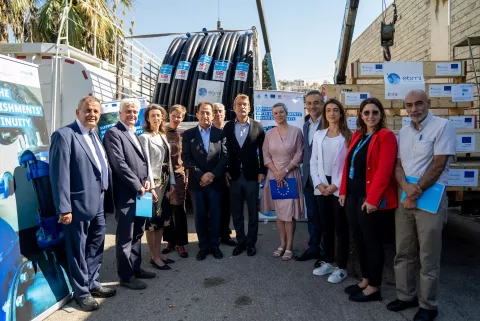
Helping Lebanon's children and families Stay Safe with Clean Water
With support from AGFUND and UNICEF, Laboratories of Lebanon's water establishments are being rehabilitated and equipped to ensure clean, safe water reaches over 1 million people amid growing public health risks

When Cholera broke out in Lebanon in 2022, the need for safe water became more urgent than ever, especially for children. With the public water system already struggling, the outbreak was a harsh reminder of how critical clean water is to public health. In response, the Arab Gulf Programme for Development (AGFUND) stepped in to help.
What began as a short-term emergency response quickly evolved into something more sustainable: supporting Lebanon’s water establishments to better test, treat, and monitor the water people use every day. In collaboration with UNICEF, this effort has focused on rehabilitating and equipping water testing laboratories, particularly in areas under pressure from displacement, like Tripoli and Zgharta in North Lebanon.

The program aimed to strengthen the country’s ability to detect contamination early and prevent future public health crises. Two water testing laboratories in Tripoli and Zgharta were in urgent need of repair.
Staff had been working in poor conditions—damp walls, mold, and limited safety measures. Today, those spaces are being rehabilitated with waterproofing, lighting, proper ventilation, emergency exits, and storage for chemicals, creating safe, functional environments where professionals can do their essential work.
The water laboratories in Tripoli and Zgharta are also being reinforced with staff training, so they can use the provided new equipment properly and keep testing going long after the project ends. This ensures that the impact is not temporary but lasting.
At the same time, testing equipment and supplies have been distributed to water establishments across Lebanon, including the Bekaa, Beirut, Mount Lebanon, Akkar, and the South. These tools are used every day to make sure that the water reaching people’s homes is clean and safe. In total, more than 1 million people are now benefiting from water that is more regularly tested and monitored.

This is especially important today. Lebanon continues to face deep economic challenges, a weakened infrastructure, and a growing number of displaced families. Many communities rely on the public water system, and without proper testing and monitoring of water quality, the risks of contamination and outbreaks of diseases like Hepatitis A or Cholera become dangerously high.
This work will quietly ensure that thousands of families have access to safe, clean water every single day. Thanks to AGFUND and UNICEF, water establishments now have the basic tools and environment they need to keep communities safe.
At its core, this effort is about dignity, safety, and health. It’s about making sure that when someone in Lebanon turns on the tap, they can trust the water that comes out.