Improved teacher capacity and strong school leadership are key for better school performance
New policy briefs reveal high teacher content knowledge and pedagogical skills, and strong school leadership as being key determinants of highly effective schools in Lao PDR.
Lao PDR has made steady progress in expanding access to quality education over the last decade. However, many children still leave primary school with difficulties in reading and writing for their age. Despite the challenges, some schools in Lao PDR are doing particularly well, with their students outperforming those in other schools in similar contexts and with similar resources.
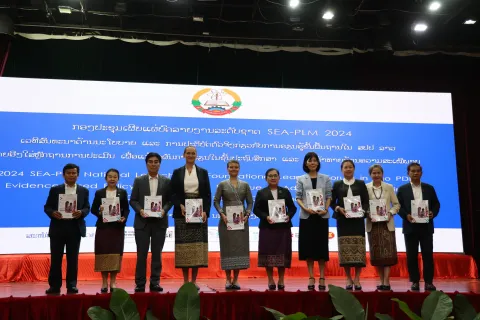
Two new policy briefs, recently published by the Ministry of Education and Sports (MoES) and UNICEF, examine teachers’ capacity and school principals to identify good practices underlying the success of these highly effective schools.
According to the policy brief focusing on teacher capacity, teacher content knowledge, which is one of the key determinants of high levels of student performance alongside pedagogical skills, is low in many primary schools. Teachers across all schools also acknowledge this issue and express a profound need for more professional development, which evidence suggests can be strengthened through collaboration and peer learning between teachers.
Apart from this, sustainable investments in the quality of primary education teachers are needed for children in Lao PDR to get equipped with the knowledge and skills needed for further education and to thrive in Lao society, the study reveals.
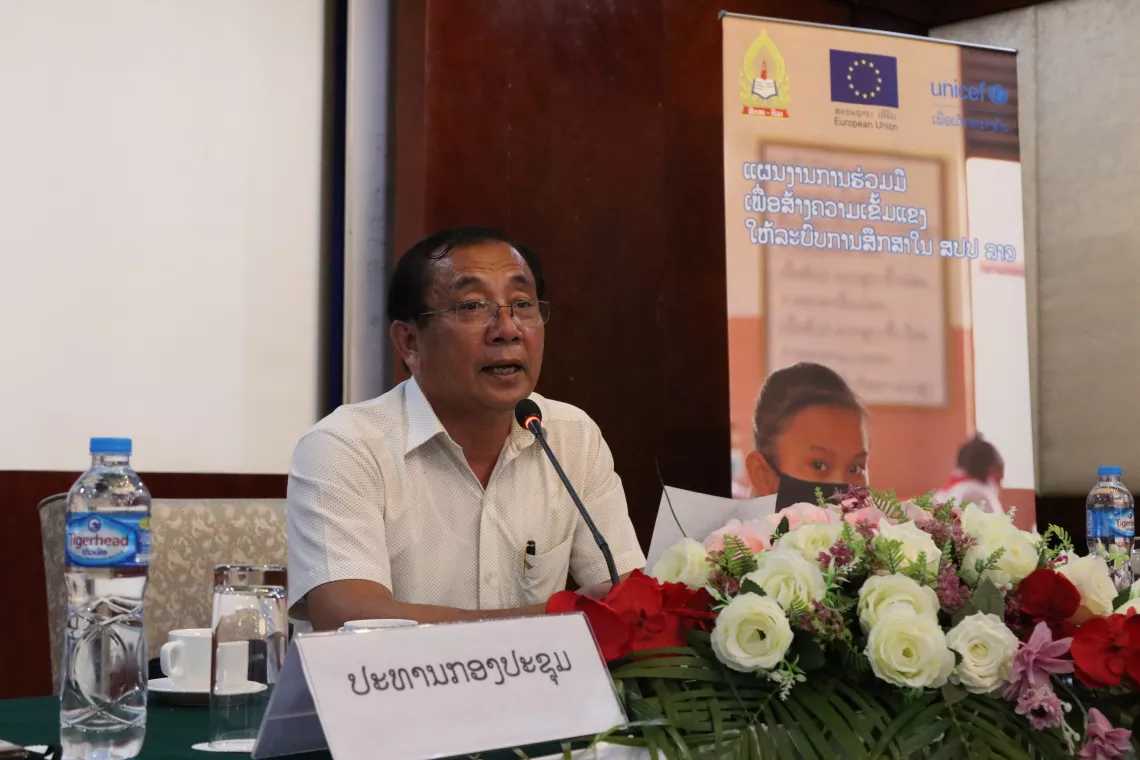
On the other hand, the policy brief on principals in highly effective schools reveals that highly effective schools are twice as likely to have a female principal than others and encourages authorities to promote qualified women to become principals. Teacher support, collaboration with teachers, giving more feedback to parents on student assessment and progress, fostering trust, respect and innovation are also among the main practices that make schools highly effective.
UNICEF and MoES is investigating grassroot solutions to help improve the quality of education in Lao PDR through a research on positive deviant schools in Lao PDR. The research helps identify the policies through which MoES can incentivize the implementation of “good practices” to help improve teaching and learning in all schools, particularly those most disadvantaged, while promoting a more efficient management of the school system.
The research is part of UNICEF’s Data Must Speak (DMS) initiative, which is co-funded by the GPE/IDRC KIX initiative, Hewlett Foundation, and UNICEF education thematic fund under the EU-funded Partnership for Strengthening the Education System of Lao PDR (PSES). The initiative aims to enhance the capacity of MoES in data management at all levels, as well as utilization for monitoring, planning, and budgeting processes. This project is also part of a larger, international new DMS research programme on positive deviant schools led by the UNICEF Office of Research-Innocenti, which involves seven other countries across Africa and Asia (Burkina Faso, Ethiopia, Madagascar, Nepal, Niger, Togo and Zambia). As such, the programme presents a promising opportunity for peer learning between countries on the use of data for informing decision-making at all levels of the system.