Number of unaccompanied and separated children migrating in Latin America and the Caribbean hits record high
UNICEF appeals for US$ 819.8 million to provide life-saving assistance to the most vulnerable children and families in the region, including those affected by complex crises, migration, internal armed conflict, armed violence and climate-related disasters
- Español
- English
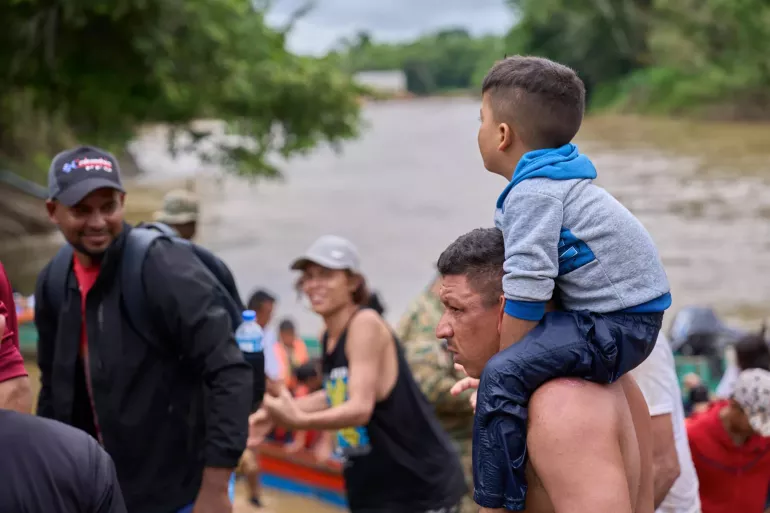
PANAMA CITY, 5 December 2024.- The number of unaccompanied and separated children migrating across several points in Latin America and the Caribbean has reached record levels according to UNICEF estimates.
From January to November 2024, nearly 4,500 unaccompanied and separated children have made the perilous journey across the Darien Gap between Colombia and Panama[1] compared to less than 3,300 recorded in all of 2023[2]. Southward, similar trends are recorded. An average of 312 unaccompanied and separated children (UASC) arrive monthly in Brazil. UNICEF identified over 3,100 UASC[3] from January to October 2024.
Children now represent one in four migrants in Latin America and the Caribbean, coupled with internal displacement, armed violence and climate crises.
“UNICEF is concerned about the surge in the number of unaccompanied and separated children on the move across Latin America and the Caribbean. Travelling alone, they experience a higher proportion of violence, including sexual violence, abuse and exploitation, with detrimental effects on their physical and mental health and well-being.”
- Anne-Claire Dufay, UNICEF Regional Director OIC for Latin America and the Caribbean.
Latin America and the Caribbean also faces other protracted crises. Armed violence and climate hazards disproportionately affect the most vulnerable populations, including children. In particular, Colombia faces the growing consequences of protracted armed conflict with an increase in grave violations against children, such as recruitment, sexual violence and attacks on schools.
“Armed violence is not only one of the triggers for migration but also severely disrupts children’s lives. Violence deprives children of their rights and prevents their access to essential services such as education, heightening the risk of forced recruitment into organized criminal groups where they face exploitation, family separation and severe psychological affectations,” Dufay alerted today in the context of the launch of UNICEF’s Humanitarian Action for Children (HAC) appeal.
In 2025, an estimated 16 million children in Latin America and the Caribbean will require humanitarian support in the face of ongoing crises, including migration, armed violence and other disasters.
UNICEF appeals for US$ 819.8 million to support emergency preparedness and response to emerging and ongoing crises through life-saving services to vulnerable people affected by armed violence, and to provide children and families on the move with access to essential services, including in countries of origin, during transit and at the destination, as well as integrated interventions to facilitate their access to education, health and protection services in host communities.
Note for editors:
The five HAC appeals by funding requirements for 2025 in LAC are:
- Haiti: US$271.2 Million
- Children on the Move and those affected by armed violence: US$249.5 Million
- Venezuela: US$183 Million
- Colombia: US$97.1 Million
- Latin America and the Caribbean: USD$19 Million
[1] Panama Humanitarian Situation Report #4, 2024
[2] https://www.unicef.org/media/151331/file/Panama-Humanitarian-SitRep-Children-Move-January-2024.pdf
[3] UNICEF records base on case management
Media contacts
Additional resources
About UNICEF
UNICEF works in some of the world's toughest places, to reach the world's most disadvantaged children. Across more than 190 countries and territories, we work for every child, everywhere, to build a better world for everyone.
For more information about UNICEF and its work for children, visit www.unicef.org/lac/en.
Follow UNICEF on LinkedIn, Twitter and Facebook.