More than 171 million students had their schooling disrupted by climate hazards in 2025 – UNICEF
Storms, floods, and heatwaves most common climate hazards causing school closures, class suspensions, and other education interruptions
- Español
- English
NEW YORK, 10 September 2026 – More than 171 million students globally – or 1 in 10 – from pre-primary to upper secondary age had their schooling disrupted by climate hazards in 2025, according to a new analysis released by UNICEF today.
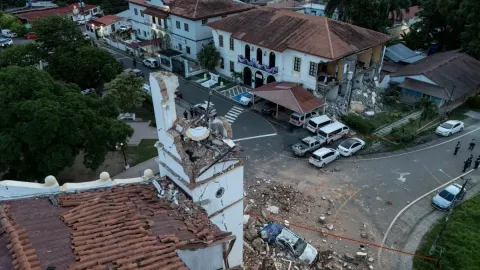
Learning Interrupted: Global Snapshot of Climate-Related School Disruptions in 2025 analyses data from 106 countries or territories and finds that climate hazards including storms, floods, heatwaves, droughts, and wildfires led to suspended classes, damaged schools, a shift to remote learning, shortened instructional time, reduced school attendance, and increased risk of dropout for millions of students worldwide.
“For millions of children, climate hazards do more than disrupt lessons, they destroy schools, uproot families, and push the most vulnerable children, especially girls, out of the classroom for good,” said UNICEF Executive Director Catherine Russell.
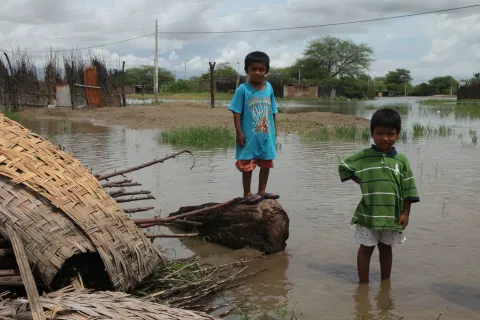
According to the analysis, storms were the most common cause of school disruptions last year, affecting 109 million students globally. Floods affected at least 70 million students, while heatwaves disrupted schooling for approximately 50 million children.
“My school is right next to a creek, and when there is flooding, the water rises and flows into the school," said 16-year-old Taudibura Garo from Papua New Guinea, where El Niño conditions are expected to increase the risk of extreme weather in the coming months. "Usually, the water comes up to our knees and floods the pit toilets, then it becomes unhealthy for us to stay at school, and we miss the lessons we are supposed to learn.”
While students across all income levels were impacted by disruptions, three-quarters of students affected live in low- and lower-middle-income countries, where education systems often lack the resources needed to safeguard learning during climate-related emergencies.
In Pakistan, for example – one of the most affected countries in the analysis – severe monsoon floods in August delayed the return to school for over 28 million students, making it one of the largest climate-related education disruptions recorded in 2025. While in Egypt, a powerful Khamsin (wind and dust) storm prompted a nationwide suspension of classes for one day in April, also affecting more than 28 million students.
According to the data, 40 countries experienced multiple rounds of climate-related school disruptions throughout the year. Madagascar, for example, faced rounds of drought, tropical cyclones, and floods affecting 280,000 students during the year. In Spain, more than 500,000 students in the Valencian Community were affected by storms in March, followed by post-tropical Cyclone Gabrielle in September. For thousands of students across the rest of the country, extreme heat disrupted classes in May and June, and Storm Alice impacted schooling in October.
Learning losses and higher school dropout rates can reduce workforce productivity, slow economic growth, and make it harder for countries to reduce poverty. The report finds that inaction could result in a potential loss of at least US$200 billion in lifetime earnings for students who experienced climate-related school disruptions in 2025.
Girls are at greater risk of dropping out when climate hazards disrupt or close schools. Damage to schools and sanitation facilities, displacement and lost family income can place additional caregiving and water-collection responsibilities on girls. These pressures can also increase the risk of child marriage, making it more difficult for girls to return to class when schools reopen.
At the same time, the report highlights practical solutions that are already helping protect learning from climate hazards, including integrating climate resilience into national education planning, strengthening school infrastructure, ensuring learning continuity during and after disruptions, and embedding climate education into curricula to equip children and young people with the skills needed to adapt to a changing world.
Building on these proven approaches, UNICEF is calling on governments and partners to scale-up efforts and protect education from the worst impacts of climate hazards by:
- Strengthening the climate-resilience of education systems to support continuity of learning during emergencies.
- Increasing domestic and international financing for education resilience.
- Investing in climate-resilient educational infrastructure to protect students and educators.
- Equipping children and young people with the knowledge and skills to build resilience and drive climate action.
- Strengthening climate and education data systems to better anticipate, respond to, and recover from disruptions.
“Climate hazards threaten children’s lives and futures,” said Russell. “To protect education for children today and for future generations, we must invest in schools and education systems that are built to withstand climate shocks.”
Notes for editors:
Countries impacted by climate hazards in 2025 were identified by consulting the Emergency Events Database (EMDAT) and the ReliefWeb Disaster Archive. Within these occurrences, school disruptions were verified from situation reports and press releases by UNICEF, The International Federation of Red Cross and Red Crescent Societies (IFRC), the European Commission Emergency Response Coordination Centre ECHO Flash, the United Nations Office for the Coordination of Humanitarian Affairs (UN OCHA), ReliefWeb, along with additional media outlets. Key data sources include UNICEF country offices and national committees, UNICEF humanitarian situation reports, UN OCHA flash updates, Save the Children, Education Cluster, ministries of education, and UNESCO Institute of Statistics (UIS).
UNICEF's Children's Climate Risk Report 2026, released in June, found that nearly half of the world's children, or 1.1 billion, are exposed to at least three overlapping climate hazards, which threaten their health, education, and survival.
Multimedia materials available here.
Subscribe to UNICEF’s global media updates on WhatsApp.
Media contacts
About UNICEF
UNICEF, the United Nations agency for children, works to protect the rights of every child, everywhere, especially the most disadvantaged children and in the toughest places to reach. Across more than 190 countries and territories, we do whatever it takes to help children survive, thrive, and fulfil their potential.
For more information about UNICEF and its work, please visit: www.unicef.org
Follow UNICEF on X (Twitter), Facebook, Instagram, and YouTube