Central Asia Joins Forces: Bishkek Hosts Discussions on Shifting from Outbreak Response to Sustainable Protection Against Vaccine-Preventable Diseases
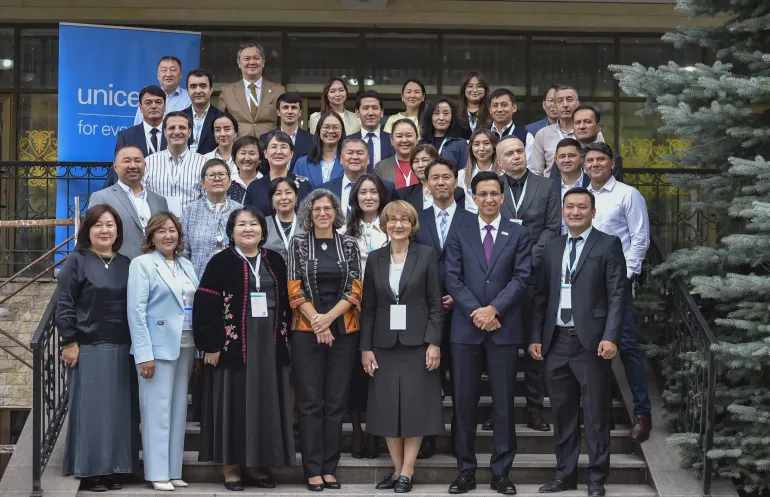
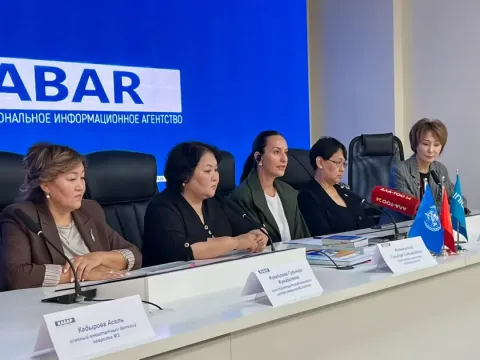
Bishkek, 24 September 2026 — A sub-regional strategic dialogue titled "Immunization in Central Asia: From Outbreak Response to Sustainable Protection" kicked off today, bringing together representatives from Central Asian countries, international organizations, and public health experts.
The meeting was organized by the Ministry of Health of the Kyrgyz Republic in collaboration with the UNICEF Country Office in Kyrgyzstan and the UNICEF Centre of Excellence. Participants include representatives from Kyrgyzstan, Kazakhstan, Uzbekistan, Tajikistan, and Turkmenistan, as well as from UNICEF and the WHO Regional Office for Europe.
Opening the event, Gulbara Ishenapysova, Deputy Minister of Health of the Kyrgyz Republic, noted that Central Asian countries currently face shared challenges regarding immunization. High population mobility, labor migration, and trade and transport links mean that the risks of infectious disease spread are not confined by national borders.
"Achieving high and sustained immunization coverage is not only a national priority for each country but also a shared goal for our entire sub-region," Gulbara Ishenapysova emphasized.
According to her, the recent rise in measles cases has once again demonstrated the critical importance of timely identification of gaps in routine immunization and taking action before they lead to disease outbreaks.
"Merely ensuring the availability of vaccines is not enough. An effective immunization programme requires sustainable funding, trained healthcare workers, quality information systems, robust epidemiological surveillance, community engagement, and effective collaboration among all stakeholders," the Deputy Minister noted.
Samman Thapa, UNICEF Representative in the Kyrgyz Republic, emphasized that protecting children requires long-term investment in immunization systems—ranging from training healthcare workers and developing cold-chain infrastructure and logistics to improving data systems, raising awareness, and engaging with the community.
"Vaccination is one of the most cost-effective public health interventions. Our shared goal must go beyond simply responding to disease outbreaks. We need to strengthen immunization systems, secure sustainable funding, and build public trust to ensure every child is vaccinated before being exposed to preventable diseases," Samman Jung Thapa noted.
The strategic dialogue focuses on sustainable immunization financing, evidence-based decision-making, digitalization and data quality improvement, as well as the development of cross-sectoral and cross-country cooperation. Participants are reviewing the practical experiences of Central Asian countries and discussing solutions that can be adapted and implemented at national and sub-regional levels.
Financing is a key topic of discussion. Country representatives will share their experiences in securing sustainable funding for immunization programmes—including the introduction of new vaccines—and discuss how to position immunization as a long-term investment in public health when formulating national budgets.
The Kyrgyz Republic will also present its experience regarding the digitalization of immunization, the development of information systems, and ensuring data quality. Representatives from other Central Asian countries will share practices regarding the use of assessment results to improve policy, strengthen epidemiological surveillance, and develop immunization systems.
Cross-sectoral collaboration has emerged as a key focus of the dialogue. Participants emphasize that achieving high vaccination coverage cannot be accomplished by the health sector alone; the process requires the involvement of education and social protection sectors, local government bodies, migration-related agencies, civil society, and religious and community leaders.
"Immunization cannot be viewed solely as a task for the healthcare system," noted Gulbara Ishenapysova, highlighting the importance of collaboration among all stakeholders to ensure every child has access to timely vaccination.
Participants are paying particular attention to shifting from reactive responses to outbreaks toward proactive prevention. The meeting addresses approaches to identifying the reasons for low vaccination coverage, analyzing root causes, and utilizing data to inform targeted interventions.
Countries are also discussing data gaps regarding unvaccinated populations and the reasons for non-vaccination, as well as the assessments needed to further improve immunization programmes.
As the Deputy Minister of Health of the Kyrgyz Republic noted, the meeting should yield not only professional discussions and knowledge sharing but also concrete agreements and follow-up actions—including on sustainable immunization financing, the use of evidence-based data, the strengthening of cross-sectoral cooperation, and enhanced accountability for results.
The discussions and exchange of best practices within this strategic dialogue are expected to help define priority areas for future work among Central Asian countries and partner organizations, strengthen national immunization programmes, and boost regional cooperation.
The participants' shared goal is to ensure that every child in Central Asia has access to timely vaccination and is protected against vaccine-preventable diseases, and that the region's health systems are prepared not only to respond effectively to outbreaks but also to prevent them.
Media contacts
About UNICEF
UNICEF promotes the rights and wellbeing of every child, in everything we do. Together with our partners, we work in 190 countries and territories to translate that commitment into practical action, focusing special effort on reaching the most vulnerable and excluded children, to the benefit of all children, everywhere.
For more information about UNICEF and its work for children, visit www.unicef.org.