Declining Vaccination Coverage Increases the Risk of Infectious Disease Outbreaks
Bishkek, 7 October 2026 – Vaccination remains one of the most effective ways to protect people from infectious diseases and their severe consequences. Conversely, declining vaccination coverage creates conditions for infections to spread and new outbreaks to occur, particularly among the most vulnerable groups.
The measles situation in Kyrgyzstan clearly demonstrates the potential consequences. Between 2023 and 2025, 30,388 measles cases were registered in the country, including severe complications and deaths. A further 680 cases were reported between January and September 2026. According to the Republican Centre for Immunoprophylaxis (RCI), among those who contracted measles in 2023–2025, 9,708 cases of pneumonia, 3,498 intestinal complications, 15 cases of encephalitis and 26 deaths were recorded.
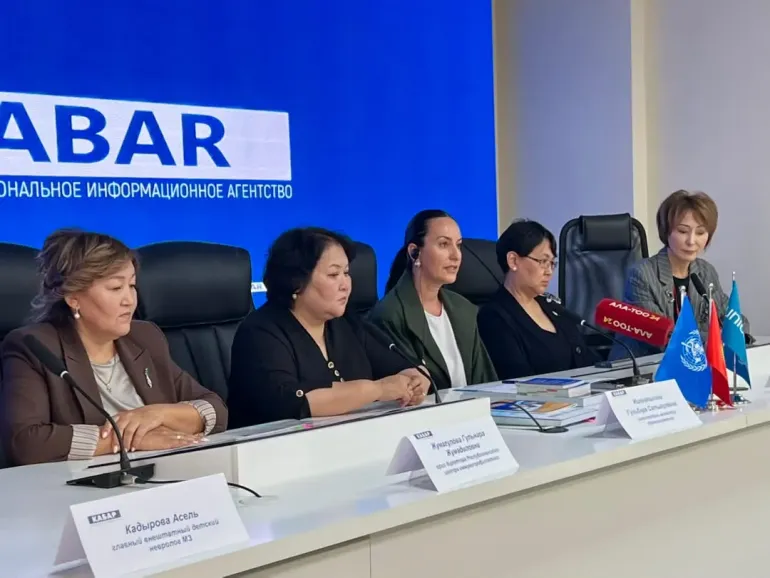
“Every parent has the right to know why vaccination is necessary, what quality standards vaccines must meet, and what risks arise when a child remains without immune protection. The Ministry of Health’s key responsibility is to ensure that people have access to reliable information, quality vaccines and timely preventive vaccination. At the same time, being unvaccinated does not automatically mean that a child’s right to education should be permanently restricted,” said Gulbara Ishenapysova, Deputy Minister of Health of the Kyrgyz Republic.
“Vaccination protects not only each individual child, but society as a whole, including newborns, people with weakened immune systems and those who cannot be vaccinated for medical reasons. By vaccinating today, we prevent disease, disability and deaths tomorrow,” said Zhanara Bekenova, WHO Officer for Vaccine-Preventable Diseases and Immunization.
Vaccine safety and quality are monitored at multiple levels. Kyrgyzstan procures vaccines through UNICEF’s international procurement mechanism. Only vaccines that meet international quality requirements and have been prequalified by WHO are eligible for procurement. In the country, vaccines also undergo the required registration and quality-control procedures, while their storage and transportation comply with cold-chain requirements.
“Vaccination prevents illness, helps children stay in school, protects families from additional costs and reduces pressure on the health system. It is one of the most cost-effective public health interventions. Evidence from Europe and Central Asia shows that every dollar invested in immunization can generate between US$48 and US$76 in economic benefits through avoided illness-related costs. Vaccination is therefore not only a health issue, but also an investment in a country’s future. Before receiving WHO prequalification, every vaccine undergoes rigorous assessment to confirm that it meets the requirements for use in national immunization programmes,” said Ana Dautovic, Officer-in-Charge Representative of UNICEF in the Kyrgyz Republic.
Vaccines undergo both international and national quality control, and the Government also allocates significant resources for vaccine procurement. In 2025, more than KGS 397 million was allocated for the procurement of vaccines and related supplies in Kyrgyzstan, including funding from the state budget and support from Gavi, the Vaccine Alliance.
Media contacts
About UNICEF
UNICEF promotes the rights and wellbeing of every child, in everything we do. Together with our partners, we work in 190 countries and territories to translate that commitment into practical action, focusing special effort on reaching the most vulnerable and excluded children, to the benefit of all children, everywhere.
For more information about UNICEF and its work for children, visit www.unicef.org.