Where Childhood Begins Again
How a community-based early childhood centre in Brekoc is giving Roma, Ashkali and Egyptian children the opportunity to learn, play and dream from the very start.
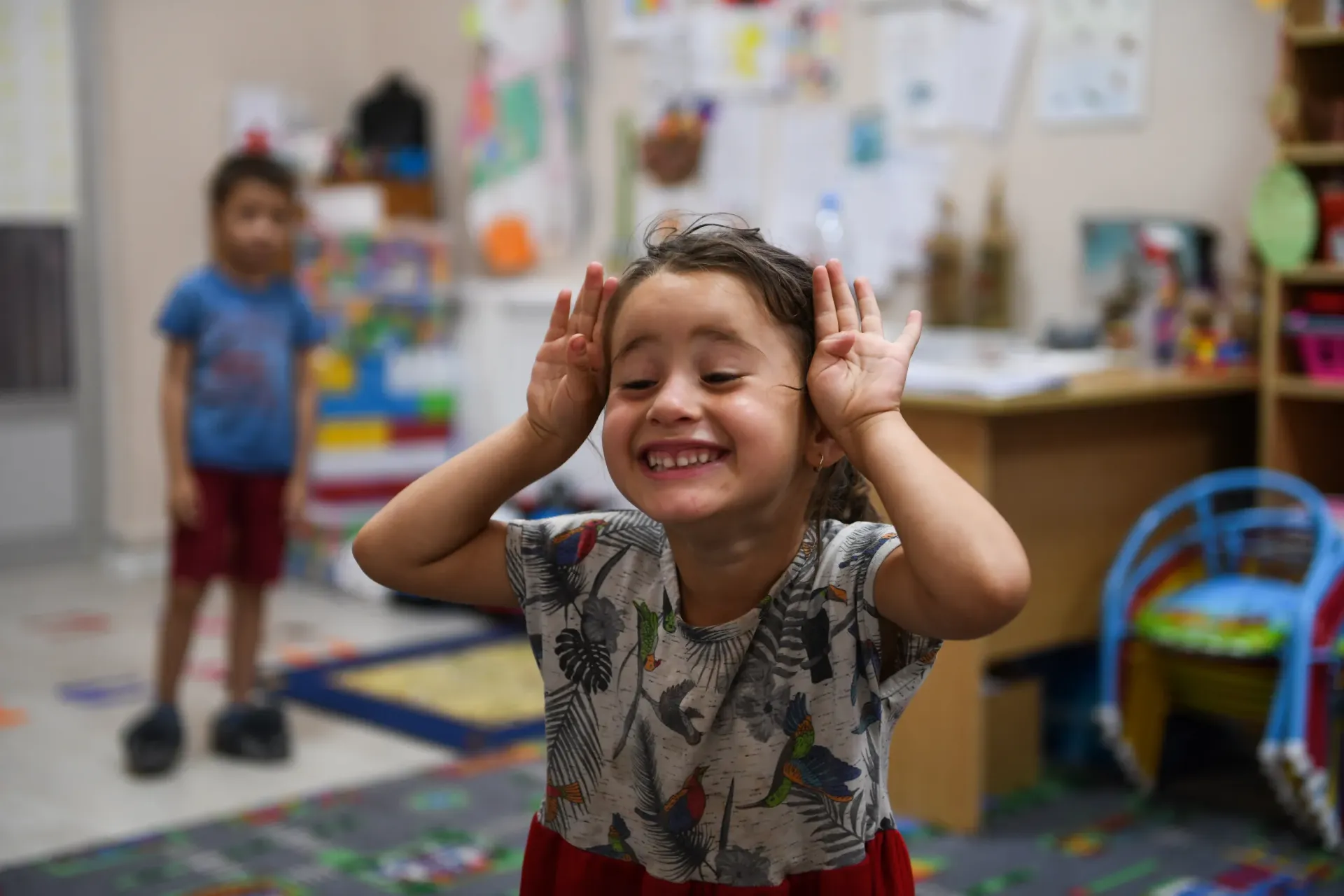
Just a few kilometres from the city of Gjakova lies the village of Brekoc, home to many families from the Roma, Ashkali and Egyptian communities. The drive takes only a few minutes, yet for many children growing up here, the opportunities available at the start of life have often been very different from those of children living only a short distance away.
For many families in this community, poverty, unemployment and social exclusion have long meant that early childhood education remained out of reach. Travelling to preschool in the city was often impossible because of transportation costs and other financial barriers. While children elsewhere began their learning journeys in kindergartens and preschools, many children in Brekoc spent their early years without access to safe learning spaces, structured play or quality early education.
According to the UNICEF survey[1], only 8% of Roma, Ashkali and Egyptian children aged 36–59 months participate in early childhood education programmes. Participation reaches 9% in urban areas compared to 7% in rural areas.
Furthermore, the findings indicate that 98% of children (99% of girls and 98% of boys) from the general population in Kosovo attend primary education. However, attendance among Roma, Ashkali and Egyptian children is significantly lower at 87% (87% of girls and 83% of boys). While approximately 10% of children from the general population are out of school at the upper secondary level, this figure rises dramatically to 58% among Roma, Ashkali and Egyptian children.
Today, however, a different story unfolds every morning.
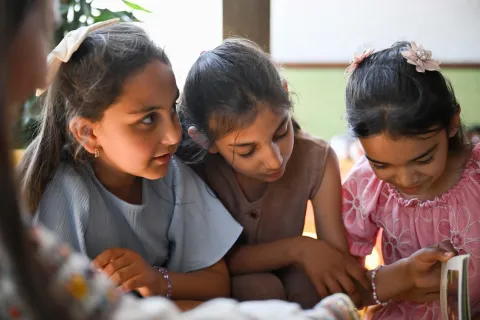
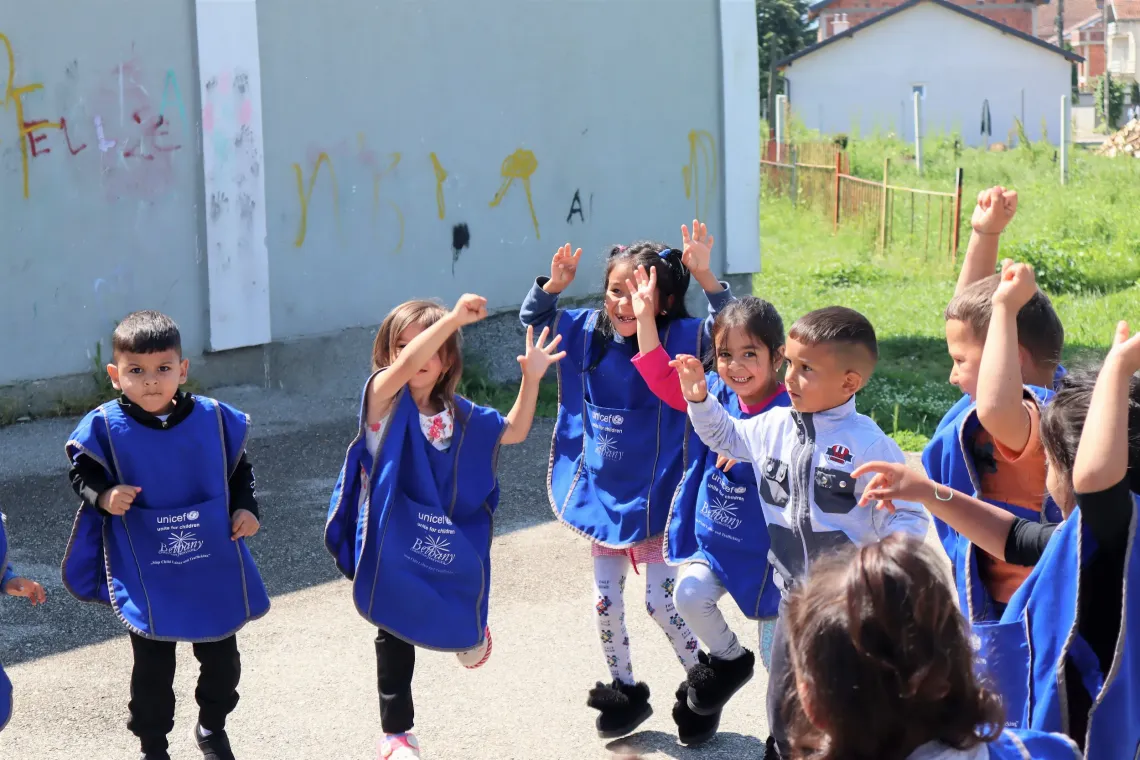
Right at the entrance to the Community-Based Early Childhood Development Centre, managed by NGO ‘Bethany Christian Services’ (BCS) with the support of UNICEF in Kosovo, children's laughter spills into the yard. Tiny voices call out to one another. Little feet race across the playground. Colorful backpacks, many bigger than the children carrying them, bounce on small shoulders as they hurry inside, eager not to miss a moment of the day ahead.
They move like busy bees, curious, energetic and full of excitement.
This Centre operates in the heart of Brekoc, bringing early childhood education directly into the community since December 2019. Instead of expecting families to travel to services, the services came to them, allowing children to walk safely from their homes each morning. Parents no longer have to worry about transportation or the cost of reaching the city. The centre is close, familiar and accessible, a place where every child has the opportunity to learn, play and thrive within their own community.
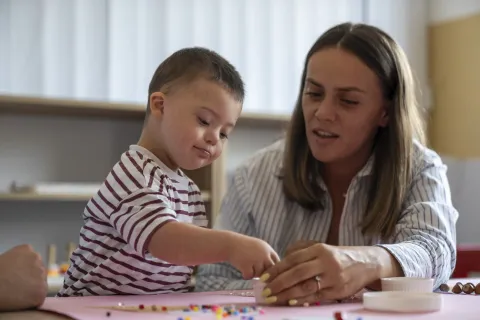
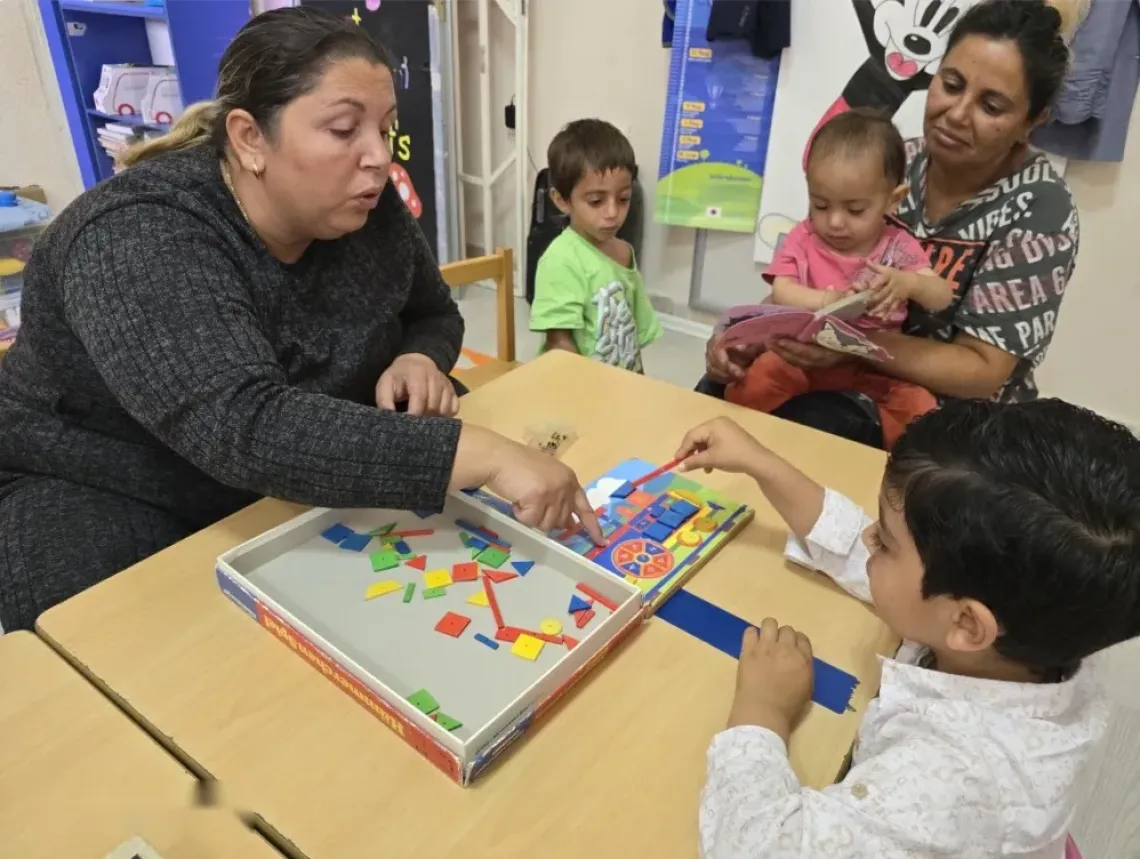
“The programme offers much more than preschool education. Children receive age-appropriate learning activities, nutritious daily meals and access to safe, stimulating classrooms equipped with educational materials”- says Dhurata Xhahnemi, educator at the community based ECE center in Brekoc.
[1] MICS 2020
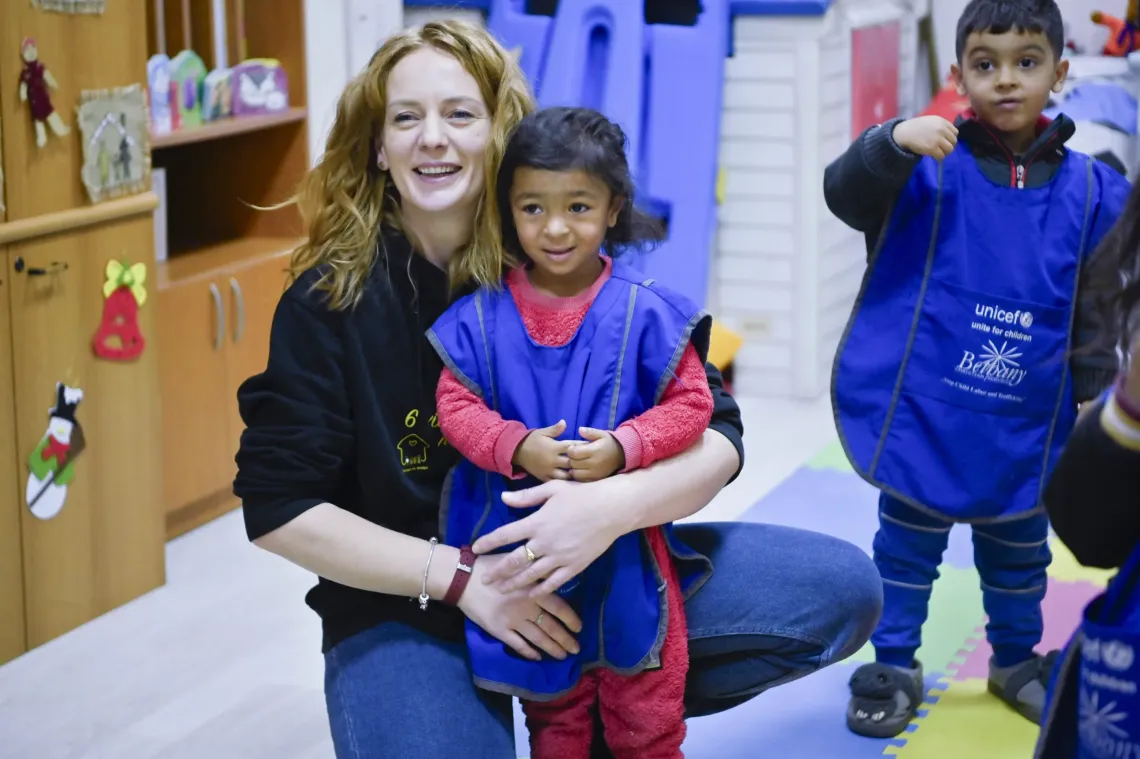
Parents participate in learning sessions, educators receive continuous professional training, and future teachers complete practical placements, helping strengthen the quality of early childhood education in the community. The programme also works closely with local institutions to advocate for better services and greater inclusion for children.
Every day children arrive ready to learn, play, sing, draw and build friendships that prepare them for school and for life.
Then the classroom door swings open. Out runs Edona.
She greets everyone with an enormous smile, laughing as she rushes to hug her teachers. Her joy is impossible to ignore. “Her smile is contagious,” – says Dhurata, the preschool educator who serves for almost nine years in the community-based ECE centers.
From a very young age, around two years old, Edona already showed a quiet persistence. She used to walk a family cow with her grandmother, passing by the centre from the opposite side on their daily routines. Even from a distance, she would be drawn by the sound of children laughing, the movement in the playground. It all stayed with her long after she had passed by.
She would go home and repeatedly tell her mother that she wanted to go there too, asking to visit the centre, curious and insistent in the way only small children can be.
She comes from an extended family household, living together with her grandparents, parents, aunt, and her older sister and brother.
Her family story is shaped by difficult realities. Her mother married very young and, having seen how both of her older children dropped out from school and her older daughter entered marriage at the age of 12, she was determined that Edona’s path would be different. She did not want her daughter to repeat the same cycle of early dropout and limited opportunity. She makes a decision that feels both simple and significant: Edona will go to the centre.
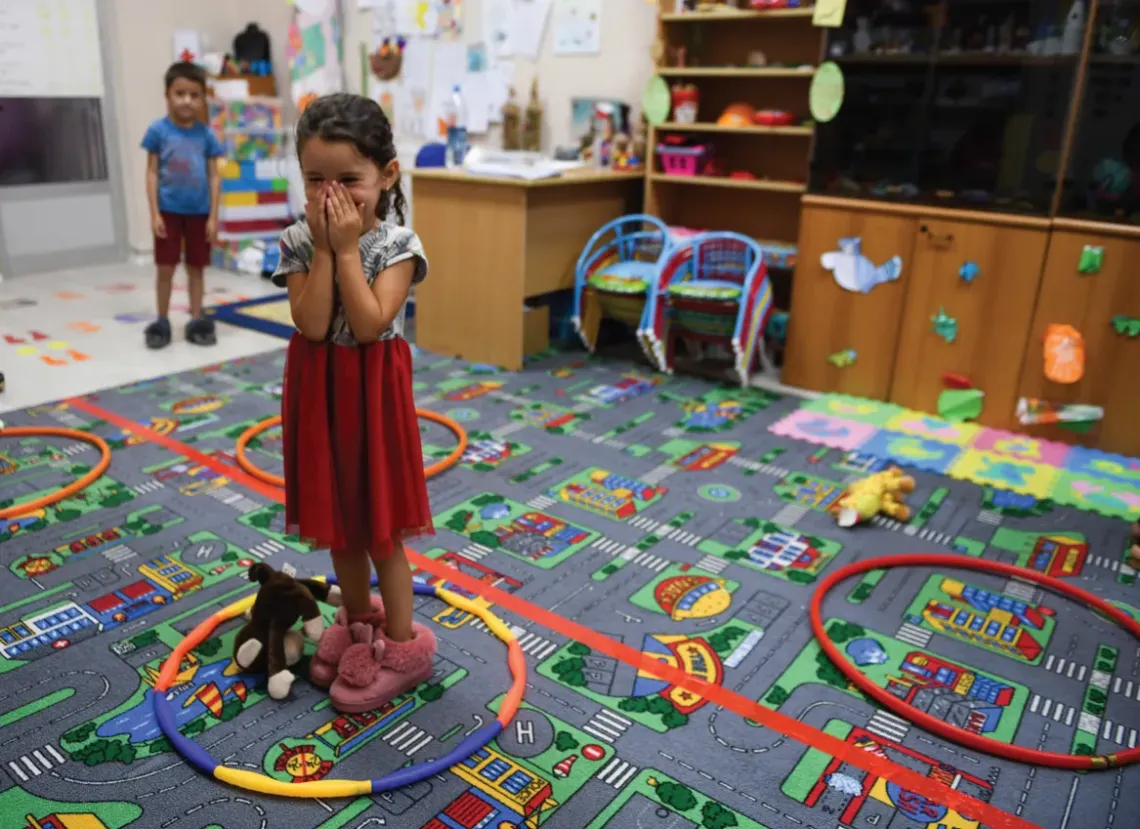
Edona becomes one of the most active children in the center. She begins helping others, encouraging her peers, and even acting as a small “tutor” for other children who are still adjusting. She knocks on doors in the neighbourhood, calling friends to come with her so they can attend together.
Her teacher, Dhurata, a preschool educator with more than nine years of experience in the community-based early childhood education centres, describes Edona as a rare child.
“Because of Edona many children came to the center” – she points out. She further continues “The center is for every child, no matter who they are or where they come from. It took me years to build trust with families and show them how much early investment matters. But children like Edona remind you why it matters”.
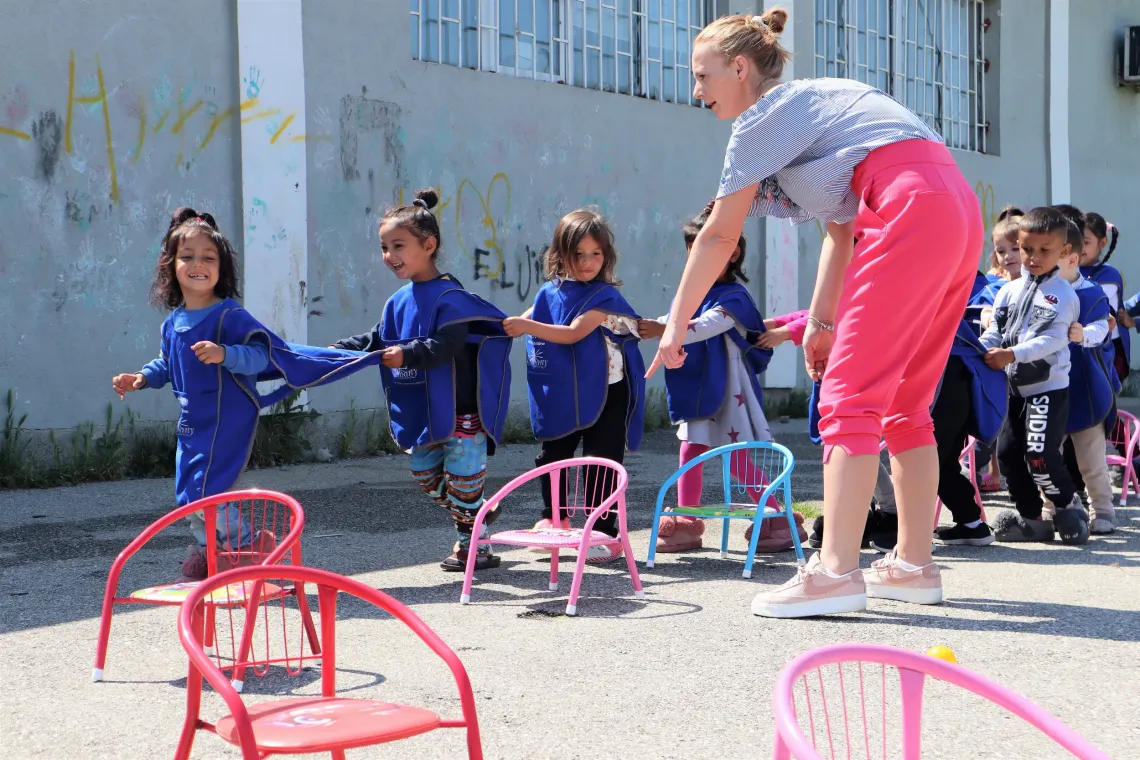
Furthermore, Dhurata points out: “I have witnessed positive transformations not only in children but also in parents. Many parents who bring their children to the centre highlight that the children have learned about personal hygiene and are now keeping their parents accountable at home. They have become more curious, actively teaching their parents positive habits and encouraging healthier daily routines”.
Edona continued school, she is the youngest in the family who is committed to become a leader and bring change to the community.
Edona's story reflects a wider transformation taking place in Brekoc. It is a reminder that the earliest years are not just the beginning of education, they are the beginning of everything. Investing in early childhood means giving every child, no matter where they are born, the chance to learn, to belong, and to thrive.