How poor air quality is triggering poor health from birth in Kosovo’s most pollute
Children in Kosovo are exposed to levels of air pollution that far exceed those recognized to cause adverse health impacts
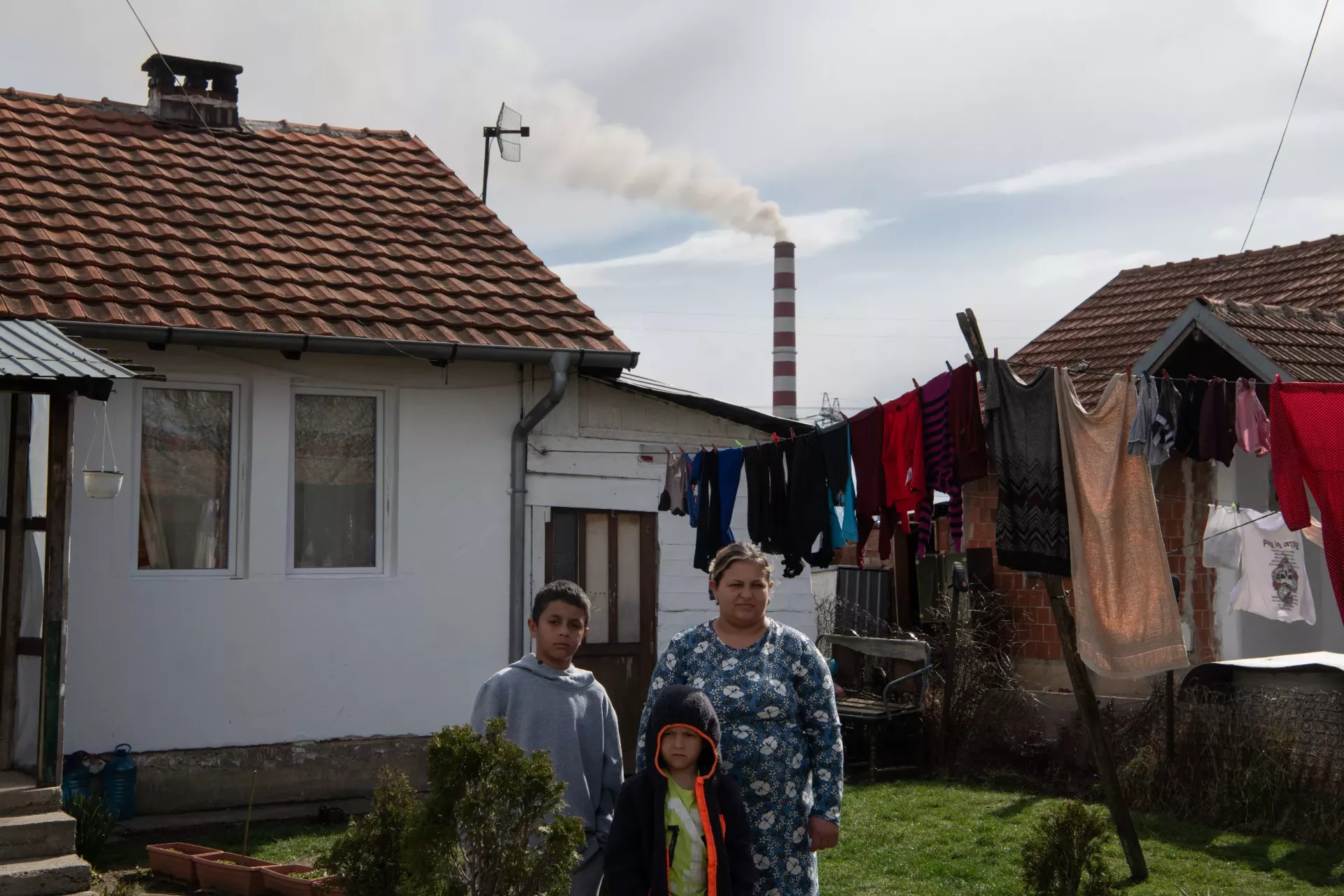
“It smells really bad here. We live in a very polluted area. It is making us sick, but my youngest son has suffered the most,” she says, pointing to five-year-old Ismaili. “When Ismaili was just one week old he had to be hospitalized for three months.”
“He coughs a lot and often has a fever. We are constantly worried because when his fever goes above 38 Celsius, he has convulsions. It can escalate very quickly, and we have to act fast,” explains Nexhare, 34, who has lived next to Power Plant A, Obiliq, Kosovo* with her husband and their five children for the past 10 years.

The harmful impact of air pollution is well recognized by the international and scientific community and children are especially vulnerable. Children in Kosovo are exposed to levels of air pollution that far exceed those recognized to cause adverse health impacts by the World Health Organization (WHO). Ultrafine micro-particles can easily get into their bloodstream, leading to respiratory infections and long-term damage to children’s lung and brain development.
“We know the air is bad here, but we can’t do anything about it,” says Nexhare before breaking down in tears. “We have no hope of anything changing.”
The younger the child, the greater the risk. Babies and young children are most vulnerable to the damaging impact of air pollution as their brains, lungs and other organs are still developing and are more susceptible to pollutants. The impact on 18-month-old Kenan, who lives with his mother Sabina, 24 and his grandmother Avjije, 46, near the power plants, is clear.

“The air is very heavy,” says Avjije, who has lived in the area for decades. “We can’t keep our children inside all the time, but when they go outside, they get very sick. We have to take Kenan to the doctor at least every three weeks, he’s always sick. I am sick, my husband is sick, everyone around is sick. What can we do, we have to live this way, there is nowhere else for us to go.”
Obiliq is home to families from Romani, Ashkali and Egyptian communities, many of whom live in settlements close to the power plants.

“Every fourth child who comes here has pulmonary disease,” says Dr Violeta, a paediatrician at the main family health centre in Obiliq, Kosovo.
“Even when children come with health problems unrelated to respiratory illnesses, everything stems from bronchitis and other respiratory infections during early childhood,” she says. “Many health problems we see in children are a result of breathing polluted air.”
The two coal-powered plants in Obiliq provide around 97 per cent of Kosovo’s energy, making it the country’s most polluted district.

“More than 250 tons of coal are burned in Obiliq’s power plants every day. More than four million kilos of coal are burned by residents to keep their homes warm during the winter,” explains Haki Jashari, the director of the district’s main family health centre and its home-visiting programme.
“We see the effects of this in our communities,” he says. “We have 50 per cent more cases of respiratory problems among children compared to the rest of Kosovo and 30 per cent more cancer cases among adults. We are seeing increased cases of miscarriage among pregnant mothers and more and more children being born prematurely or underweight.”
A group of young people have been taking action on air pollution since June 2023, working with local communities and the authorities to record the quality of air in the neighbourhood. With the support of UNICEF’s Youth4CleanAir initiative, the young environmental activists have been measuring air pollution every morning and afternoon, tracking the data and making it available to locals. They track PM2.5, particulates that are smaller than 2.5 microns in diameter and that often come from power plants, industrial facilities, cars and trucks, and PM10 – larger particulates that are found in dust and smoke.
Anything over 250 micrograms of PM2.5 or PM10 per cubic meter of air is regarded as hazardous, according to WHO.


“We take the same route every day and measure the air quality along the way,” explains Verona, a 17-year-old volunteer who is part of the Youth4CleanAir initiative. She checks the air quality device that she connects to her phone: “I have recorded more than 500 of PM2.5 and more than 1000 of PM10 before. It is not uncommon to see readings as high as these.”
More than 400 young people have been involved in the programme and have, to date, reached over 5000 children and youth with their initiatives. Their voices are being heard and the local and central level institutions are giving them a seat at the table in discussions on air pollution.
UNICEF works across the Western Balkans in partnership with governments, the private sector, civil society and the Swedish Environment Protection Agency to tackle levels of air pollution that are among the worst in Europe. Our work includes improving environmental education in schools, supporting education programmes for green jobs (including jobs in air quality), raising awareness about the causes and health impacts of air pollution among communities, and engaging children and young people in air quality data and management.
*All references to Kosovo are made in the context of UN Security Council Resolution 1244 (1999)