Kosovo Makes Strong Progress in Reducing Child Mortality
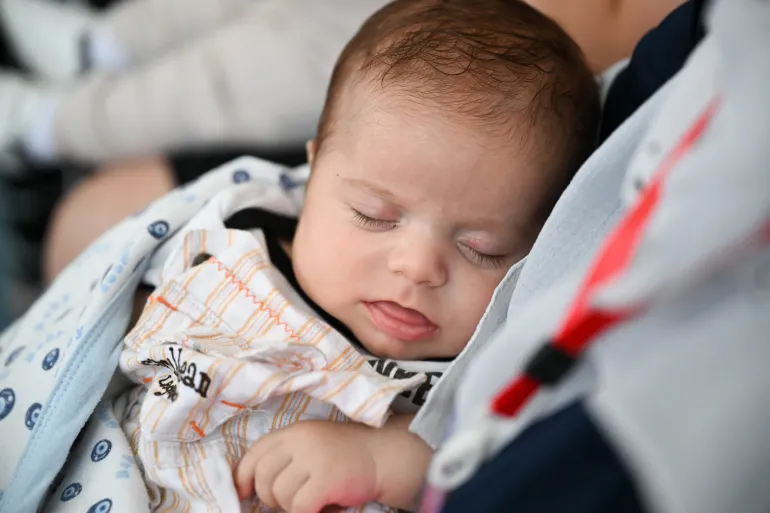
Pristina, 25 March 2026 – Kosovo has achieved a significant progress in child survival, demonstrating strong government commitment to evidence-based policymaking and strategic health programming according to the new report released by the United Nations Inter-agency Group for Child Mortality Estimation (UN IGME).
Since 2015, Kosovo’s neonatal mortality rate (NMR) has declined by 36%, from 10.3 to 6.6 deaths per 1,000 live births, and the under-five mortality rate (U5MR) has dropped by 39%, from 14.3 to 8.7 per 1,000 live births in 2024. These improvements reflect sustained investments in primary health care and expanded access to quality maternal and child health services.
A cornerstone of Kosovo’s success has been the nationwide scaling up of the Home Visiting Programme, which began as a pilot in 2014 and was implemented across all municipalities by 2022, supported by a robust policy and legal foundation. Its integration into the Law on Child Protection, prioritization within the Health Sector Strategy 2025–2030 and costed Primary Health Care action plan 2024-2026 ensured both political ownership and financial sustainability by the Ministry of Health and support at the municipality level.
“We are pleased that the commitment and dedication of our healthcare professionals, from primary healthcare to gynecology and neonatology, are being reflected in concrete results. The Ministry of Health has undertaken sustainable policies, from strengthening primary healthcare to expanding services for mothers and children and has also introduced new services in the Neonatology Clinic. We will continue to implement evidence-based policies so that this progress continues even further,” said the Minister of Health, Mr. Arben Vitia.
Implemented across the whole of Kosovo, with the long-standing support from the Grand Duchy of Luxembourg in partnership with UNICEF in Kosovo, the Home Visiting Programme provides targeted outreach to pregnant women, newborns and young children particularly those in vulnerable situations. At the heart of this success are municipal-level nurses, whose role is crucial in reaching children and families in the most remote and rural areas, by providing tailored in-home support, the programme strengthens maternal health, supports neonatal care and promotes early childhood development. These coordinated actions have played a critical role in improving child survival outcomes.
“Children are at the heart of every society. Their health, safety, and well-being shape our collective future. Guided by this conviction, Luxembourg has proudly supported initiatives such as the Home Visiting Programme, Guide for Monitoring Child Development (GMCD) trainings , and Group Care for Parenting,” said Eric Dietz, Head of Mission of the Embassy of the Grand Duchy of Luxembourg in Prishtina.
According to the UN IGME “Levels & Trends in Child Mortality Report 2025”, an estimated 4.9 million children worldwide died before their fifth birthday in 2024, highlighting both long-term progress globally and the urgent need to accelerate efforts to prevent child deaths. Kosovo’s experience illustrates how evidence-based policies, sustained investment, and targeted interventions can deliver measurable results.
“Many children are alive today because of the commitment to proven solutions, such as sustained investments in early childhood development, right policy choices, skilled nurses and doctors, targeted support to parents and evidence-based health system strengthening,” said Head of UNICEF office in Kosovo Veronika Vashchenko. “Bringing preventable child deaths to a record low is a remarkable achievement. UNICEF is committed to continue our cooperation with all partners to prevent reversing these hard-earned gains and ensuring all children survive and thrive.”
Kosovo continues to prioritize child health equity, leveraging data-driven strategies and strategic programming to ensure that all children survive and thrive, while contributing to the global fight against preventable child mortality.
While Kosovo’s progress is noteworthy, global mortality trends underscore persistent disparities in child survival outcomes. The UN IGME report emphasizes that, despite historic declines in child deaths over recent decades, progress has slowed in many parts of the world, and large numbers of preventable deaths still occur particularly in settings with limited access to essential health care and services.
Media contacts
About UNICEF
UNICEF promotes the rights and wellbeing of every child, in everything we do. Together with our partners, we work in 190 countries and territories to translate that commitment into practical action, focusing special effort on reaching the most vulnerable and excluded children, to the benefit of all children, everywhere.
For more information about UNICEF and its work for children, visit www.unicef.org.