Supplying Water, Supplying Hope
Remote, underdeveloped villages in the south of Jordan were living a water crisis affecting every aspect of their lives. A triad partnership between local communities, local water authorities and UNICEF was established to bring about change.

For years, families in several remote villages in the southern governorate of Ma’an faced a tough reality: water was scarce, unpredictable, and often too little to meet their needs. When water did come, the pressure was so low it barely reached the homes on hilltops. And then long, hot summer months came, and the crisis exacerbated to an even new level.

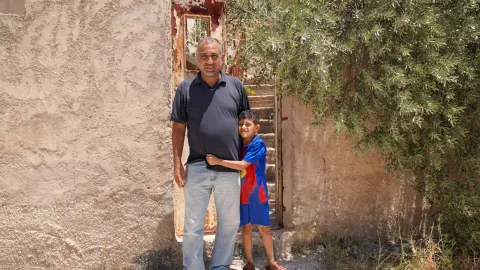
Ghalib, a father of four from Abu Al Lasan village, recalls those not-so-distant days. “We couldn’t plan anything,” he says. “You never knew when the water would come, or if it would come at all. Sometimes it stopped for days without warning. That made it impossible to decide when to water the trees, fill the tanks, or even wash clothes. Every day was a guessing game, and we always had to be ready for the worst.”
For families like his, the shortage wasn’t just inconvenient; it affected health and livelihoods. “We had to buy water from trucks, which could cost hundreds of dinars a month in summer,” Ghalib adds.
But the story here isn’t just about pipes and pumps, but about people coming together.
Finding a Voice Together
Something changed as UNICEF, local authorities, and the community worked to form a water committees made up of women, elders, youth, and others from across the villages.
“We wanted to make sure everyone was heard,” says Jamila, president of a local charity that support women and youth in Athroh village. The committee held regular meetings, listened to concerns, and shared information about water rights and responsibilities.
“We wanted to make sure everyone was heard,”

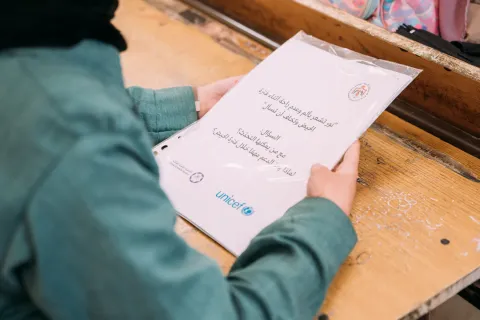
As part of the committees' activities, young people like Jamila’s daughter, Bashayer, also had a role to play, leading awareness sessions in schools and helping families understand how to report water problems.
The water committee became a bridge, connecting people people to water authorities and making sure community voices shaped the solutions.
Real Changes on the Ground
The committees’ inputs informed the technical team’s work, whether fixing old pipelines, upgrading boreholes, or improving pumping stations.
Ghalib says things are different now. “We get water twice a week, and the pressure is good. I can fill my tanks. Life has become more relaxed.”
His 10-year-old son Hashem, adds with a smile: “Now I can take a shower when it’s hot.”

Life has become more relaxed.
More Than Just Water
More and better-quality water isn’t just about health and wellbeing. For Jamila’s charity, it means better products and jobs for women. Cleaner water helped them meet food safety standards and start selling their dairy and other products and herbs beyond the village.
“Access to water is all about dignity,” Jamila adds.
UNICEF is grateful for KOICA for generously supporting this initiative.