Mobile immunization brings lifesaving vaccines to children living in hard-to-reach areas of Jordan.
UNICEF supports the Ministry of Health efforts to ensure free and safe access to vaccines for every child.
- English
- العربية
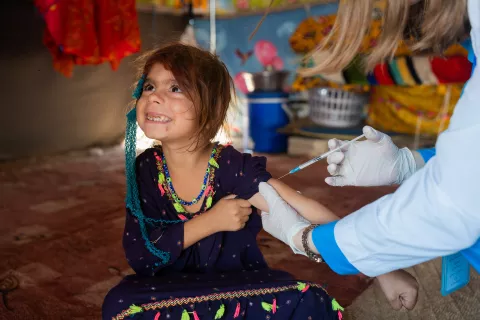
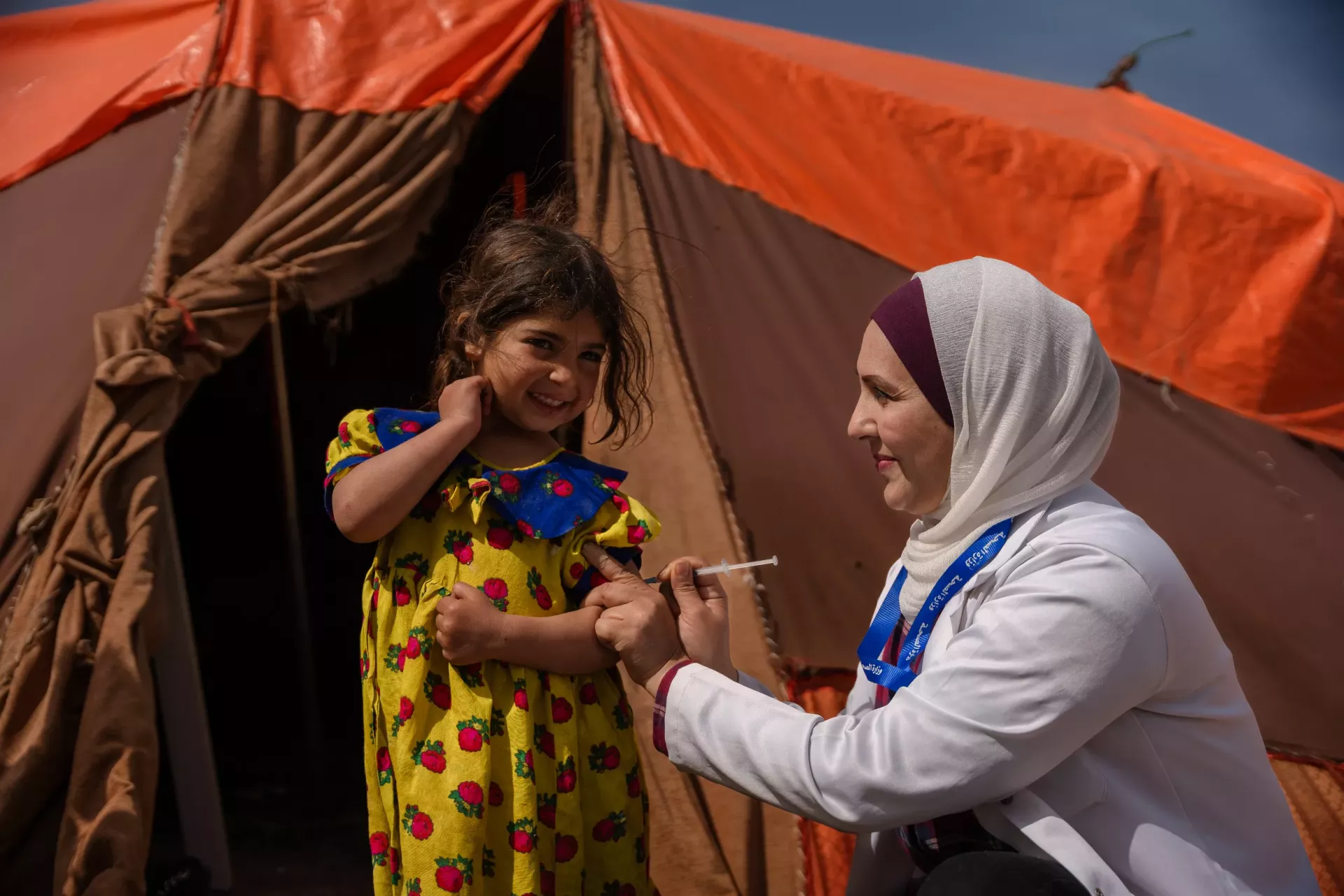
“They gave me a shot today but I didn’t cry,” said six-year-old Ghadeer with a wide grin on her face, following her vaccination in the informal tented settlement in Irbid, north Jordan, where her family lives. “Now I am very strong like a superhero.”
Watching closely, her father is eager to share his happiness at the arrival of the mobile immunization team. “We are all so glad the Ministry of Health decided to bring the vaccines to us. My only wish in life is for my children to have a happy and safe life.”
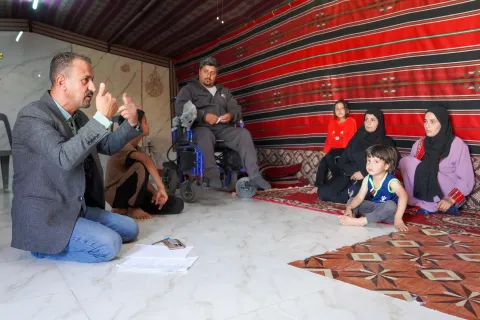
The family who are part of the marginalized Dom community, cannot afford the transportation costs to reach the nearest health clinic, preventing them from accessing much-needed immunization services.
Even though vaccination in Jordan is free and available to children of all nationalities, children living in remote tented settlements like Ghadeer face multiple barriers to accessing their nearest healthcare facilities – from costs to lack of information.
This leaves their children at risk of vaccine-preventable disease.
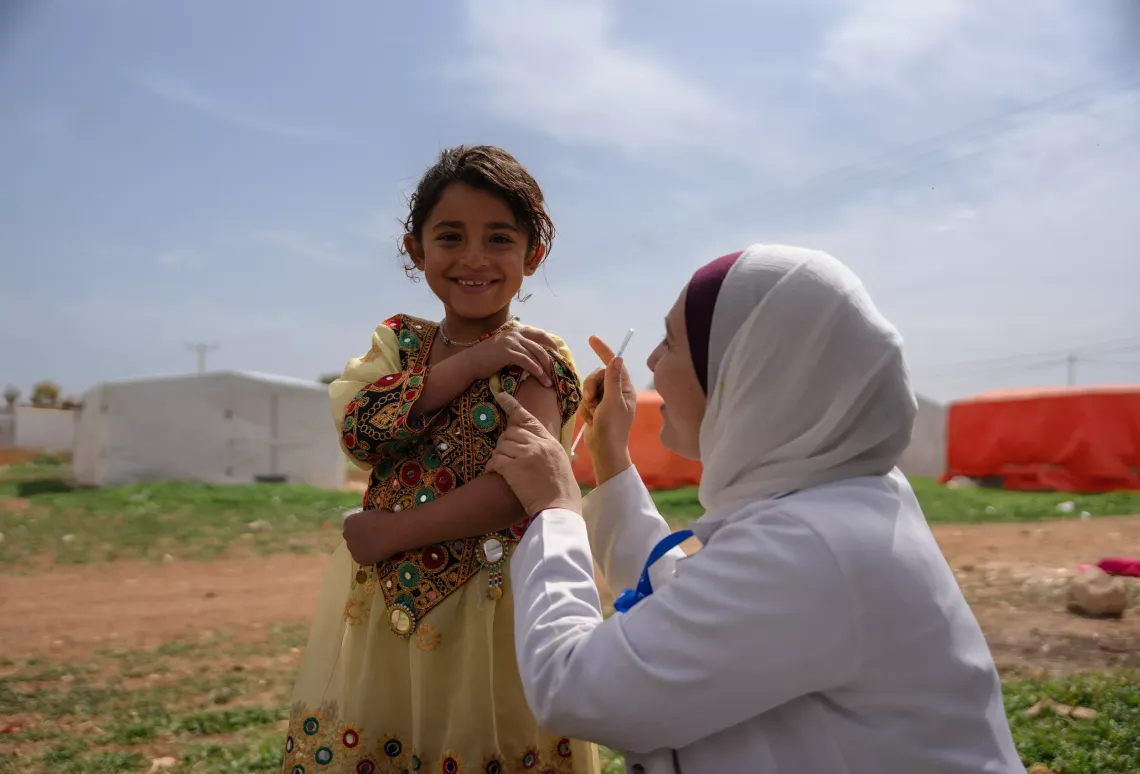
“I’m so glad that nurses came to our camp to vaccine our children,” said the mother of five-year-old Zeinab. “I can’t afford to go to the health clinic as it is very far away in the city. I am so happy that there are people out there who care about the wellbeing of my children.”
As well as carrying out vaccinations, the mobile immunization teams ensure that parents receive information on how to best protect their children and ensure they can grow up healthy. They also answer any questions parents have and counteract misinformation that leads to vaccine hesitancy.
“With UNICEF’s support, we are able to reach those who need our help the most and bring the cold chain and vaccines to them,” explained midwife and mobile immunization team member Sheeren, as the mobile immunization team visit another site in the Jordan Valley.
“These populations have limited knowledge about immunization and they tend not to visit our health centres. I speak to the mothers about how vaccines protect their children from diseases and tell them that they must visit the clinic after they give birth to ensure their newborn babies have the protection they need.”
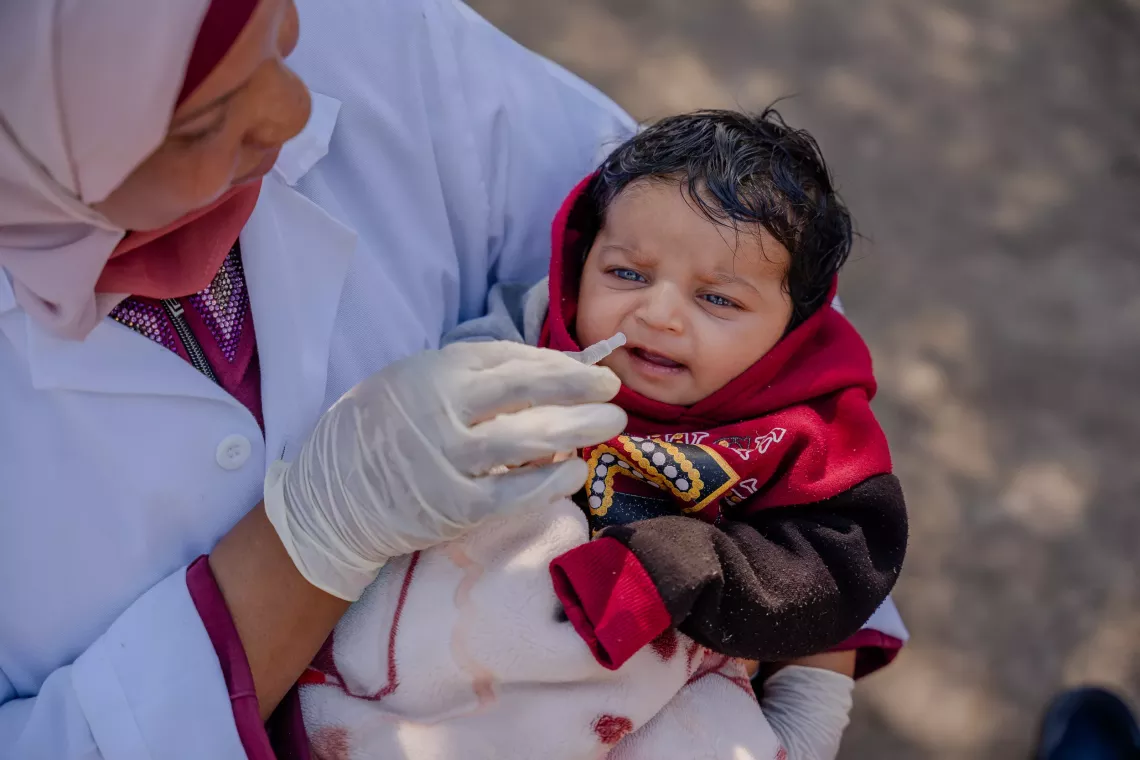
There was an outbreak of measles in this very community only one year ago, according to Sheeren, underpinning the urgency to vaccinate every child living in hard-to-reach communities to ensure the maximum immunization level. “After we convinced them and vaccinated the children, the parents thanked us for coming all this way. It cheered us up and really motivated us to keep trying,” added Sheeren.
“I fear for my children’s health in this harsh environment,” continued Zeinab’s mother. “We need all the protection from disease we can get.”
UNICEF supports the National Expanded Programme on Immunization led by the Ministry of Health, including the provision of vaccines, health supplies, cold chain equipment and training of healthcare workers. Efforts to ensure that vulnerable children living in remote communities are vaccinated though mobile immunization teams are generously supported by the Government of Korea.