

Youth Transitions to Adulthood in Jordan
Aspirations Vs. Reality

- English
- العربية
28 per cent of the population in Jordan (as of 2020) were aged between 16 and 30 years old, with Jordanians and Syrians comprising most of the youth population. And yet, the challenges faced by the youth in Jordan during their transition to adulthood are only getting more complex.
The Youth Economic Aspiration Study discusses aspirations of youth and sheds light on their reality. The report explores the challenges and obstacles found on the way of the Jordanian youth due to the economical situation, and the ongoing global pandemic of coronavirus disease 2019 (COVID-19). It also lays out key findings in different areas, and recommendations to accelerate policies and objectives related to youth and their transition to adulthood.
In addition, the report provides insight into the role of gender and social norms in sustainable development in the context of youth aspirations and related frameworks.
“A good job is what secures financial independence, marriage, and owning a house.” – Young Jordanian man, aged between 24–26.
Let's dive into some of the key findings in this article.
Educational aspirations and achievements
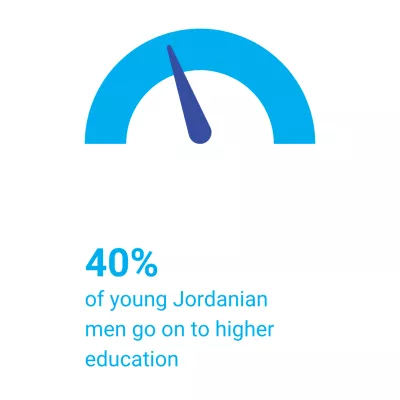
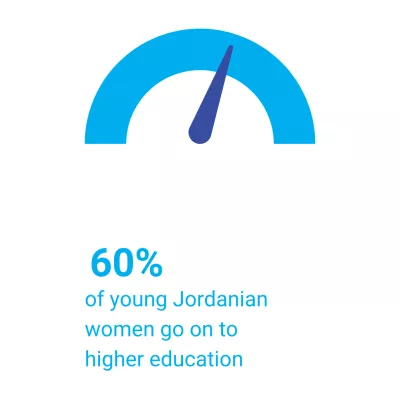
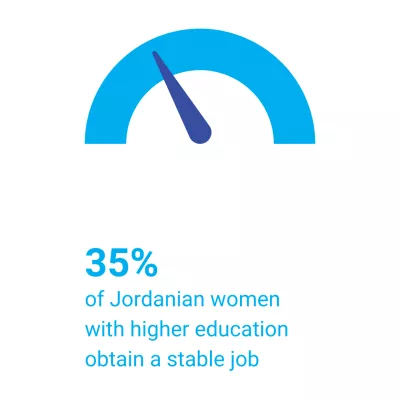
Jordan made important progress in increasing educational attainment over the past 30 years, especially among young women. However, Jordanian youth are still facing challenges in capitalizing on this education to get good jobs and improved livelihoods.
The challenging transition from school to work
Less than three-quarters of young men have obtained a job that lasts for longer than six months.
Young Jordanian women reach a peak employment rate of 17 per cent at the age of 25–30 years.
The probabilities of getting formal employment are much lower for young Jordanian women, even when educated.
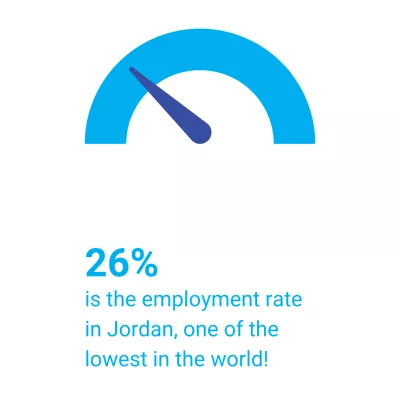
During COVID-19, unemployment rates rose in Jordan as hiring froze and job losses increased.
Employment and unemployment
Young Jordanians have clear views on what constitutes a good job. They
preferred the public sector due to its job security and better working conditions.
For women, teaching jobs were preferred. On the other hand, men preferred employment in the military. Yet, only a small percentage of young people were able to obtain such jobs.
Moreover, women’s employment is severely constrained by the availability of jobs that meet women’s reservation working conditions or reservation prestige.
“The preferred jobs are those in the public sector… a job where you can secure your future, …to secure a good and safe income, a job that is secure and fixed, unlike the private sector which may at any time lay off an employee.” – Young Jordanian man, aged between 21–30.



Entrepreneurship
48 per cent of young people reported that they wanted to start their own business or project within five years, only 10 per cent reported they had ever had an idea for a business and tried to start one.
Out of the 10%:
50 per cent never started their business
45 per cent started a business which either failed or closed
5 per cent managed to continue with their business
Gender norms and sexual harassment
Young people across sex and nationality groups generally expressed attitudes supportive of gender equality, at least in theory. While a majority of young people were supportive of women being allowed to work, a substantial fraction of young men were not.
“In my opinion, [a good job for women] would be in either the education or the health sector. In our society, we need female nurses and doctors. Some men would tell you that they do not like their wives going to a male doctor… it is more comfortable for her and [acceptable in] society [for her to be seen by a female doctor].” – Young Jordanian man, aged between 24–26.


News consumption and social media use
According to the study's results, almost no young people accessed news from traditional, print media, but instead relied on websites and online video media.
Job finding was an important function of social media for a fifth to two-fifths of young people. And far more men than women reported that meeting new people and interacting with the opposite sex were important purposes of social media.
78–88 per cent of Jordanian youth use social media to keep in touch with friends and family
16 per cent of young male Jordanians spent 8 hours or more on social media
35–44 per cent experienced a fear of missing out on social media
19–34 per cent experienced jealousy as a result of their use of social media