

Adolescent, Youth Development and Participation
A successful transition to adulthood for children in Jordan.
- English
- العربية
Situation
Jordan has one of the youngest populations in the world.
With 20% of the population between the ages of 15 and 24, Jordan has a significant demographic opportunity, yet it must overcome notable challenges to realize the full potential of its young people.
Each year in Jordan, tens of thousands of young people enter the job market, yet many struggle to find work:
- 43% of young people aged 15–24 are unemployed.
- 14.8% is the labour force participation rate among females, among the lowest rates globally.
- 67% of young people with disabilities are unemployed.
- 43.7% of Syrian refugee young people are unemployed.
There is a growing skills gap between what young people learn and what employers need. Without urgent action, many young people — especially the most vulnerable — will be left behind.
Another vulnerable group is youth with disabilities: 6% of youth aged 10-24 have at least one disability (Department of Statistics and ICF International, 2013), and face difficulties in accessing services and programmes.
What does UNICEF do?
UNICEF/Bseiso
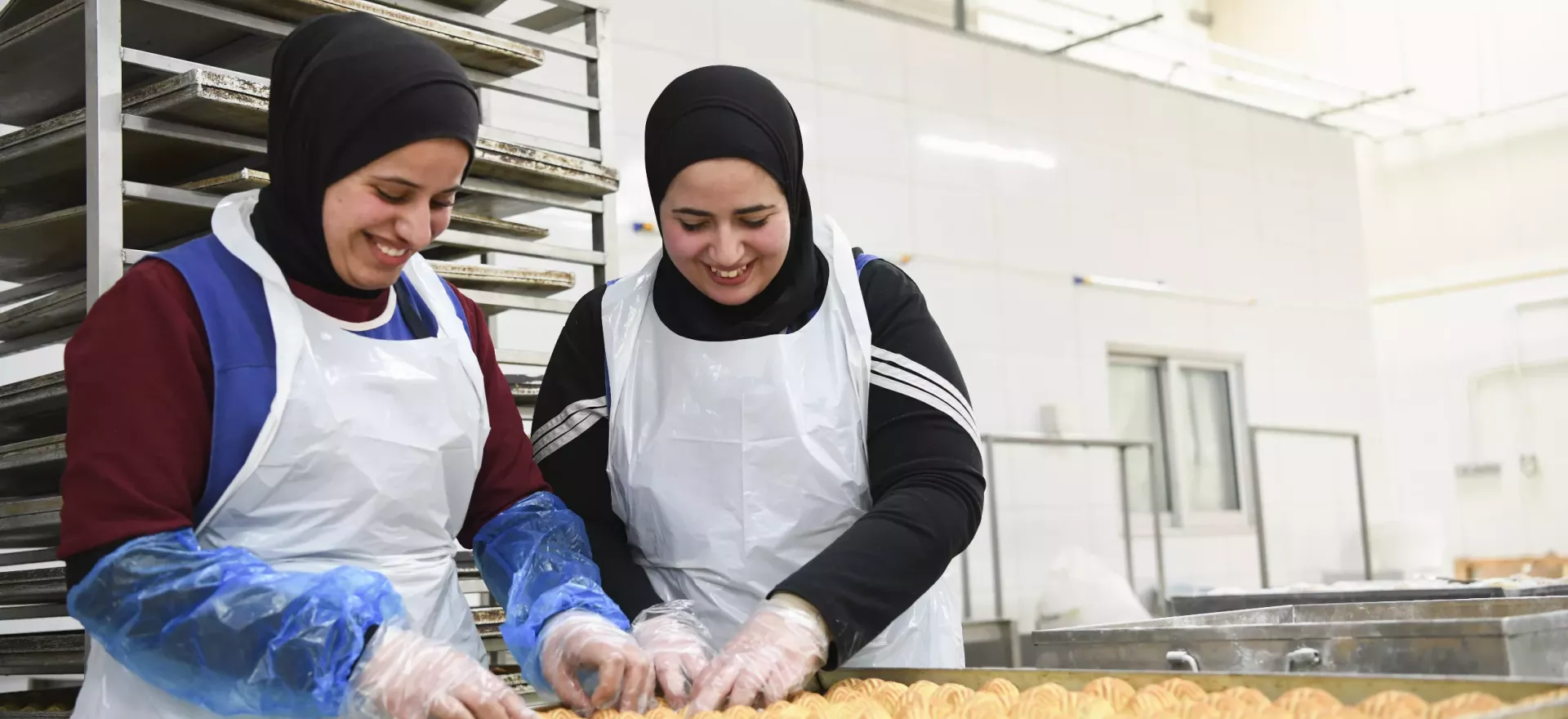
Working closely with the Government of Jordan, UNICEF supports young people to build skills, access opportunities, and become active participants and leaders in their communities and the economy.
UNICEF/Bseiso
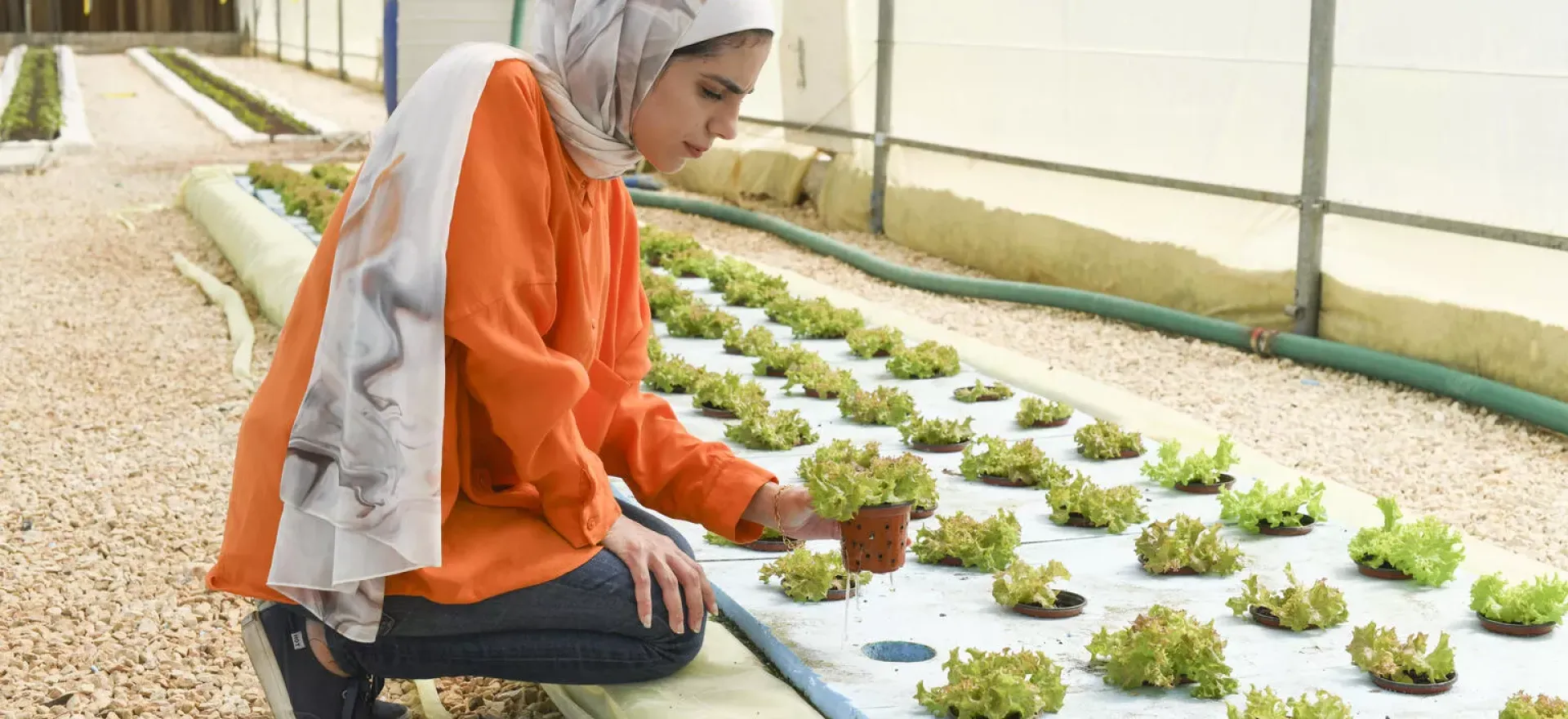
We work with partners in alignment with Jordan's national goals for young people to be in learning, training, or work, and our approach puts equity and inclusion at the centre.
In 2025, UNICEF reached more than 90,000 young people across Jordan through our different programmes. These included volunteering, life skills, digital skills, vocational training and entrepreneurship programmes.
Our key areas of focus include:
Areas of focus
Working with young people from vulnerable communities to build practical life and 21st-century skills, access job-oriented Technical and Vocational Education and Training opportunities, and receive career guidance to support confident transitions from learning to work.
Encouraging an entrepreneurial mindset among young people from vulnerable communities through innovative approaches, while providing the technical and financial support they need to turn ideas into successful businesses.
Working with government partners to develop, pilot, and advance programmes for young people within national systems, while strengthening collaboration with civil society to ensure long-term impact and sustainability.
Promoting economic inclusion and active participation of vulnerable young people including girls, persons with disabilities, and those living in poverty.
With our partners, the results UNICEF achieved in Jordan in 2025 include:
- Supported the implementation of the National Youth Survey 2025, carried out by the Ministry of Youth in partnership with the Center for Strategic Studies at the University of Jordan, the Department of Statistics, and UNICEF.
- Initiated the development of Jordan’s National Strategy, which will be informed by the evidence-based data from the National Youth Survey.
- Launched “Generation Ready", a three-year strategic partnership between the Ministry of Labour, UNICEF and the Vocational Training Corporation that aims to modernize Technical and Vocational Education and Training (TVET).
- Provided demand-driven digital skills training to 2,827 young people through the Digital Skills for a Better Future programme, equipping them with in-demand competencies including programming (Python), social media, graphic design, and web development. This enabled young people to participate in the digital economy, access remote work, and pursue gig economy opportunities, with 706 going on to secure income-generating work.
- Provided entrepreneurship and on-the-job training to 1,568 young people, enabling the launch of 40 micro-businesses that enhance economic participation, particularly for young women and those with limited mobility.
- Reached 34,343 young people across Jordan with market-driven skills development.
- Supported the participation of more than 46,000 young people in volunteering opportunities through Nahno, the national volunteering platform. The community initiatives addressed different issues including climate, health and education, and engaged both public and private sectors.
- Promoted youth-led climate action through the training of more than 9,000 Climate Leaders and Champions, while young climate volunteers planted close to 19,300 trees, and collected more than 70,700 kg of recyclable waste across 10,198 km² throughout the country.
UNICEF is committed to a future where young people can make a positive impact in their community and beyond.