A mother’s promise is helping Mustafa and Ibrahim grow up safe and healthy in Muthanna
This uncertainty shapes many of the decisions Kawther and her husband make for their children.

- English
- العربية
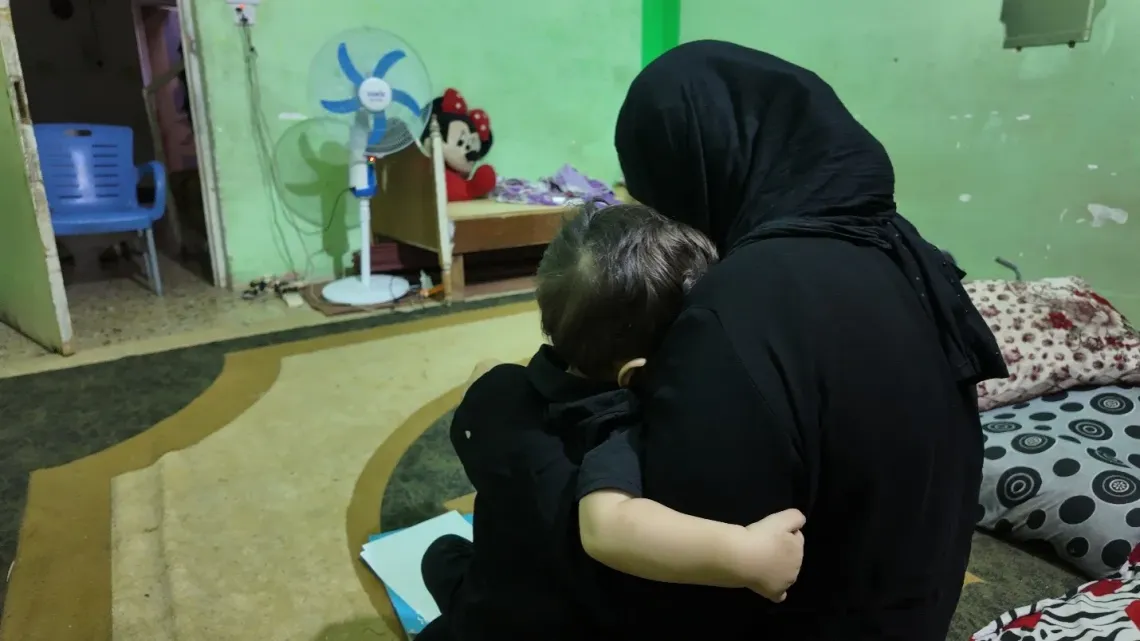
For Kawther, a mother of two, each day depends on whether her husband can find work. “Our only source of income is if my husband finds work for the day,” she said. “Sometimes he does. Other times, he doesn’t.”
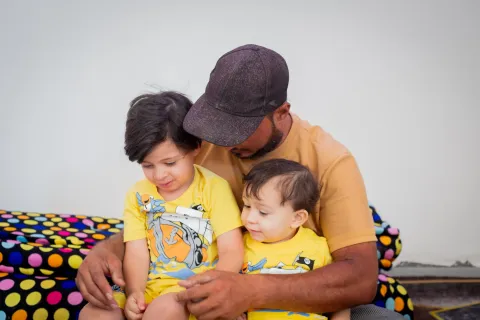
This uncertainty shapes many of the decisions Kawther and her husband make for their children: seven-year-old Mustafa and 18-month-old Ibrahim.
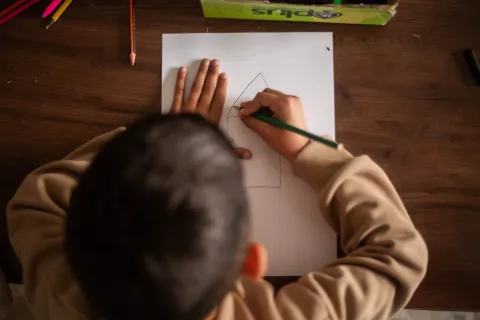
“I really wish I could give my children the best. Mustafa has just started school, and I encourage him every day. I try my best to stay on top of his studies.”
In one of Iraq’s poorest governorates, providing for two young children often means stretching limited resources and relying on available support.
“Mustafa's father and I made a promise to each other. We would make sure he gets every vaccine on time, so he can grow up happy and safe. We’re doing the same for Ibrahim. The support we received helped us cover some costs, like getting to the health center. It made it possible.”
For families living on a low and uncertain income, the cost of travelling to a health center can determine whether a child receives a check-up or vaccine on time.
Muthanna is Iraq’s poorest governorate. Nearly one in three children in the poorest households lack basic necessities – the highest rate in the country. Many homes are built with inadequate materials, few families own land, and internet access is among the lowest in Iraq. The adolescent birth rate is twice the national average, while gaps in antenatal care, early childhood development services and immunization remain.
With funding from the European Union, UNICEF, the International Labour Organization (ILO) and the World Food Programme (WFP) are working with the Government of Iraq, through the Ministry of Labour and Social Affairs, to implement the Child Plus Benefit pilot. The programme combines cash assistance with access to health services for families most in need. It supports 10,000 families in Muthanna who are registered in Iraq’s Social Safety Net, prioritizing pregnant women and children under 2, including Ibrahim.
Connecting families to essential services
UNICEF worked with the Ministry of Labour and Social Affairs and the Directorate of Labour and Social Affairs to develop a case-management system that connects families with essential health services. Social workers and health staff were trained to identify families in vulnerable situations and follow up with them. Text messages remind families when a health check-up or vaccine is due. If a pregnant woman misses an antenatal care appointment or a child misses a vaccine, health workers notify social workers, who follow up by telephone or through a home visit.
UNICEF also strengthened the systems supporting the programme by upgrading the database used to register and track families. Frontline teams received computers, tablets and internet access to help them continue their work, including in hard-to-reach areas.
For Kawther’s family, this means timely reminders, follow-up from a health worker and support to help cover the journey to the health center.
The Muthanna initiative is one of three pilots in Iraq. In Duhok and Sulaymaniyah in the Kurdistan Region of Iraq, similar programmes link cash assistance with education support for families whose children are moving from primary to secondary school. Together, the three pilots are generating evidence to inform efforts to expand integrated social protection for families across Iraq, so that a child’s future is not determined by household income.
For Kawther, the hope is simple. “I just want them to grow up healthy,” she said, watching Mustafa nearby. “Safe and healthy. That’s all I want.”