Building Peace
Stories from Iraq

- English
- العربية
Peace is often understood as the absence of conflict. Yet for many people in Iraq, peace is much more tangible.
It is the opportunity to learn, work and provide for a family. It is a safe place to belong. It takes shape when people recover from hardship, reconnect with others and begin to look towards the future with confidence.
Across Iraq, people are building peace every day with UN support. Their stories are different, but together they show that long-term stability requires inclusion, social cohesion and the ability of people and communities to shape their own lives. Everyday acts of reconstruction and connection may seem small, but they are the foundations on which lasting peace can grow.
Peace Through Education and Inclusion
Education can open doors that conflict and displacement have closed. Inclusion helps people walk through those doors and take their place in the communities around them.
In Fallujah, Rana is finding her way back to school.
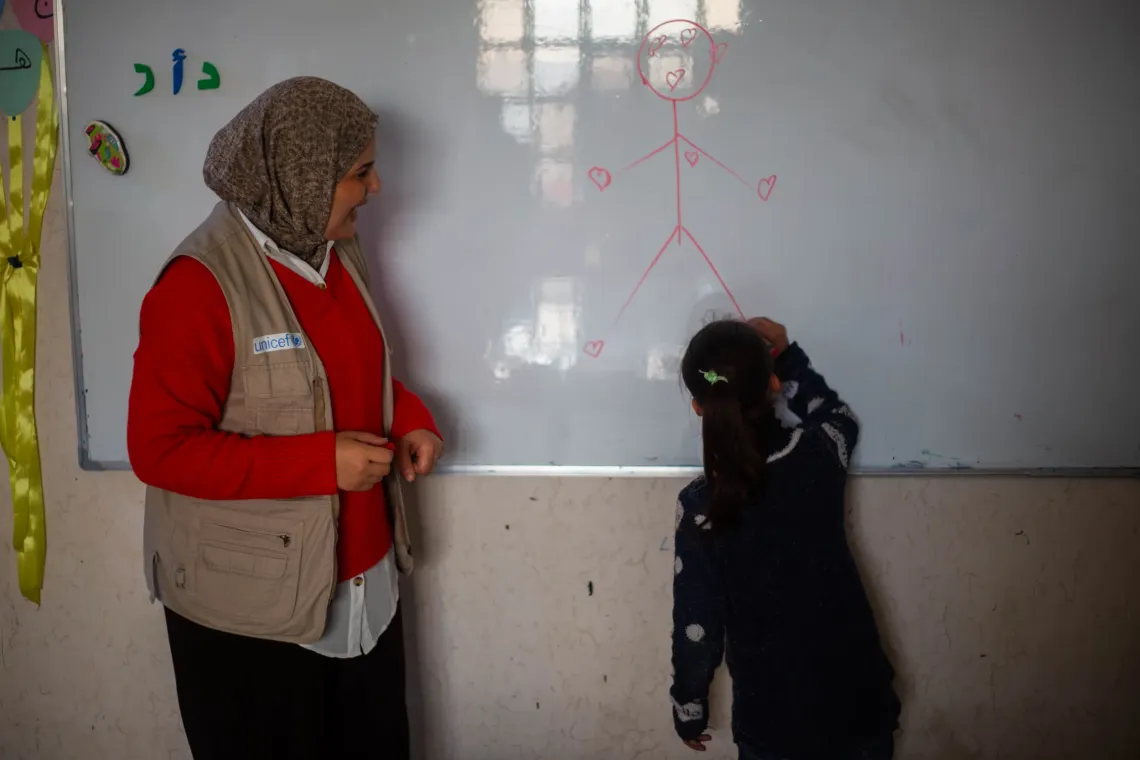
After more than two years away from education, Rana returned home carrying memories of displacement, profound loss and the uncertainty of an interrupted childhood. At a Government-run Falluja Community Centre supported by the UN Children’s Fund (UNICEF), she found a safe place to begin again.
Through UNICEF-supported interventions, the Centre offers accelerated learning classes, psychosocial support, legal assistance to help uprooted children obtain civil documentation and a space where students like Rana can learn, play and slowly rebuild their confidence.
Her teacher noticed the transformation in her drawings.
“At the beginning, they showed scenes of war. Now they show peace.” says her teacher.
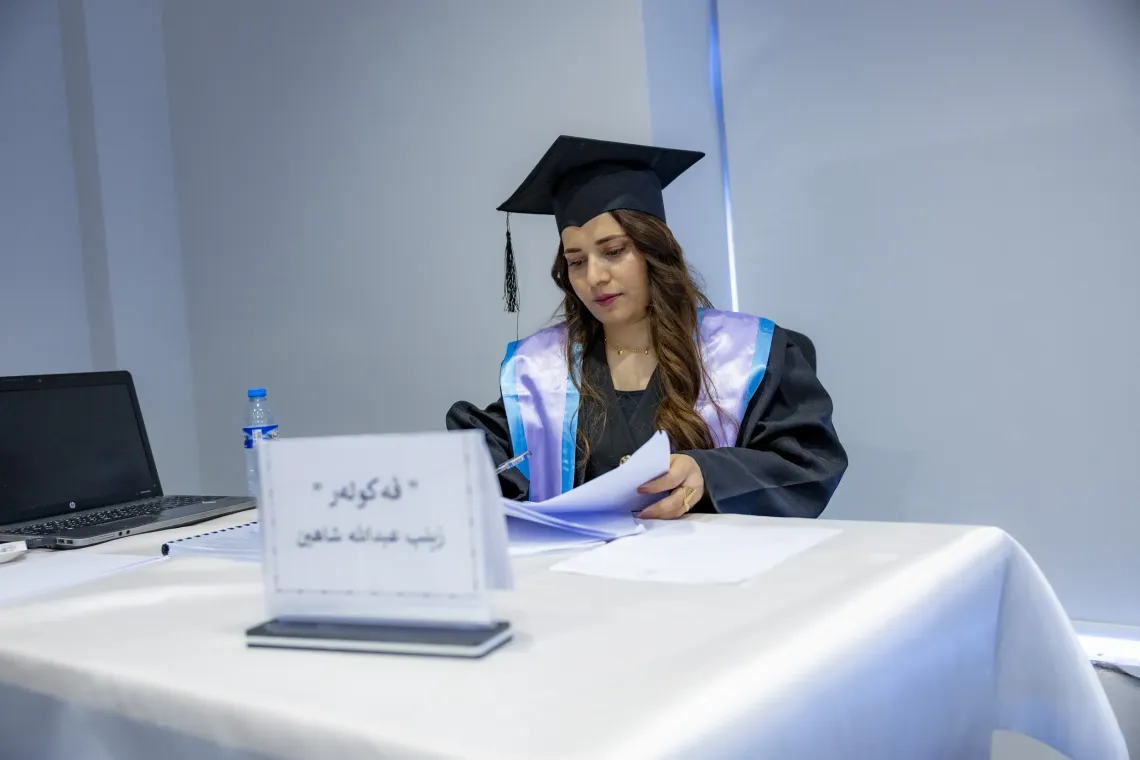
For Zainab, education became a bridge between communities. As a Syrian refugee who grew up in Domiz 1 camp, Zainab excelled at school but faced the financial barrier of continuing her education. A DAFI scholarship from the UN High Commissioner for Refugees (UNHCR) enabled her to study political science at the University of Duhok, where she graduated top of her class and later completed her master’s thesis.
She studied alongside Iraqi students. “I never felt different,” she says.
Today, Zainab wants to use her education to strengthen connections between refugee and host communities. What began as an opportunity for one student has become a chance to contribute, participate and help bring communities closer together.
These stories remind us that education and inclusion are essential to the cycle of peace: schooling and belonging lead to stability, which in turn opens the door to investments in education and social cohesion.
Opportunities for Peace, Peace for Opportunities
Education can broaden horizons. But people also need opportunities to turn their skills, ideas and hard work into a livelihood and, ultimately, a reason to nurture a new tomorrow.
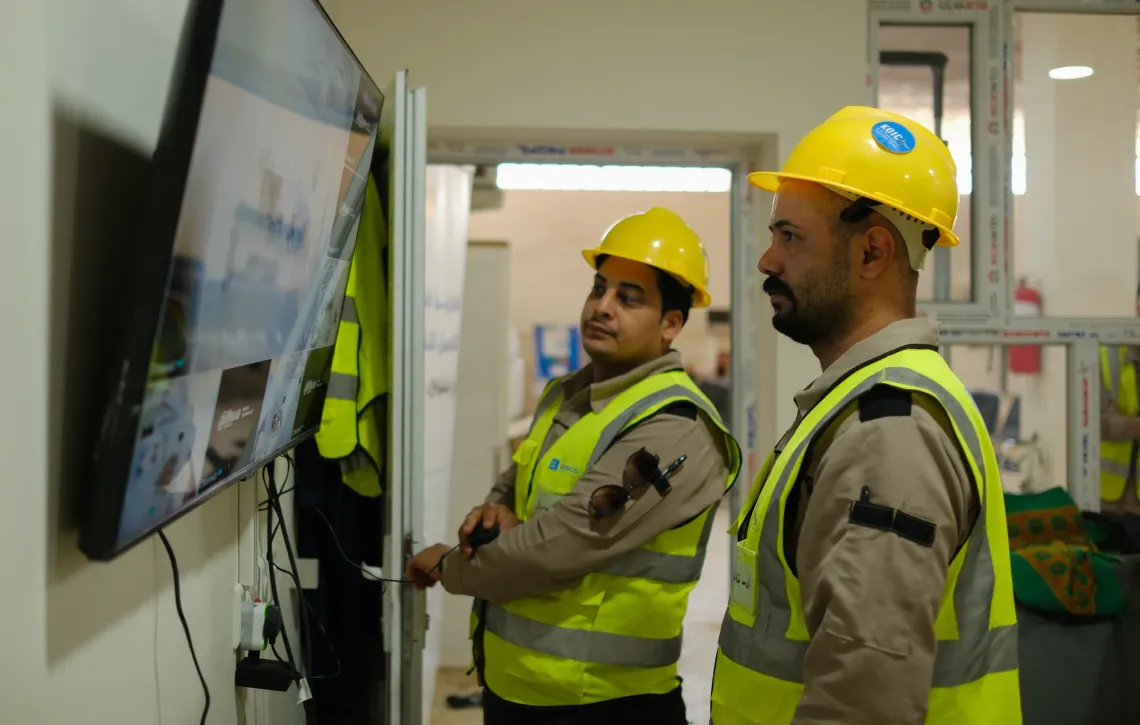
In Nineveh, Yaseen and Taha met during a training course in CCTV installation and maintenance at Mosul Vocational Training Centre. The UN Educational, Scientific and Cultural Organization (UNESCO) supports the center by overseeing training, building workshop spaces and learning infrastructure, contributing to the curricula and connecting participants to employers.
Before they had even completed the course, Yaseen and Taha decided to start a business together.
They began by working alongside an established company, gaining experience while building their own client base. They promoted their services through social media and gradually earned customers' trust through reliable work, professionalism and competitive prices.
Their ambition now goes beyond finding a job. They want to expand their business, open a shop and provide not only for themselves but for their families.
Their story shows what an economic opportunity can mean in a community recovering from conflict. A skill can become an income. An income can become independence. And independence can give people a reason to invest in where they live and what comes next.
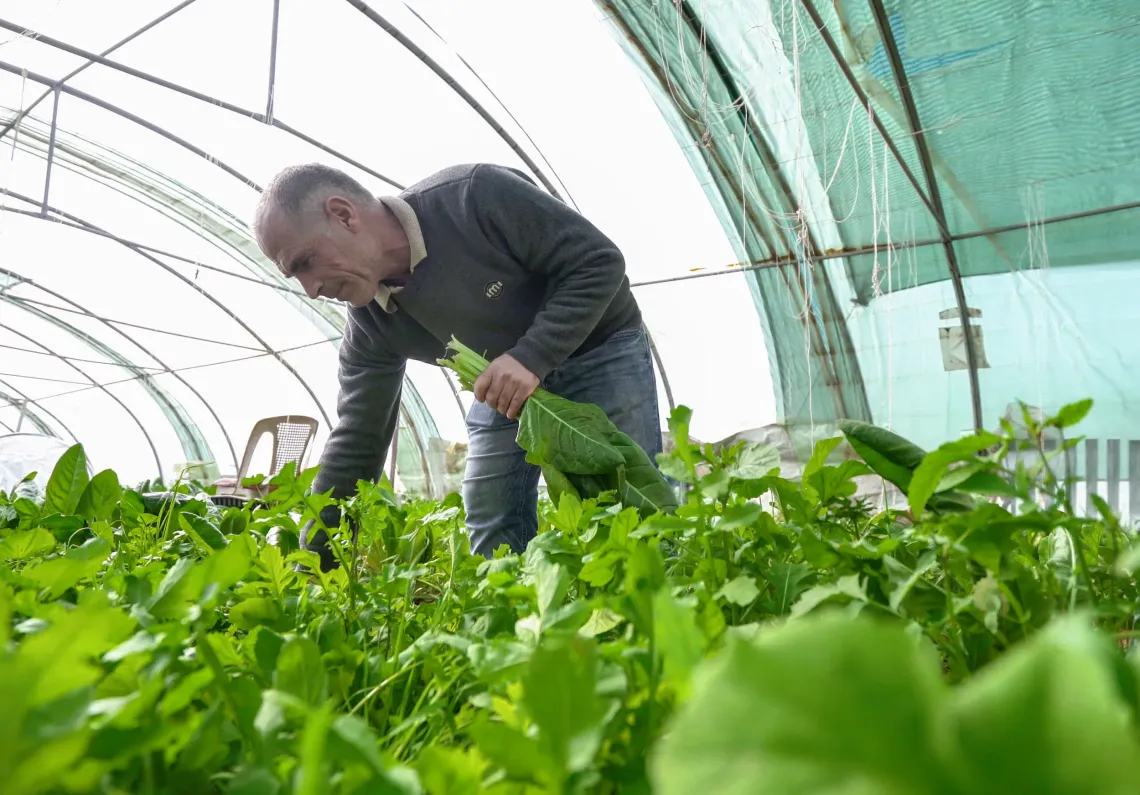
In Domiz refugee camp, a Syrian refugee and farmer, Adnan Mohammed has built his livelihood by growing vegetables in a greenhouse. When rising fertiliser and agricultural treatment costs made farming more difficult, he adapted by using locally produced organic fertilisers and traditional pest-control methods.
His work was supported by the EU-funded JOBS project, implemented by the International Trade Centre (ITC). Adnan was able to maintain his greenhouse, acquire small machinery and improve his farming practices, helping him meet buyer requirements and increasing the value of his produce.
The ITC coordinates field-based training, knowledge exchange between farmers and linking them to retail markets and buyers in other governorates.
“When farmers come together, everyone brings their own experience. We learn from each other, share what we know and make better decisions.” says Adnan.
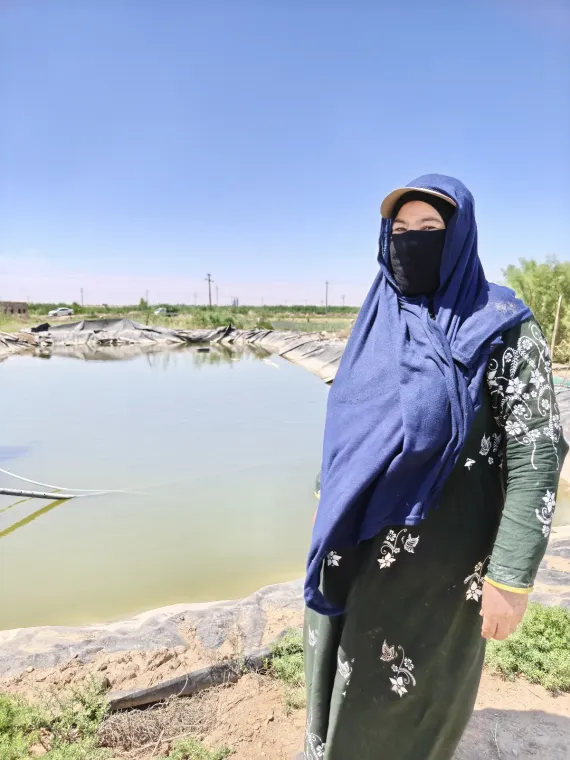
In Fallujah, Anbar, peace looks like water reaching a farmer’s field again. Displaced by conflict in 2014, Hasna Suhail returned home with nothing and turned to farming to restart her life. Through the World Food Programme (WFP)’s modern irrigation support, she now grows wheat, alfalfa and vegetables, and has launched a fish farm that feeds her family and community. Nearby, Khudair Ali Jurdy restored the orchard he lost to war after canal rehabilitation brought back his irrigation water, and composting training now strengthens his soil and yields.
Delivered over three years ago, these interventions continue to sustain Hasna, Khudair and thousands of families across Anbar — proof that WFP’s support creates lasting foundations and that investing in peace pays dividends for years to come.
Building Peace Together
These stories come from different communities and reflect different challenges. Some are about livelihoods and economic opportunity. Others are about education and inclusion.
Various programmes and parts of the United Nations support them, working alongside the Government of Iraq, local partners and donors.
Yet they share a common meaning. Stability is not only about rebuilding infrastructure or restoring services. It is also about transforming lives, strengthening relationships and creating the conditions for communities to move forward together.