Why blockchain is the future of humanitarian response
From financial transfers to data sharing, and vaccine supply chains to impact tracking, blockchain technology is set to make humanitarian responses better for everyone
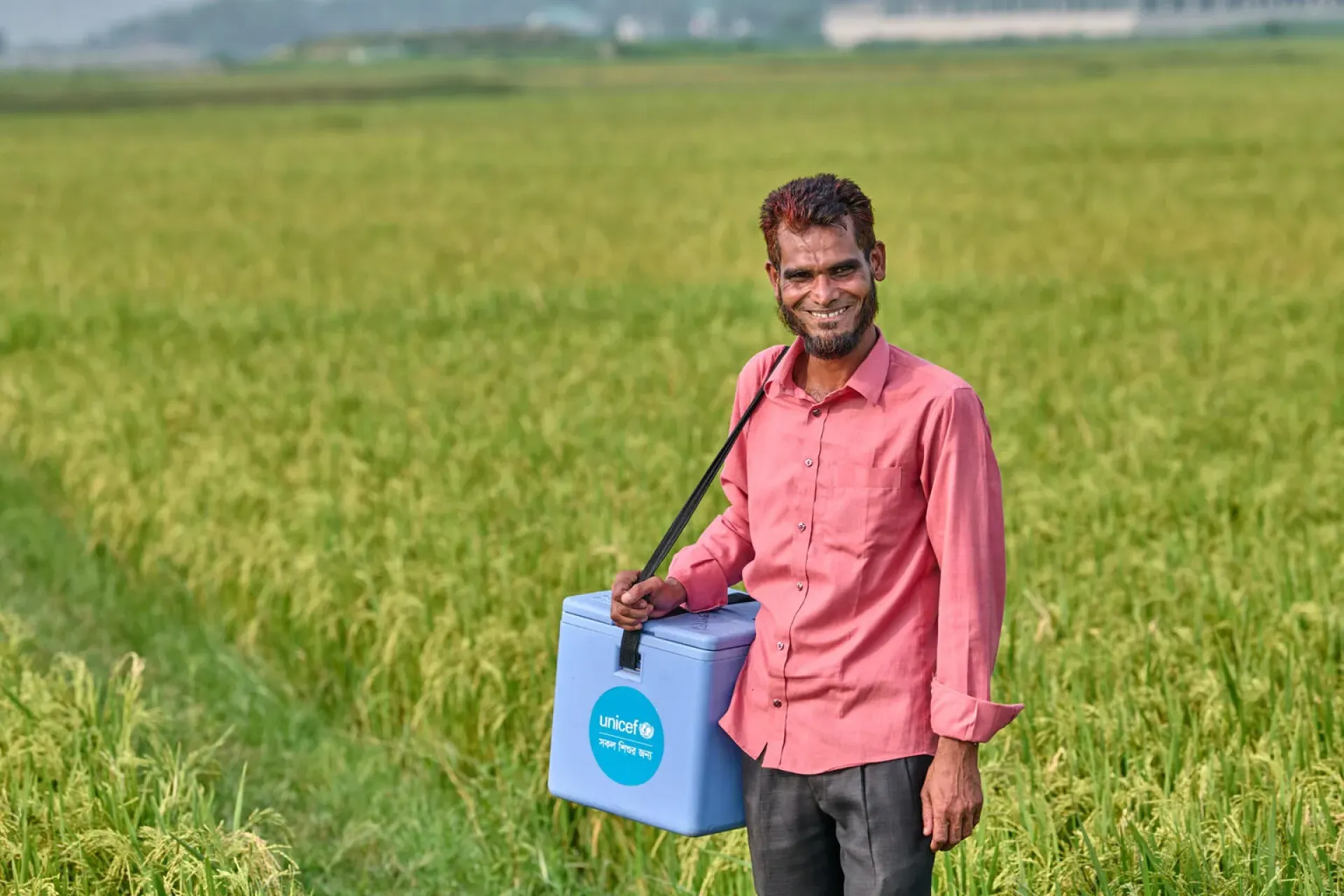
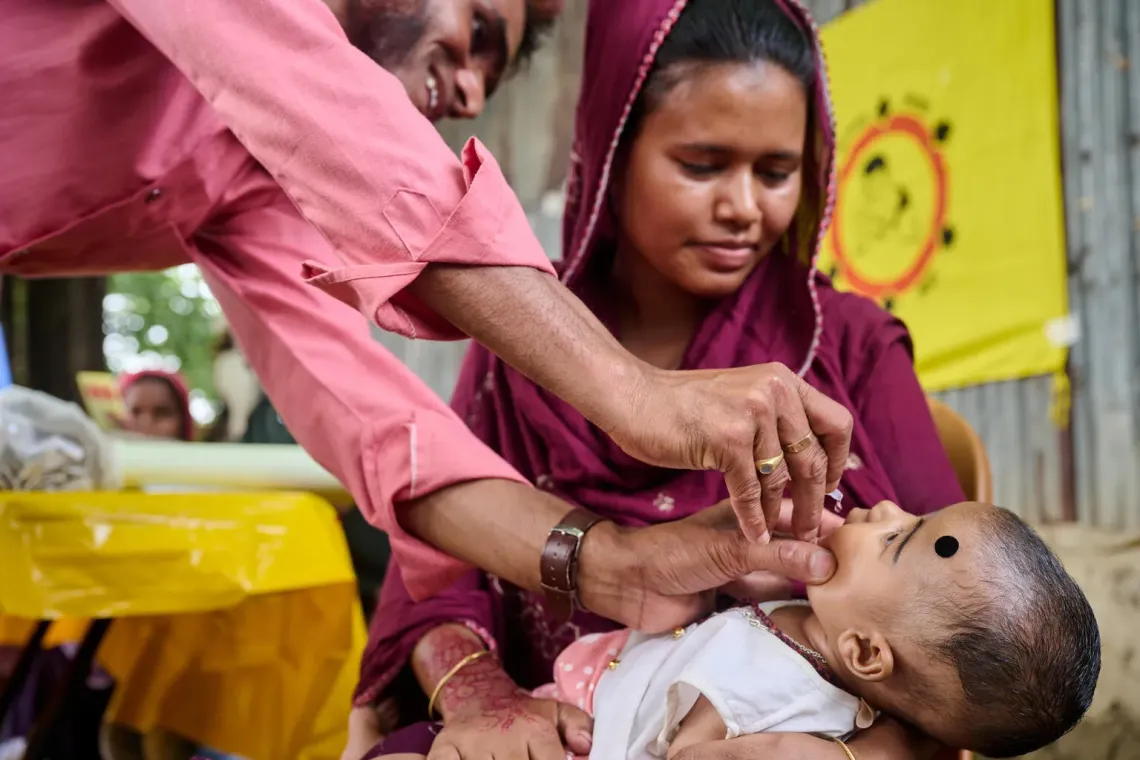
In Bangladesh, nearly 60 million doses of vaccines are required every year to immunize 4 million children. It is a humanitarian operation as immense and complex as it is routine and essential. Despite the best efforts of all involved, an estimated half a million children still miss out, while a fifth of vaccines are lost, damaged or wasted.
UNICEF-backed startup StaTwig has built a blockchain-based solution to close these gaps and prevent waste by tracking individual vials throughout the supply chain, from depot to health centre.
When crises strike, cash transfers are among the most effective humanitarian interventions, yet in low- and middle-income countries around one-in-four adults do not have a bank account. In Kenya, a group of UNICEF-supported startups have collaborated to create and test a blockchain-based humanitarian cash transfer system that is faster, more transparent, works without internet or smart phones and does not require people to have bank accounts.
Blockchain basics
These are just two examples of how blockchain can improve humanitarian action for children and are among the use cases making it an increasingly essential technology. But first – for the uninitiated – what is blockchain?
A blockchain is like an account book that everyone can look at but no one can tamper with. The information in this shared database is decentralized and immutable – meaning it cannot be altered by any individual without leaving a trace – and distributed, with identical copies of the data in machines all over world providing an extra layer of security and accountability.
Built with open-source software, blockchain offers humanitarian agencies like UNICEF a path to more transparent, accountable and efficient operations including financial transfers, impact and progress tracking, multi-stakeholder coordination, governance and online trust and security.
Emerging trends
At the Office of Innovation (OOI), we are prototyping and scaling use cases while assessing how advances in artificial intelligence (AI) might meaningfully intersect with our blockchain work.
Thanks to years of piloting and research, we are equipped to lean into a series of important recent trends with the potential to accelerate outcomes for children:
Stablecoins for financial transfers
Stablecoins are cryptocurrencies pegged to traditional currencies, meaning they avoid the dramatic value fluctuations that have made crypto notorious.
- UNICEF’s CryptoFund was launched in 2019 as the first vehicle in the United Nations to use digital assets. Today, it enables UNICEF to hold and deploy cryptocurrencies, including USDC stablecoins.
Public immutable ledgers
The unalterable characteristic of blockchains offers transparency to programme dashboards and impact tracking.
- OOI is testing whether Karma – a blockchain-based accountability platform used by tech builders – may be effective in reporting project updates and milestones.
Multi-stakeholder data sharing
Smart contracts – where software stored on the blockchain triggers an action automatically, without the need for human intermediaries, when specified conditions are met – can make workflows cheaper and more efficient, especially in supply chains and procurement.
- OOI and partner BX Smart Labs tested a smart contract to calculate credit scores for unbanked youth groups in Burundi, thereby increasing their access to loans
Privacy, trust and security
Approaches such as zero-knowledge proofs (e.g. age verification without sharing ID) or multi-party computation (e.g. training healthcare AI models on hospital data without revealing confidential patient records) enable privacy and security while verifying identities, credentials and provenance of information. This is especially relevant for protecting children from online threats.
- OOI’s data and trust cohort is creating a guardrail for trustworthy data ecosystems, equipping young people with the digital literacy to identify and defuse misinformation and disinformation.
Stakeholder engagement
UNICEF engages with thousands of stakeholders across 190+ countries, including institutional donors, governments, partner organizations, communities and young people themselves.
- Experiments such as Primero DAO are testing how decentralized governance principles can strengthen community participation.
Fund-disbursement mechanisms
Blockchain’s inherent speed, transparency and accountability make it an ideal technology for improving the distribution of funds, which is one of UNICEF’s core activities.
- OOI is exploring the use of Drips to provide sustainable funding for digital public goods (DPGs).
Investing, building, deploying
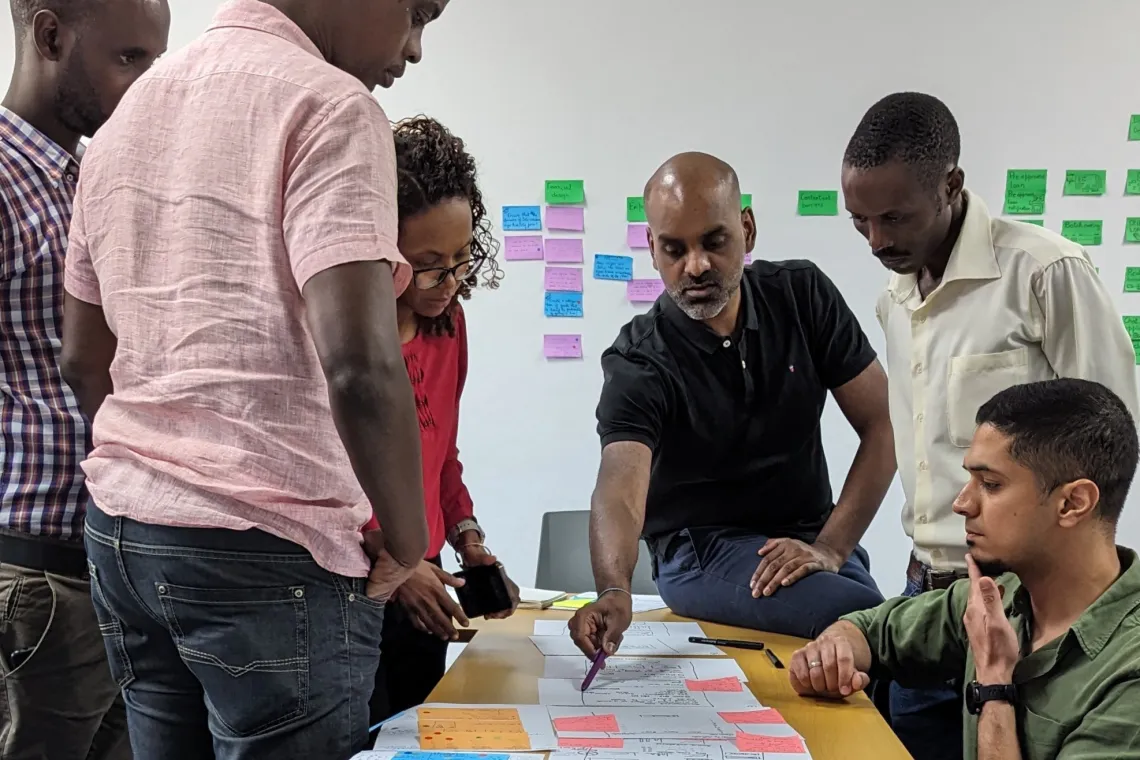
OOI invests in early-stage, open-source, frontier tech solutions that can benefit children. We provide grants and mentorship to blockchain startups in emerging markets building solutions aligned with the Sustainable Development Goals (SDGs) and support UNICEF country offices to deploy them.
We also collaborate with established Web3 players to design, develop and prototype solutions, and have an in-house full-stack team to build solutions ourselves.
We have invested in 23 blockchain solutions addressing financial inclusion, health, nutrition, climate, connectivity and education, and deployed solutions in Bangladesh, Burundi and Nepal.
As these pilots progress, we see increasing opportunities to combine individual solutions to create coherent, scalable systems.
The direction of travel is clear: from individual pilots towards platforms and ecosystem-level solutions, and from digital-only innovation towards real-world impact. We believe small pilots, creative combinations and openness to larger themes will enable us to harness blockchain’s potential across a diverse range of use-cases.