How blockchain can transform humanitarian cash transfers at scale
Three emerging market startups, supported by the UNICEF Venture Fund, tested a digital cash transfer system built for speed, transparency and accountability in crisis settings


Cash transfers have become a lifeline in humanitarian crises – UNICEF alone delivered US$688 million to 3.5 million households in 2024. But traditional systems are slow, opaque and expensive. Intermediaries take cuts. Tracking is difficult. And millions without bank accounts remain unreachable.
Three startups supported by UNICEF's Venture Fund believe blockchain technology can solve these problems. Their pilot in Nairobi, Kenya, proves it’s possible.

Blockchain infrastructure
Digital wallets
Digital assets to local currency conversion
Blockchain and digital asset-based humanitarian cash transfers
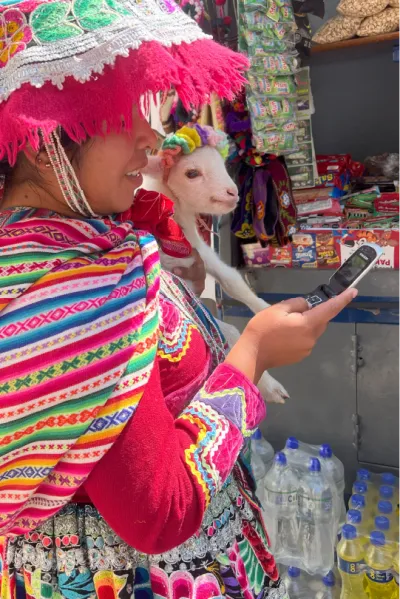
Three startups, one solution.
Through its Venture Fund, the UNICEF Office of Innovation (OOI) has developed a cohort of emerging-market startups from around the world, innovating, testing and iterating blockchain-based open-source solutions aimed at improving the lives of children and their communities.
Three of these startups have now created an integrated solution: Rumsan (Nepal) provided blockchain infrastructure, Xcapit (Argentina) built the digital wallet and Kotani Pay (Kenya) handled the conversion of digital assets to local currency mobile money. Together, they created AidLink, an end-to-end system for blockchain and digital asset-based humanitarian cash transfers.
A configurable prototype, AidLink supports cash transfers using digital assets. It can operate on basic phones and does not require internet connectivity because the digital wallet that receives the digital assets, and the exchange service that turns them into local currency, are SMS-based.
‘Clear and meaningful purpose’
By complementing traditional cash – in the form of fiat currency – with digital assets can enable faster, cheaper, more transparent, accountable and inclusive transfers. “AidLink has a clear and meaningful purpose: simplifying and unifying aid distribution to ensure transparency, accountability and operational efficiency,” said Jose Trajtenberg, CEO and Co-Founder of Xcapit.
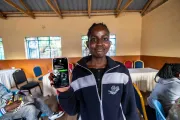
AidLink was trialed with a group of 49 participants in Nairobi, Kenya, in partnership with Advantage Africa, a local NGO working to relieve poverty.
Led and managed by the three startups, the pilot tested uploading recipient information to trigger the automatic creation of digital wallets which received digital assets in the form of , a cryptocurrency pegged to the US dollar. The USDC was then exchanged for Kenyan shillings and transferred to participants’ M-Pesa mobile money accounts via SMS commands.
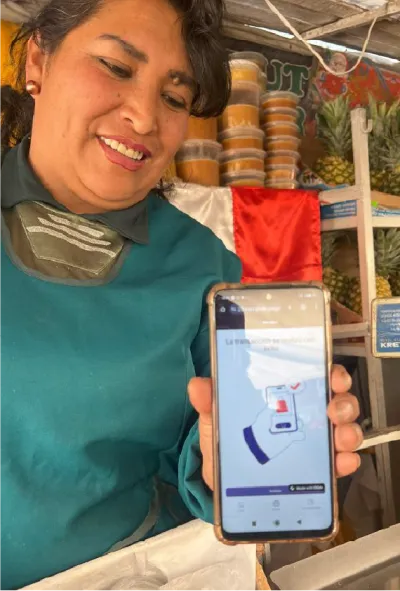
The Nairobi pilot proved the concept works: all 49 participants successfully received and converted funds using only basic phones and SMS. For OOI, this isn’t just about showing promise – it’s about demonstrating that humanitarian cash transfers can evolve to meet the speed, transparency and inclusion that modern crises demand.
The startups now aim to develop AidLink into a scalable, modular product that can integrate with existing humanitarian and government systems – joining a growing ecosystem of digital public goods built for crisis response.






“We see strong potential for AidLink to evolve into a standalone product that is modular and easily integrated with other humanitarian and government systems,”