Exploring sustainable funding for digital public goods
A blockchain-based app offers an innovative, sustainable potential solution to the problem of stable funding for open-source software and digital public goods
Since joining the UNICEF Office of Innovation (OOI) in 2021, I have seen numerous brilliant open-source initiatives seeded, but despite their potential to drive social change not all of them go on to become widely adopted digital public goods (DPGs).
One of the big reasons for this is a simple one: DPGs are not a fast track to financial returns for traditional technology investors because they are rooted in free open-source software and focused on social impact, not the bottom line. As a result, the market is failing to value the time and energy of innovative technologists behind DPGs.
OOI meets real world challenges with innovative solutions and, through its Venture Fund, has years of experience creating, deploying, maintaining and funding open-source digital solutions that benefit children and their communities. It is a member of the Digital Public Goods Alliance (DPGA) and is the only part of the UN family that can receive donations and make investments using digital assets, through its groundbreaking CryptoFund.
As Blockchain Lead, I have constant exposure to the Web3 ecosystem of open code, open data and open governance, and to emerging innovative funding mechanisms for DPGs. During blockchain builder conferences – including, most recently, Devconnect in Buenos Aires – I have met, discussed with and learnt from the teams working to build and grow these novel solutions.
Scanning the horizon for new mechanisms, the Venture Fund is piloting Drips, a decentralized app built on a blockchain platform that enables holders of digital assets to support open-source projects of their choice.
The Drips protocol allows donated funds to be shared among the software and coders behind the DPG, through its built-in dependency splitting option, creating an interconnected financial network for open-source software creators and supporters.

Reliable funding, drip by drip
The Venture Fund has compiled a Drip List of five UNICEF-powered DPGs with proven real-world impact, making them eligible for blockchain-based sustainable funding that is as transparent as their source code.
The DPGS on the UNICEF Drip List are:
- Bebbo: parenting app with locally adapted tips and support for new parents, used by more than 1.6 million families in 17 countries
- HOPE: UNICEF’s bespoke information management system for humanitarian cash transfers, reaching 25 million people in 33 countries
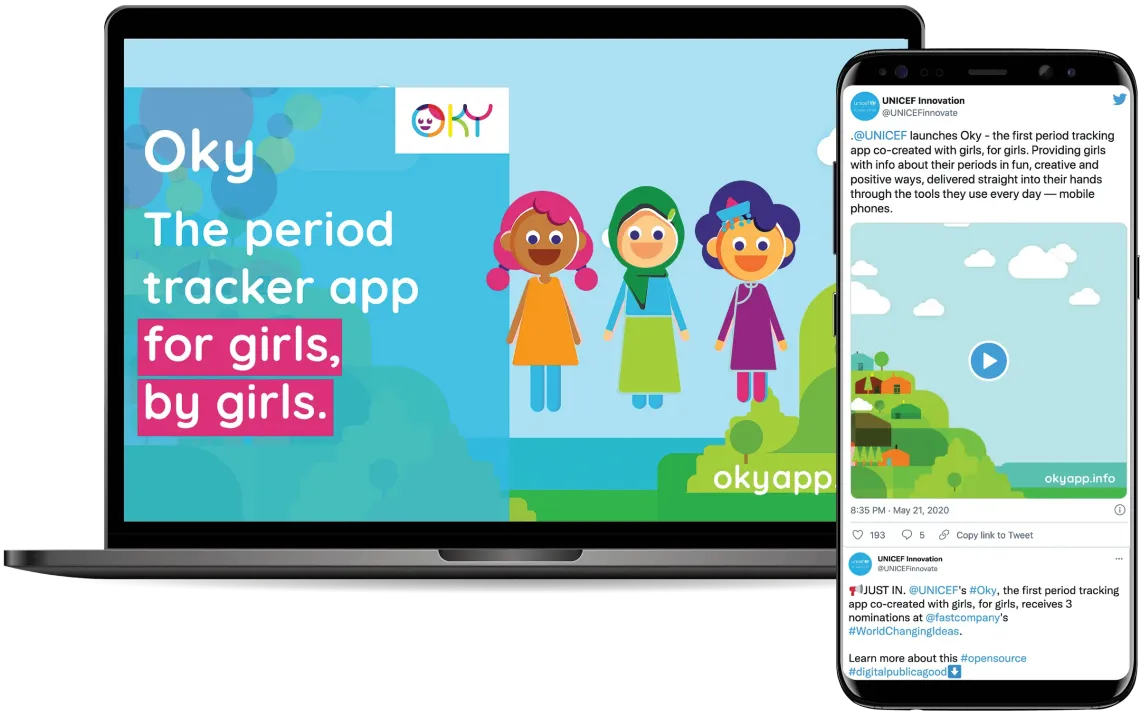
- Oky: period-tracking app created for and with girls, providing advice on sexual and reproductive health and rights to over 1 million girls in 12 countries
- Primero: UNICEF’s digital case management and incident monitoring tool for child protection, with 20,000 users tracking 2 million cases in 70 countries
- RapidPro: platform to design, build, pilot and scale mobile messaging interventions, with over 8 billion messages exchanged in 131 countries
Holders of digital assets on the Ethereum blockchain can support these DPGs by transferring funds to the UNICEF Drip List to be split equally among the five proven solutions.
With Drips, recipients need not have a cryptocurrency wallet to receive donations, which are securely stored in a smart contract connected to each initiative’s unique GitHub repository where its open-source code is hosted.
Piloting with purpose
The pilot will help answer a series of questions to clarify the potential of Drips to fund DPGs:
- Is the emerging, decentralized Web3 ecosystem willing to fund DPGs that have a proven track record of real-world impact?
- If so, who are the donors, how much are they willing to donate and how often?
- Will the DPGs attract reliable and sustainable funding organically over time?
The pilot will also inform UNICEF’s ongoing exploration of ways to engage effectively with the Web3 world for broader fundraising purposes.
If the potential of Drips is realized in the pilot, this funding mechanism could be used for a far wider range of UNICEF-supported DPGs and could even contribute to the development of a DPG marketplace with inbuilt sustainable funding.
This is the ultimate aim: reliable, stable financing for open-source software for social good, developed and deployed in emerging markets to solve identified challenges for children and their communities.