From cash transfers to digital disbursement
Blockchain technology can increase the efficiency, inclusion and transparency of cash assistance

When disaster strikes, UNICEF and other aid agencies have long provided affected populations with life-saving emergency supplies and cash assistance.
In recent years, the use of humanitarian cash transfers has increased dramatically. UNICEF cash transfers worth $688 million reached an estimated 3.5 million directly affected households across 48 countries in 2024.
The integration of innovative blockchain technology could significantly enhance both the impact and reach of cash transfers leading to:
- increased efficiency – automation reduces operational costs and speeds up the delivery of assistance, cutting transaction times from days to minutes.
- expanded inclusion – digital wallets reach those who are excluded from traditional banking and financial systems, and provide secure, accessible cash assistance even to those without smartphones or internet access.
- enhanced transparency – end-to-end visibility and real-time reconciliation build donor confidence and ensure aid reaches the intended recipients.
Blockchain’s potential is game changing, but its implementation is complex, involving careful consideration of the rights, data privacy and security concerns of affected populations, while overcoming technological literacy gaps.
Building the blocks
The UNICEF Venture Fund is supporting startups in developing countries to build an accessible end-to-end platform for aid disbursement at scale, providing automated transaction management and standardized protocols for inclusion, transparency, data sharing and interoperability across systems.
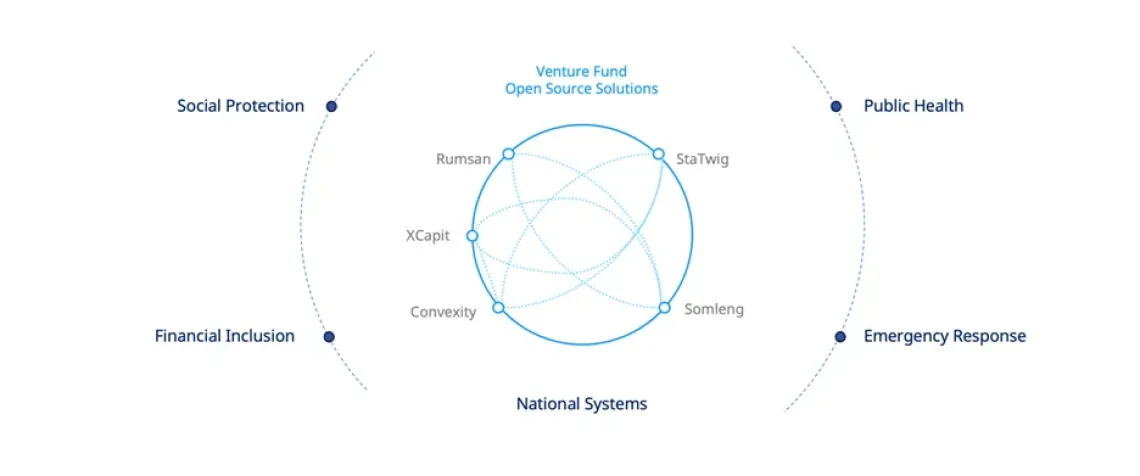
Venture Fund investment cohorts (in 2019, 2021 and 2022), country office pilots and UNICEF’s CryptoFund have led to an emerging suite of Venture Fund backed open source blockchain solutions applicable to cash transfers.
- StaTwig has built a blockchain-based system for end-to-end supply chain transparency. The system is already being implemented in Bangladesh for vaccine delivery, creating system-wide efficiencies.
- Convexity developed the digital cash and voucher platform CHATS (Convexity Humanitarian Aid Transfer System) which uses a blockchain-based smart contract to allow verified aid recipients to have a digital wallet, even without access to a smartphone or the internet. In three pilot projects, CHATS reduced costs by 20 per cent.
- Rumsan’s cash and voucher platform Rahat uses blockchain-based real-time fund tracking to increase transparency and accountability. A pilot with UNICEF Nepal and a subsequent third-party evaluation showed that Rahat enables faster disbursement.
- eSusFarm has developed a parametric insurance model for smallholder farmers using blockchain to automate fast and transparent payouts when climate disasters strike. The solution is an important step towards real-time reconciliation and full transparency.
- Kotani Pay’s cryptocurrency to local currency exchange platform and Xcapit’s Web3 phone wallet both function without the need for internet-enabled smartphones making digital financial services more accessible and increasing individual and community level inclusion.
- Somleng has developed a low-cost Interactive Voice Response (IVR) and SMS platform for communication and timely information delivery especially in areas with low literacy and limited internet connectivity. Rumsan integrated their platform with this tool to communicate with beneficiaries for the UNICEF Nepal pilot.
Mapping the landscape
In 2024, the Venture Fund conducted a comprehensive landscape analysis to develop a country matrix for testing and deploying blockchain and digital asset-based aid assistance.
The analysis showed that countries with high currency volatility, favourable crypto regulations, where people already use digital financial transaction tools and where a high proportion of the population is unbanked are most likely to embrace blockchain-based digital cash transfers.
Taking the next steps
Blockchain technology has immense potential to improve emergency response, for donors, humanitarian agencies and affected populations, but there is still much to do. Looking ahead, the Venture Fund is looking to:
- explore the use of digital assets to transfer cash assistance. Humanitarian cash transfer pilots will be implemented to assess the feasibility of public blockchain technology, wallet infrastructure and mechanisms for converting crypto to local currency.
- prototype an end-to-end system bringing together digital public goods developed by Venture Fund portfolio companies. For example, Rumsan’s management and payment module might be combined with Xcapit’s low-tech digital wallet and Kotani Pay’s crypto-to-paper currency exchange.
- explore blockchain for broader social protection programmes and anticipatory action, such as using blockchain for climate risk management and automatic cash transfers as preparedness mechanism