New blockchain cohort backs accountable aid and fair credit
Building on a decade of investment, UNICEF funds three blockchain-based solutions from Colombia, India and Kenya for cash transfers, impact verification and financial inclusion


UNICEF Blockchain Ventures backs digital public goods solutions that keep humanitarian cash transfers private, let communities verify development work and turn women’s loan repayments into credit they own.
Each solution receives up to US$100,000 investment – paid in bitcoin, ether or USD Coin cryptocurrencies – alongside technical support and mentoring to test, strengthen and validate it for scale.
“UNICEF has invested in blockchain technology for the past decade. Building on our learning, Blockchain Ventures seeks to systematically invest in core infrastructure that strengthens the technology’s ability to solve real world problems,” said Sanna Bedi, Innovation Specialist at the UNICEF Office of Innovation. “Through open-source, interoperable solutions, we can harness blockchain’s transparency and speed while putting safety, privacy and inclusion first.”
The solutions
The Blockchain Ventures call for ready-to-deploy solutions received 497 expressions of interest from 70 countries and led to 30 submissions from 19 countries, 55 per cent of which were from woman-led companies. The three selected for the first cohort are:
The solutions
Galeon’s privacy infrastructure for humanitarian cash transfers on public blockchains keeps recipients’ identities shielded from public view while transactions remain auditable by authorized parties. This solution addresses the barrier that has kept humanitarian organizations from using public blockchains for cash transfers, where every payment to a vulnerable recipient becomes permanently visible to anyone.
Atlantis' platform lets development organisations prove funded work happened by placing geo-tagged records on a public blockchain. This solution enables communities to quickly and simply attest whether development work was completed, increasing accountability to affected populations.
Cladfy’s blockchain-enabled digital identity system provides low-income women with a verifiable credit history and loan record that is owned by them, rather than by lenders. This solution makes it easier for recipients to access financial support, and for lenders to audit disbursements.
These solutions are designed and built in the markets where the need is greatest – addressing structural barriers with locally grounded technology. Through this Blockchain Ventures cohort, UNICEF and partners are working with emerging economy entrepreneurs to de-risk future investment by directing catalytic capital towards locally built innovation.
A proven portfolio
Since 2014, the UNICEF Venture Fund has invested in 102 early-stage startups across emerging markets, providing equity-free capital in both traditional fiat and cryptocurrency. These ventures have reached over 114 million people and raised 12.4 times the initial capital invested. Close to half of the startups are woman-led.
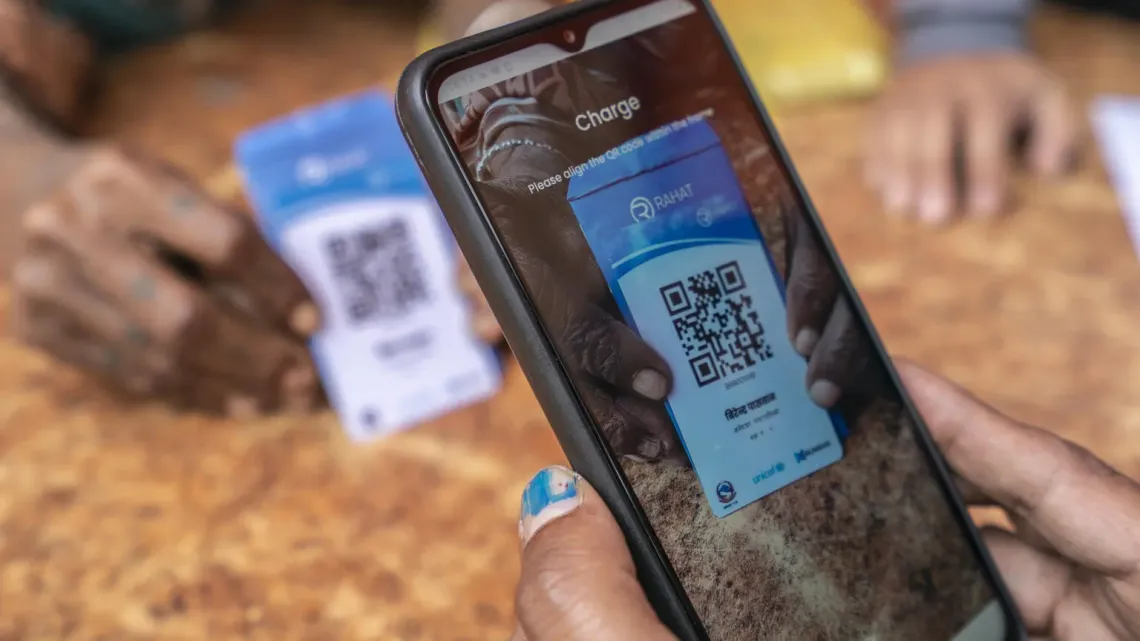
The Venture Fund portfolio already includes over 25 blockchain solutions addressing financial inclusion, health, nutrition, climate, connectivity and education, offering a path to more transparent, accountable and efficient operations, with proven solutions deployed in Bangladesh, Burundi, Nepal and elsewhere.
Supported by partners Ethereum Foundation and GSR Foundation, Blockchain Ventures is a five-year (2026–2031) focus on the potential of blockchain to power possibility-driven innovation through a series of tailored annual calls for funding applications.
Blockchain Ventures sits within the Venture Fund’s multi-year investment strategy, also including Climate Ventures and Femtech Ventures.