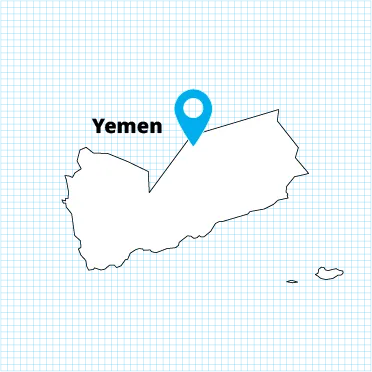
Innovation Across Borders: Yemen
Joseph Agbamoro, UNICEF Yemen, tells us how artificial intelligence is improving accountability in cash transfers
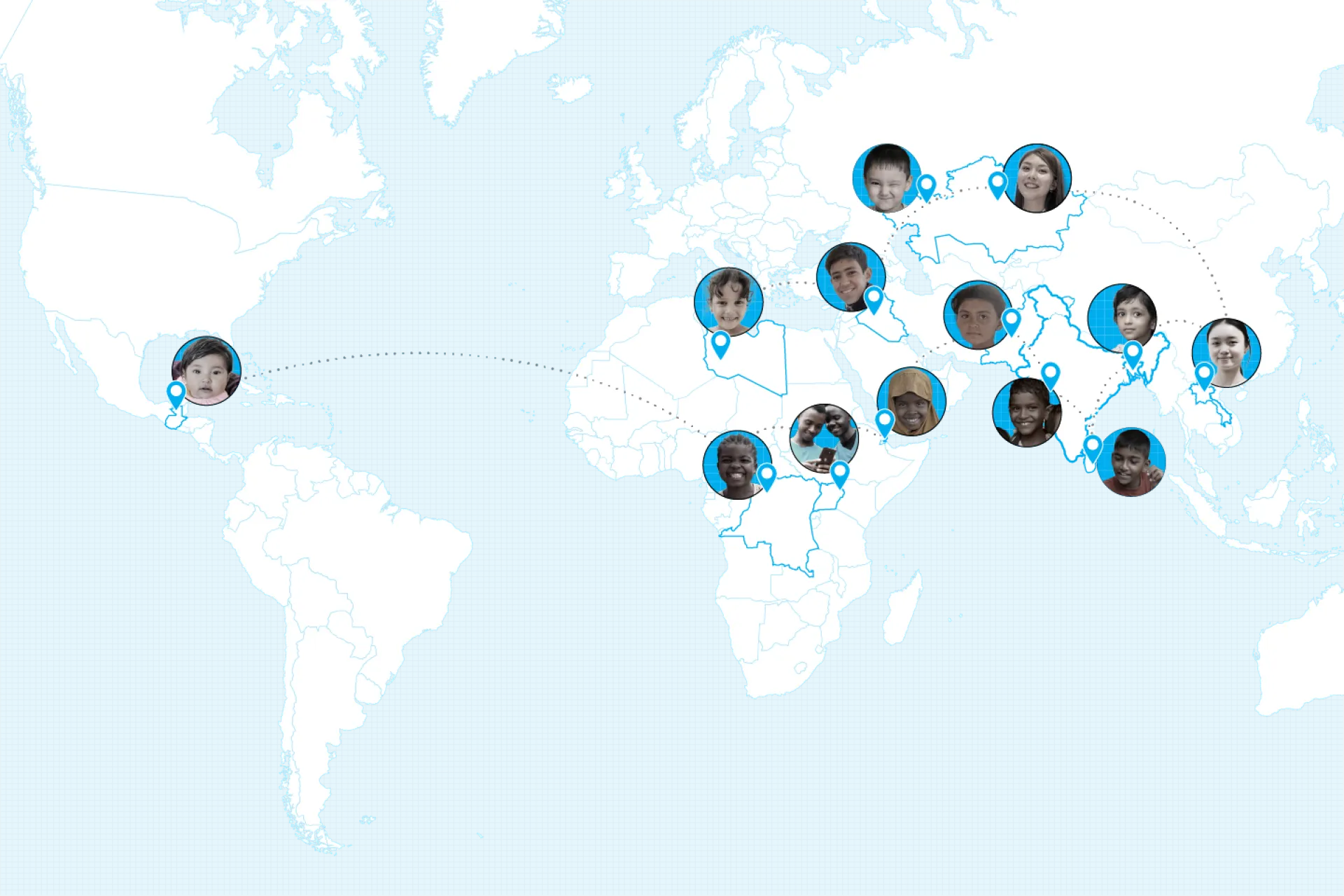
Across 190 countries and territories, UNICEF colleagues and partners are on the frontlines of the greatest challenges affecting the lives of children and young people. Innovation Across Borders highlights the experiences, successes and learnings of innovation champions, committed to making positive social impact.

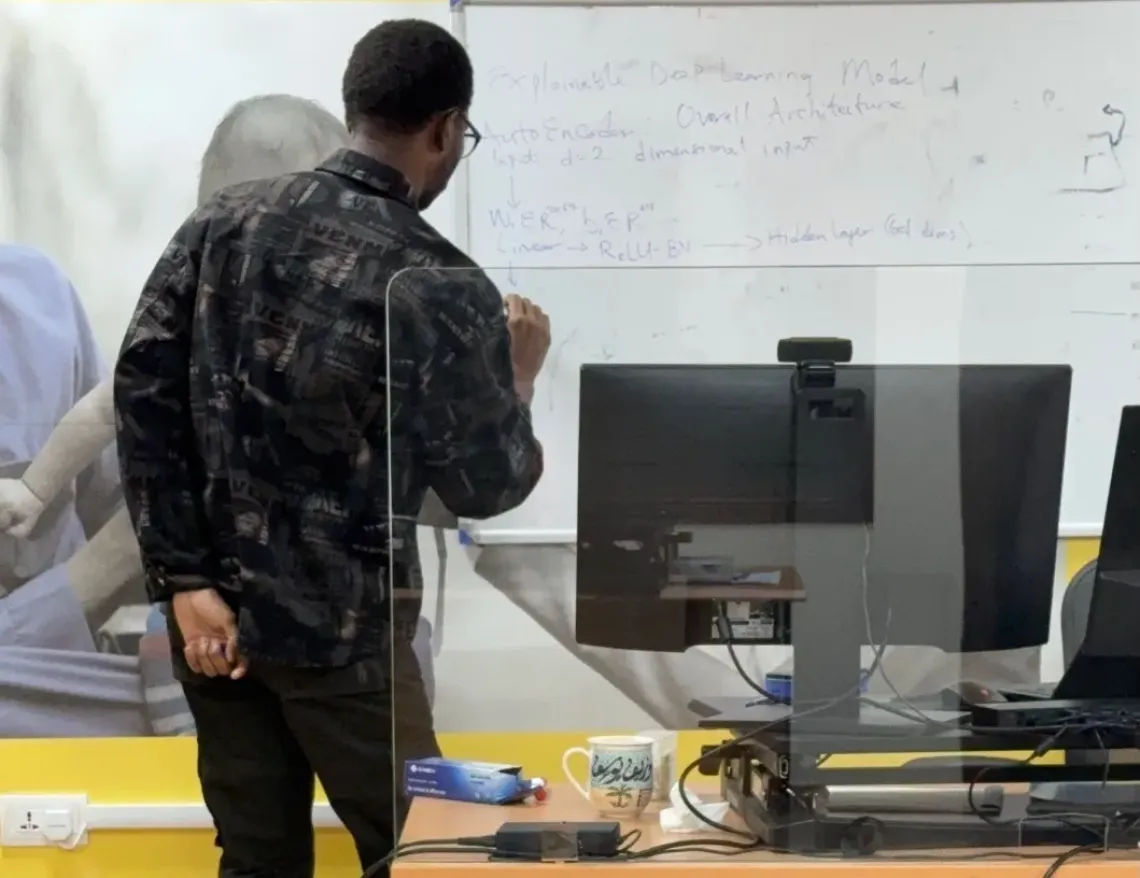
Joseph Agbamoro, AI technical specialist, UNICEF Yemen
Tell us about the innovation you are working on.
Yemen’s cash transfer programme supports over 9.6 million people – that’s roughly a third of the population – and I have been working on an anomaly detection system to help the team detect unusual payment patterns and strengthen accountability.
What is the role of AI in this initiative? What does it enable that could not have been done otherwise?
AI moves us from reactive to real-time review. Previously, checks depended on manual work or rules based on risks we already knew, which meant the system could flag obvious issues but miss patterns. AI allows us to look at payments at the individual level.
For example, it can rapidly check whether a payment amount is unusual or the frequency has changed, whether the Arabic payment description makes sense, whether the amount matches the stated service and regional rate, or whether an individual is using different names or IDs.
This is practically impossible to do manually at scale, especially within regular weekly payment windows.
What risks must be mitigated in using this technology, and how do you do that?
The biggest risk is treating AI as if it is always right. We do not do that. The AI flags records for human review, but it does not block, approve or change any payment.
Every flagged case is reviewed by a data analyst who can escalate it for correction or override it. They can also leave a note, so there is an audit trail that helps us improve the system over time.
We also focus strongly on explainability, meaning that for every anomaly, the system gives a clear reason that can be traced back to the database. This means data analysts can see exactly why the AI flagged the record.

What has been the impact of your innovation on the ground?
Efficiency and accountability. A review process that used to take a full working day can be done in 15 minutes and, most importantly, the review happens before the payment is made.
For a programme disbursing very large amounts – over a billion dollars to date this year – it is a meaningful improvement that strengthens data integrity, reduces errors and creates a record of why certain cases were flagged, corrected or approved.








What challenges have you encountered in developing and implementing this initiative?
Useful AI is built on good data and doing that foundational work took some time. Before building the AI, we had to document the existing data systems, organize the payment information and create the right database structure.
Another challenge was the complexity of the Arabic language. Yemeni names can have many components, and spelling variations or missing diacritics can make matching difficult. Off-the-shelf tools were inadequate for our context, so we had to build and adapt local models that could better understand the payment descriptions and naming patterns.
What have been the high points?
The high point for me was seeing the system produce explanations that matched what we could verify in the database. That was important because it showed that the AI was not just producing a mysterious score but was helping analysts see something specific and traceable.
Another high point was seeing the review time drop significantly. When you know that something that used to take hours can now be done in minutes – without removing human judgment – you immediately see the value.
What was your experience of collaborating with partners?
The work required close collaboration with programme colleagues in Amman, Jordan, where I am based, with the Management Information Systems team in the Yemen service centre in Amman, with colleagues in Yemen and at the UNICEF Venture Fund.
That collaboration was very important because the technology had to fit the way the programme actually works. The system was not designed in isolation: anomaly metrics came from real issues the team had observed in the payment process.
AI is only useful when it supports the people responsible for making decisions.

What have been your biggest lessons learned?
My biggest lesson is that AI projects are data projects. The AI model is only one part of the work. You need documentation, data governance, human review processes and clear accountability.
I also learned that explainability is not optional in humanitarian settings. If a system flags a payment, people need to understand why. Otherwise, it becomes difficult to trust and difficult to govern.
A Social Welfare Fund worker (left) clarifies the payment process to Mokhtar (right). Mokhtar's family is one of 1,967 households receiving support through the Cash Plus component within the ECHO-supported education programme in Khawkha, Hudaydah in 2026. Mokhtar says, "this support has will help us manage buying the most important items for our children."
What are your hopes for the future of this innovation, in Yemen and beyond?
In Yemen, I hope the system continues to evolve and becomes even more integrated into payment operations. We are also exploring how AI could support the complaint and feedback mechanism, especially by helping log, classify and route complaints more efficiently while maintaining human oversight for sensitive cases.
Beyond Yemen, I hope this work can offer a practical template for other large-scale cash transfer programmes. The lesson is not that every office should simply copy and paste the model, but that AI can strengthen transparency, speed and accountability.
“The happiest moment in my life is when I used to receive this money transfer continuously every month, but after the war, I started receiving it infrequently.” Said Saleh Ali.
What message around innovation do you have for colleagues and partners around the world?
Innovation should not start with technology. It should start with a real operational problem. In our context, we wanted to explore ways to review complex payments faster, earlier and more transparently. The AI solution helped because it was a response to that problem.
My message is that innovation works best when it supports people, improves accountability and leaves room for human judgment. The goal is not to replace decision-makers but to give them better tools.
Joseph Agbamoro is AI technical specialist at UNICEF Yemen