First-Ever Climate Report by UNICEF and Government of Indonesia Calls for Focused Action to Protect Children

- English
- Bahasa Indonesia
Jakarta, 8 August 2024 – UNICEF and the Government of Indonesia released a groundbreaking report that examines the increasingly severe impacts of climate change on children in Indonesia and underscores the urgent need for climate policies and programmes to focus on children.
The Climate Landscape Analysis for Children report, developed by the Ministry of Environment and Forestry in collaboration with UNICEF, reveals significant gaps, finding that many social sector policies, laws, regulations, and plans overlook the impact of climate change and do not include child-focused actions to address climate change.
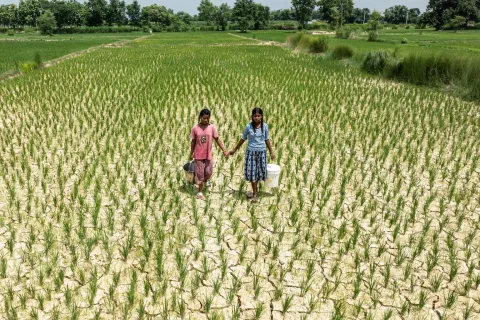
The report outlines why it is urgent to protect children from the impact of increasingly frequent disruptions caused by extreme weather events, including droughts and flooding, and from long-term climatic shifts such as rising temperatures and sea levels.
These disruptions affect critical social services on which children depend, such as education, health and water, sanitation and hygiene. They reduce children’s access to nutritious food, which can contribute to the challenge of malnutrition in the country, and also contribute to the spread of waterborne and vector-borne diseases.
The new report also outlines the significant economic cost of climate change, forecasting a potential reduction of Indonesia’s GDP by up to 3.45% by 2050, with a disproportionate impact on the poorest communities.
Indonesia ranks 46th out of 163 countries on The Children’s Climate Risk Index issued by UNICEF, indicating children’s high vulnerability to environmental stresses and extreme weather events. A significant majority of children in Indonesia are exposed to air pollution, while an estimated 28 million to coastal flooding, and 15 million to heat waves.
“The right of every child to grow up in a healthy environment is increasingly threatened by the severe impacts of climate change across the world and here in Indonesia,” said Maniza Zaman, UNICEF Indonesia Representative. “It is imperative to educate children about climate change, to engage them in creating solutions and to put them at the centre of all climate action.”
The report proposes six strategies to address children’s needs in climate-related policies and programmes:
- Integrate children's rights in climate policies, programmes and funding decisions.
- Improve collaboration among the government, civil society, private sector and communities including children, to address climate impact in policies and programmes related to climate, environment and energy issues as well as the social sector.
- Generate knowledge and evidence about how climate change affects children's health and well-being.
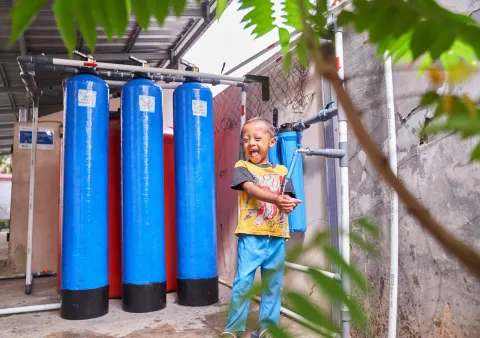
- Increase the resilience of social services and facilities to withstand climate disruptions and continue serving children and families.
- Ensure children and young people are educated about climate change and create opportunities for them to get involved in climate and environmental actions.
- Improve climate data collection and early warning systems.
Media contacts
About UNICEF
UNICEF promotes the rights and wellbeing of every child, in everything we do. Together with our partners, we work in 190 countries and territories to translate that commitment into practical action, focusing special effort on reaching the most vulnerable and excluded children, to the benefit of all children, everywhere.
For more information about UNICEF and its work for children, visit www.unicef.org.