Health workers in rural Assam are braving the odds to inoculate children
See how health workers cover unvaccinated or partially vaccinated children against vaccine-preventable diseases.
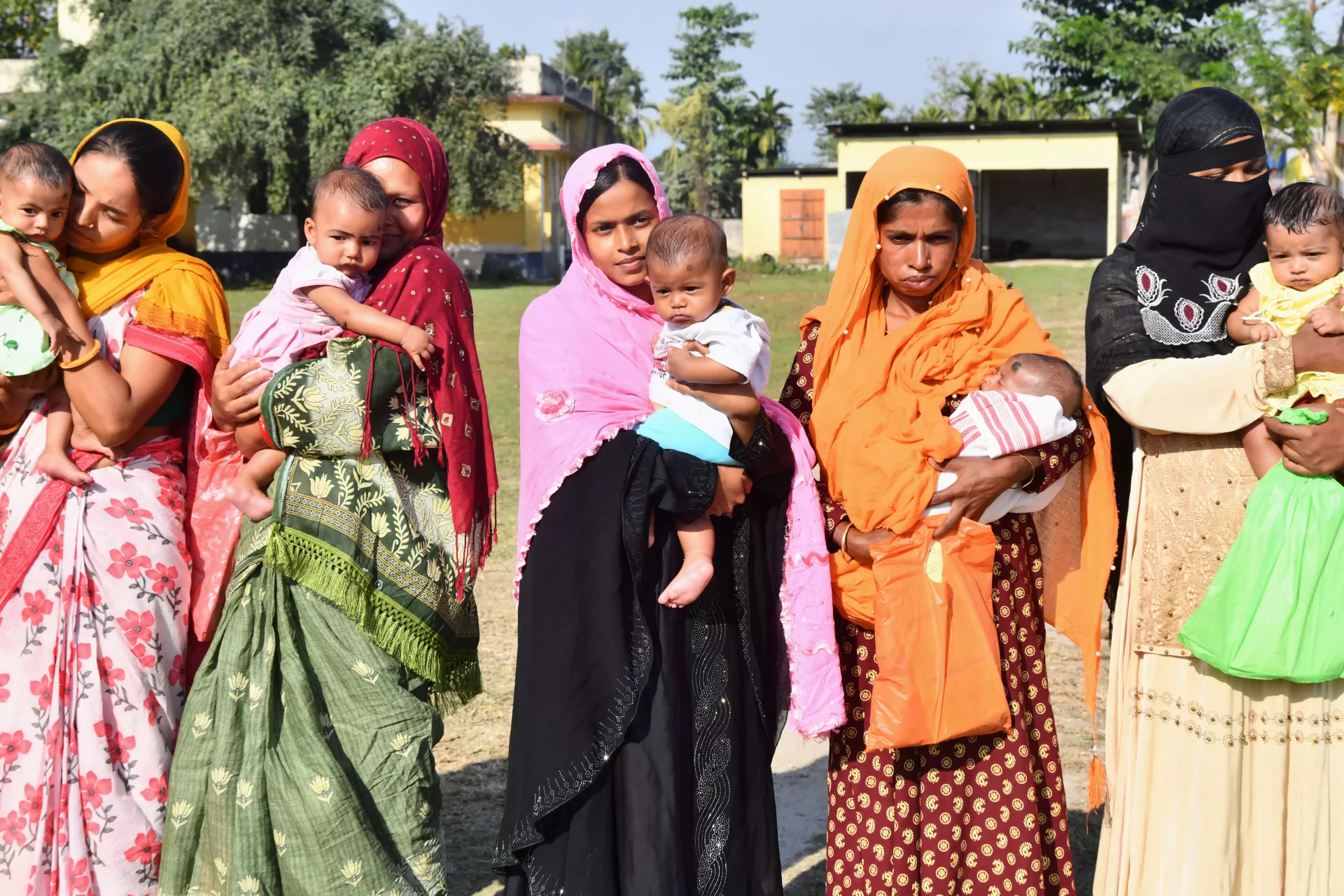
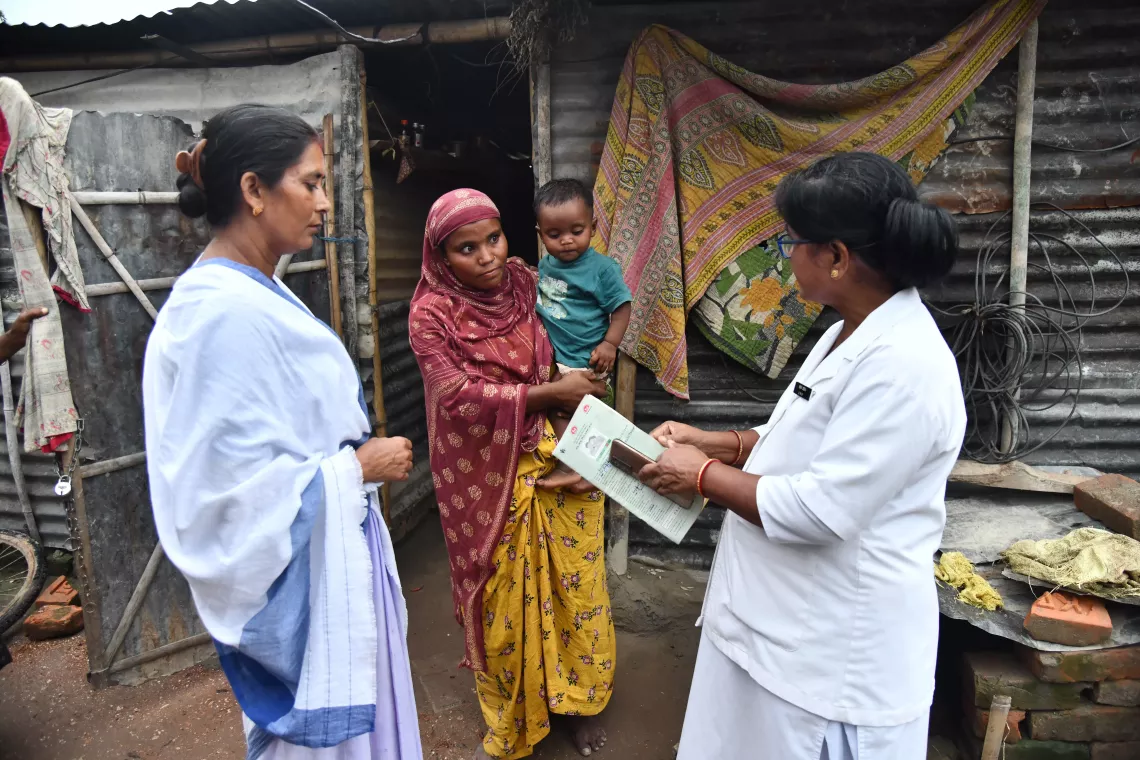
Assam: For 23-year-old Reshmina Khatun, a front yard filled with heaps of freshly minted bricks, a temporary tin-walled hut, and a shared tubewell among 35 households were not the perfect settings to welcome her first baby.
In August this year, Reshmina and her husband Izajul Haque, who hail from a remote village in Dhubri district, migrated to Darrang district, about 300 km away. Like many others from her village, she and her husband are migrant workers engaged in various brick kiln industries across the district.
Reshmina stopped going to work in her advanced pregnancy stage. In 2023 this year, Reshmina delivered a healthy baby in the nearby Jonaram Chowka Model Hospital, thanks to the health workers of Jaljali Block Public Health Centre (BPHC) that supported Reshmina through the delivery—right from providing her with the required vaccines, nutrition, and guidance through her pregnancy. Her child received the birth dose in the Jaljali Public Health Centre in no time.
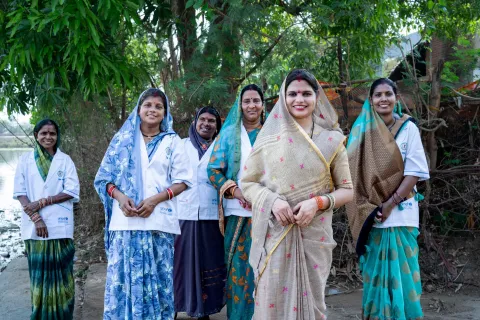
“I am from Gauripur (Dhubri district), and I have come here to work. Meanwhile, I gave birth to a healthy girl child with the help of grassroots health workers, Accredited Social Health Activist (ASHA) and Auxiliary Nursing Midwifery (ANM) sisters here. I have not missed any vaccines so far. The ASHA sisters come here every day to check on my health. I am doing okay,” said Reshmina, the new mother.
However, the scenario was not so hopeful for the state of Assam until a few years ago. Assam is one of the most climate-vulnerable states in India. The floods that occur every year inundate over 60 per cent of the state’s landmass.
Massive erosion leaves riverine communities homeless and forces them to migrate to other places. A significant chunk of the population, mostly from districts like Dhubri, Kokrajhar, Barpeta, etc., keeps migrating to districts like Darrang, Kamrup, etc., in search of livelihood.
In KDT brick industries, which fall under the Jaljali BPHC, around 120 migrant families work as labourers in the 12 brick kiln factories under its jurisdiction.
Out of which, the number of children is 157. Notably, in four blocks of Sipajhar, Kharupetia, Jaljali, and Patharighat of Darrang district, thousands of migrant labourers are engaged in brick kilns. Keeping track of the exact number of children living in these families and their vaccination status has remained a challenge.
The number fluctuates as they keep moving from one place to another with their parents. Thus, overall child health and wellbeing remain a significant concern due to poor care-seeking behaviours and low uptake of health services, including age-appropriate vaccination.
While the situation had been improving over the last few years due to government efforts, the COVID-19 pandemic further disrupted healthcare services.
However, a special immunization campaign launched by the Ministry of Health & Family Welfare of the Indian government not only brought the unvaccinated or partially vaccinated children into focus but also successfully vaccinated them.
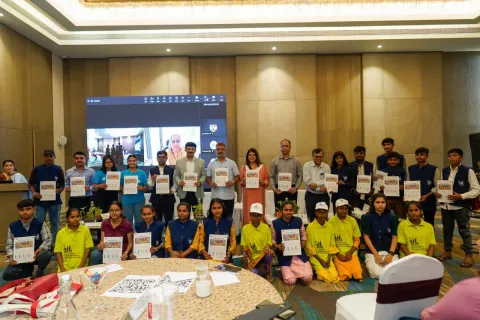
The campaign, titled Intensified Mission Indradhanush (IMI) 5.0, has helped the government cover unvaccinated or partially vaccinated children against vaccine-preventable diseases.
The campaign, titled Intensified Mission Indradhanush (IMI) 5.0, aims to enhance immunisation coverage for all vaccines provided under the Universal Immunisation Programme (UIP) as per the National Immunisation Schedule (NIS).
Special focus is on improvement of Measles and Rubella vaccination coverage with the aim of Measles & Rubella elimination by 2023, and use of the U-WIN digital platform for Routine Immunisation in pilot mode across all districts in the country.
Malcolm Momin, a health educator posted in the Jaljali Block Public Health Centre where the KDT Brick Kiln Industry is located, has stated that right from creating awareness among the community to the district administration instructing the brick kiln owners to cooperate with the vaccination drives for COVID-19 and routine immunization, no stone is left unturned to link all children to vaccination services and special immunization drives.
“As per the guidance of the District Commissioner, the Labour department has instructed the managers and owners of the brick kilns to help on-ground health workers with vaccination drives.
Whenever there is a vaccination drive under IMI, SNID, or NID, the managers have to collect the list of beneficiaries and make sure they are available on the day of a vaccination drive.”
Momin also supports awareness generation against COVID-19 vaccination and identifies eligible people for vaccination during his community visits.
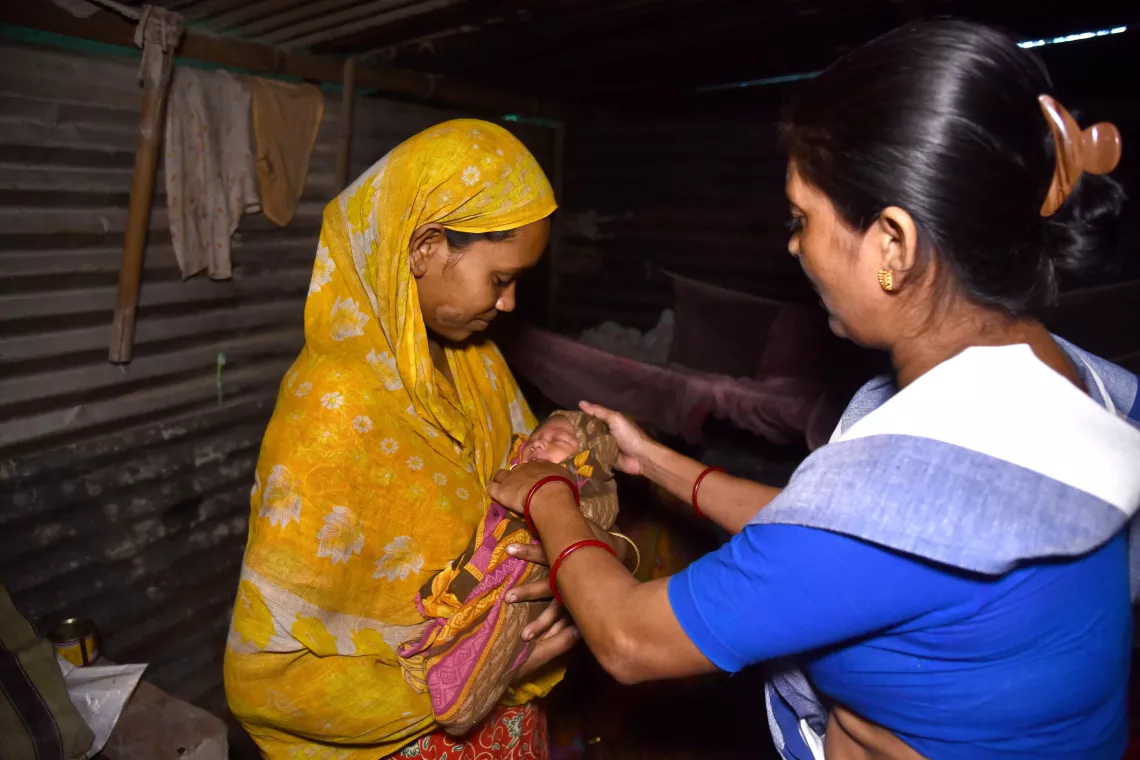
“Migrant workers often lack knowledge about vaccination benefits. We are educating them on this topic. The Labour Department requires all brick kiln workers to bring their mother and Child Protection (MCP) cards and ID, such as Aadhar and voter ID cards. The government has launched the U-Win portal, where we assist health workers in updating beneficiary details,” Momin said.
Born at home, eight-month-old Rajibul Islam had not even received the birth dose vaccines. Rajibul’s parents were not aware of the importance of the age-appropriate vaccinations that keep infants safe against several life-threatening diseases. Rajibul’s parents, Reshmi (mother) and Rafiqul Islam, hail from Dhubri district and are migrant workers in the KDT brick kilns.
The couple and the newborn could not be traced by the local health workers in Dhubri district as they migrated as soon as the baby was born. They have been working at the KDT brick kilns for the last five years.
Every year they arrive at the KDT brick kilns site during August-September and continue to work there till March next year, when the season of brick kilns ends. During the head count survey for IMI 5.0, a local Accredited Social Health Activist (ASHA), a grassroots health worker, identified Rajibul as an unvaccinated child.
She reported this to the Jaljali Block Public Health Centre. Nirupama Devi, the ASHA worker, not only registered Reshmi and Rajibul for the IMI 5.0 but also made the mandatory Mother and Child Protection (MCP) card for them. On August 8, 2023, during her Routine Immunization, Nirupama made sure that Rajibul got the first dose of BCG, Penta, OPV, PCV, IPV, and Rota vaccines.
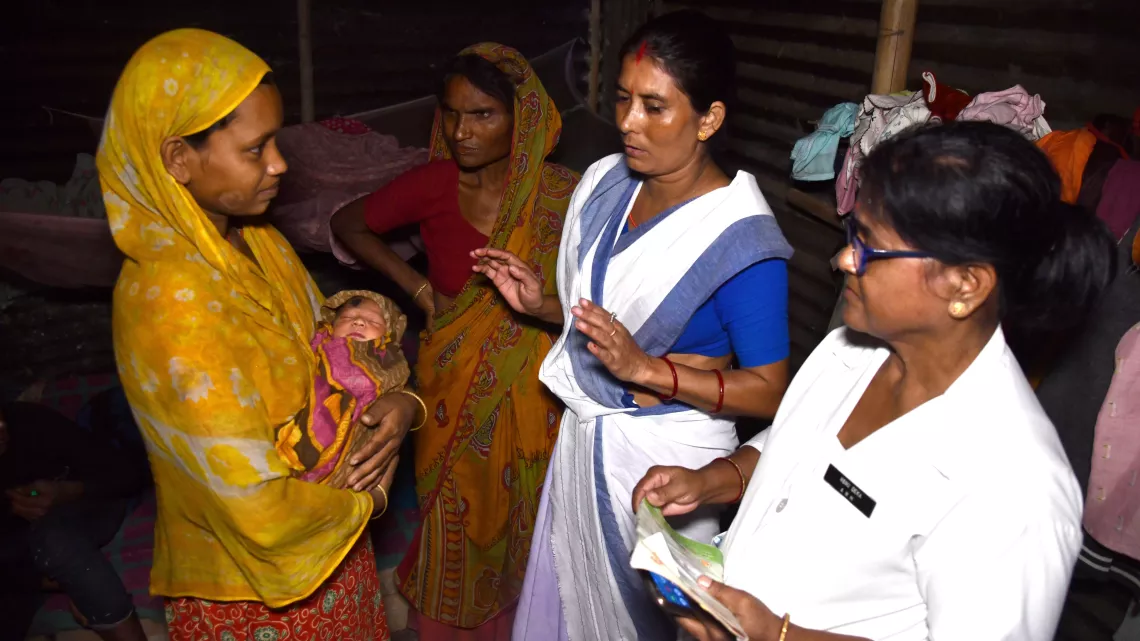
“I carried out the first survey on August 6 in the brick kiln. As I asked for the MCP card from Reshmi, she said that the baby was born at home and none of the vaccines were administered,” she said
Nirupama was surveyed as part of the Intensified Mission Indradhanush (IMI 5.0) campaign by the government, which is an effort not only to boost routine immunisation but also to ensure that such services reach the missed-out and dropped-out children and pregnant women across the country.
This year, for the first time, the campaign is being conducted across all the districts in the country and includes children up to 5 years of age.
“Similar is the case with Reshmina Parbin, who arrived here at the brick kiln in August this year with her husband. She was in an advanced stage of pregnancy. When I checked her MCP card, I could see that she had taken only the first dose of TD and is due for her second dose,” said Renu Deka, the local ANM who travels a distance of 4 km on foot every day to reach the Jaljali Public Health Centre due to bad road conditions.