

Every child in school
Reducing the number of out of school children

- English
- हिंदी
Reducing the number of out of school children
The Government of India’s Sarva Shiksha Abhiyan (SSA) programme since 2001-2002 towards ensuring universal elementary education, followed by the Compulsory Education (RTE) Act in 2009 has contributed to steady progress in reducing the number of out-of-school children.
The number of children out of school remains high, and 36 per cent of girls and boys drop out before completing the full cycle of elementary education. The majority (75 per cent) of out-of-school children are concentrated in six states: Uttar Pradesh, Rajasthan, Bihar, Madhya Pradesh, Odisha, and West Bengal.
While Uttar Pradesh has the highest number of out-of-school children, Odisha has the highest concentration of out-of-school children (6.1 per cent), followed by Rajasthan (5.2 per cent) and Bihar (4.95 per cent).
In the cases of Chhattisgarh, Jharkhand, Jammu and Kashmir, the increase in the number of children out of school is exacerbated by civil strife/conflict.
The overall profile of out-of-school children highlights the fact that traditional disadvantages continue to pose barriers, including gender barriers, as most out-of-school children are girls, and social barriers for children from scheduled castes (SC), scheduled tribes (ST) and from linguistic, ethnic and religious minority groups like Muslims.
Children with disabilities are also overrepresented amongst out-of-school children, with almost one-third (28 per cent) of children with disabilities out of school.
The socio-economic impacts of COVID-19 will likely increase the number of out-of-school children and the percentage of girls and boys who drop out of school due to early marriage or to work, respectively.
In addition, reverse migration from urban areas has increased the number of children in rural areas. Most of these children were in low-cost private schools, but will have to find a place, if they return to school, in rural government schools.
The longer children are out of school, the stronger the likelihood that they will not return. Thus reducing the likelihood that these children gain the training and education opportunities which are critical to lifelong learning and livelihoods.
Child marriage is a known factor that precludes education, particularly that of girls and could have a greater impact on girls’ enrolment and retention due to COVID-19. Another reason for children being out-of-school is child labour.
In the total population of 10-14-year-old children, 6.68 per cent are child labourers, of whom 7.2 per cent are males and 6.1 per cent are females.
The mentioned figures for child labourers remain underestimated because they do not include those in the informal sector who do domestic work, due to the absence of a comprehensive national child labour survey.
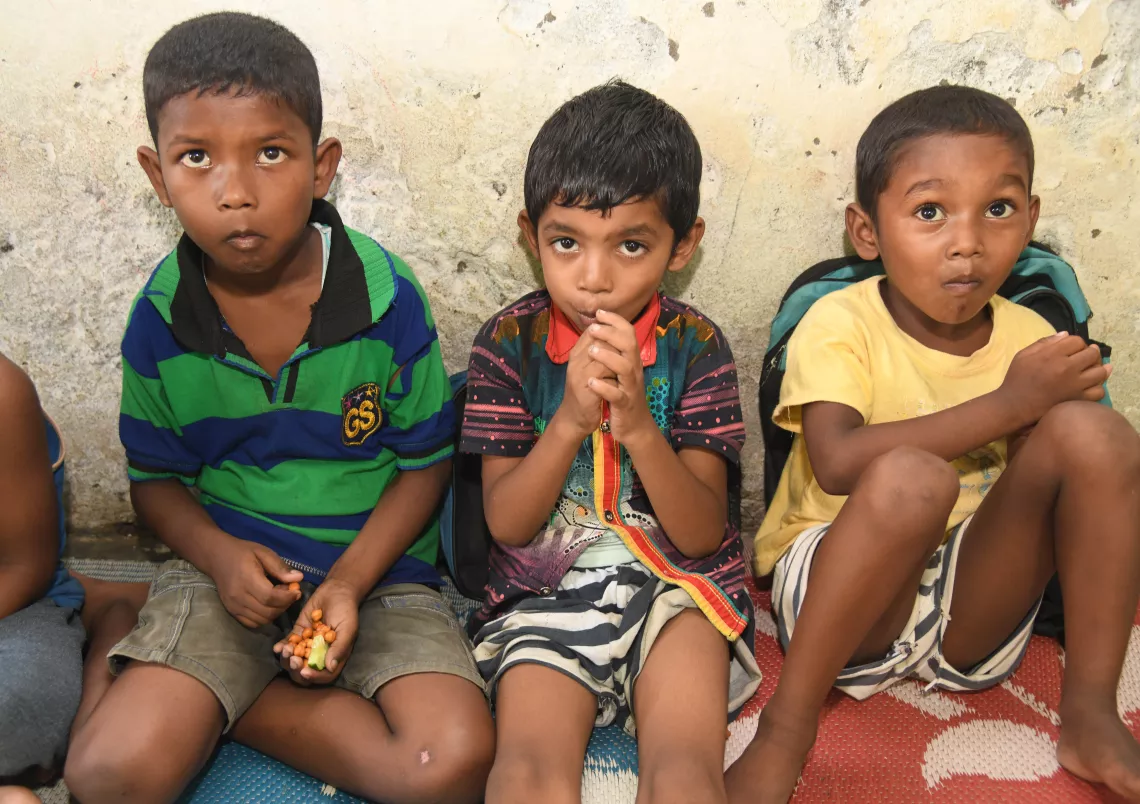
Recognizing the many issues related to out-of-school children, UNICEF will focus on building the capacity of government departments and partners in the effective coordination, implementation and monitoring of education interventions targeting marginalised children who are out of school and are at risk of dropping out of school.
Emphasis will be on system strengthening, providing technical support for special training and other flexible learning programmes, monitoring and tracking of children out of school or at-risk of dropping out, interventions to prevent drop out, including through the establishment of early warning systems, collecting and effectively using disaggregated data to inform policy programming and budget decisions, implementation and performance monitoring.
In addressing the impacts of COVID-19, as part of planning for the reopening of schools, advocacy for state governments to carry out back-to-school campaigns to encourage children and parents to safely return to school.
Parental and community awareness-raising regarding measures and processes to mitigate COVID-19-related risks would be a priority.
Under the lead of child protection and/or inclusive social policy, UNICEF education programme will collaborate on social protection schemes that aim to keep girls in school by addressing child labour which is key for boys and influencing social norms around the value of girl child, and preventing early marriage working in close collaboration with the education department, community level institutions, department of women and child, and other relevant departments.