Providing care under makeshift shelters: mobile clinics at the heart of displacement
Thanks to support from Gavi, the Vaccine Alliance and UNICEF, vaccination and medical consultation sessions are organized for children and women living in displacement sites
- Français
- English
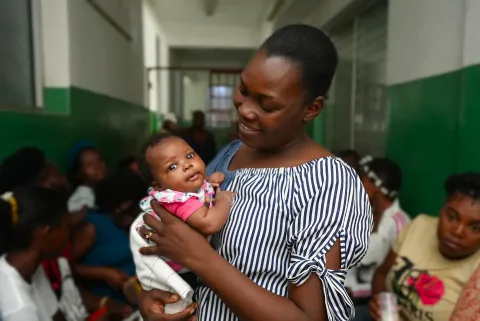
Port-au-Prince, Haiti — Sitting in the shade of a sheet stretched between two poles, Michel-Ange holds her two-year-old daughter Cherbie close. Six months ago, she abandoned her home in the commune of Tabarre when armed groups attacked her neighborhood. Since then, she has been living with her child in the Jean Marie César displacement site on the outskirts of Port-au-Prince. Like many other families here, she has lost everything: her home, her bearings, her access to healthcare.
Life in a displacement camp is difficult, she says. Like her, thousands of families have fled violence and now live in camps for displaced people in very precarious conditions, often without drinking water, latrines, or access to healthcare. Here, even the slightest fever or cough could become dangerous.
“Since we fled, I haven't slept peacefully for a single night. I was afraid my daughter would get sick. But today, something is changing. A mobile clinic has arrived,” she says.
A team from Médecins du Monde, a UNICEF partner and with the support of Gavi, the Vaccine Alliance, had arrived to the site to provide healthcare to protect children and women from preventable diseases. “Cherbie finally saw a doctor and received her vaccinations. I'm so relieved,” adds Michelle-Ange.

Access to essential healthcare is finally possible
In a context of extreme insecurity, where health facilities are often inaccessible, this intervention addresses urgent medical needs while reestablishing an essential link between families and the health system.
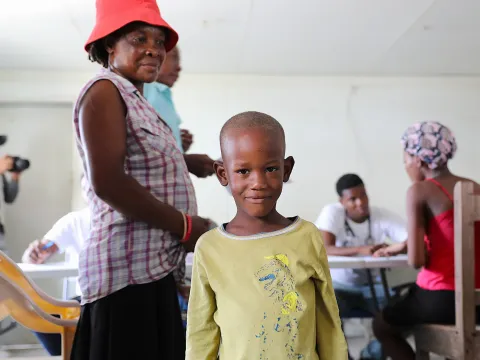
More than 350 people received care that day. Vaccines against measles, diphtheria, polio and tetanus, consultations for pregnant women, and simple advice on disease prevention were offered free of charge. Hygiene kits and medicines were also distributed.
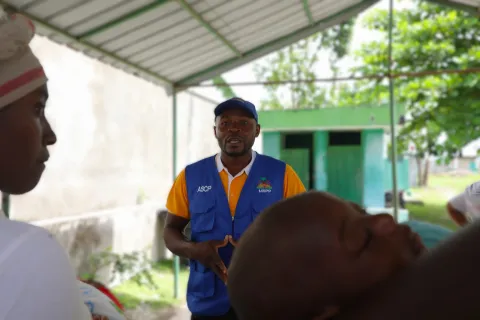
The mobile team does more than just treat patients. “People here have lost everything,” explains Wilson, a field worker who works with UNICEF's partner. “I talk to the children to reassure them during treatment. We want them to feel a little safe, even if it's only temporary.”

Critical support in a prolonged crisis
At her side, Dr. Valérie, an immunization specialist at UNICEF, emphasizes the importance of vaccinating children, even in emergency situations: “It's a matter of public health, but also of justice. Every child has the right to prevention, wherever they are.”
“For many families, this mobile clinic is their first contact with a health professional in months. It may not seem like much, but in this context, every consultation, every vaccine, every reassuring word counts,” she adds.
In 2025, through its implementing partners, UNICEF deployed 76 mobile clinics in the Port-au-Prince metropolitan area. Thanks to the support of Gavi, the Vaccine Alliance, we were able to continue our efforts to ensure that displaced children receive the care they need. In a country where insecurity makes access to basic services very difficult, these mobile clinics are essential.