Breaking the chains of an age-old practice to preserve public health.
In a society facing challenges of access to sanitation, UNICEF, with funding from the European Union, is deploying initiatives to promote hygiene within the population.
- Français
- English
Artibonite, January 18, 2024 – In a society where nearly a quarter of households struggle with access to sanitation, the consequences for public health are alarming. To address this situation, UNICEF, with financial support from the European Union, has undertaken significant efforts by implementing a project aimed at promoting sanitation and hygiene within rural communities.
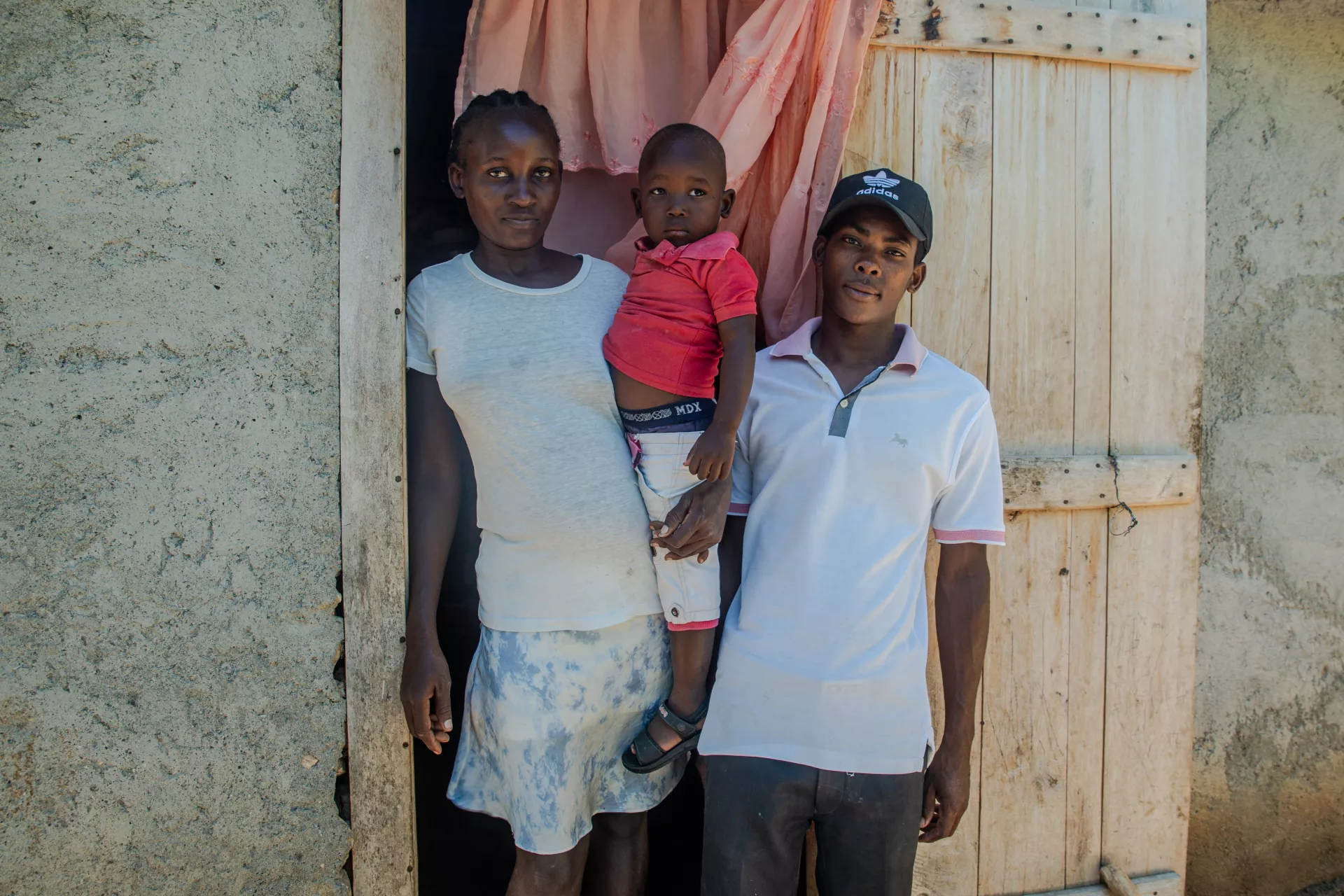
In the municipality of Gros-Morne, as well as in certain regions of Haiti, the practice of open defecation is common, increasing the risk of waterborne diseases. To put an end to this practice detrimental to public health, the community has mobilized to build latrines equipped with handwashing systems in their homes, through the community-led total sanitation (CLTS) approach developed by DINEPA. Over the past two years, thanks to this approach, more than 5,700 sanitary structures with handwashing points have been constructed or renovated in certain communes of Artibonite. "Previously, we dug holes to relieve ourselves outdoors. Now, having our own toilets is a blessing," testifies Davidson, a resident of Gros-Morne. Residents are satisfied as they observe a reduction in illness cases in their community, especially during this period of cholera crisis, as Davidson explains. "We were warned that cholera continues to prevail in the country. To avoid getting sick, we are building toilets because open defecation can make us ill."
This collective awareness among residents did not happen overnight. Community mobilization and awareness-raising about the importance of handwashing and other hygiene practices to prevent water-related diseases have been carried out by local sanitation committees (CASA). They hold meetings within the community to discuss open defecation practices in order to change behaviors passed down from generation to generation, as Kelonis Lucia, a member of the Gros-Morne CASA, highlights. "Open defecation is an ancient practice. There were places where people enjoyed going to relieve themselves. It was more challenging to dissuade them from continuing." However, with the various awareness sessions, mindsets and practices have gradually evolved. "As they see other people building toilets, and with the creation of CASA, individuals cease practicing open defecation."

The work of local committees, combined with community engagement, demonstrates that the CLTS methodology is an effective response against the practice of open defecation, as emphasized by Yves Bertrand, WASH specialist at UNICEF. "Thanks to funding from the European Union, thousands of people will have access to improved sanitation facilities and will adopt good hygiene practices. This funding is essential to accelerate access to water, sanitation, and good hygiene practices, thereby contributing to achieving the Sustainable Development Goals and declaring, for the first time in Haiti, a "fecal contamination-free" communal section."
UNICEF, with the support of partners such as the European Union, is working to promote hygiene practices and the construction of sanitation infrastructure to protect the health of residents and foster a healthier and more sustainable future.