
"I had no say"
In Dubréka, women are reclaiming the power to decide on their children's health

- Français
- English
On the shaded porch of her home, M'mahawa Camara sits with her eight-month-old daughter Adama on her lap. Facing her, Mohamed Sylla, a community godfather, begins a conversation that, not long ago, would have been unthinkable.
In Tondon, one of the sub-prefectures of Dubréka, getting children vaccinated depends on more than just access to health services. In many households, health decisions are made exclusively by men, leaving mothers with little room to act on their own. For M'mahawa, the main barrier was not distance or lack of care, it was her husband's refusal.
"At first, my husband did not want our children to be vaccinated, and I did not dare make that decision alone," she says. "I had no say."


With the support of theGovernment of Canada, through the Global Polio Eradication Initiative(GPEI), UNICEF and its partners launched an initiative in Dubréka to dismantle the cultural and social barriers holding back vaccination, especially children, particularly girls. At the heart of the approach: strengthening mothers' decision-making power and engaging men as allies in their children's health.
On the ground, community godmothers like Fanta are driving that change.
"When I visit a man who refuses vaccination, I always start by greeting him with respect," she explains. "If he is eating, I sit down and share his meal to show him we are on the same side. Only then do I ask: 'What is the problem? Why are you refusing to have your children vaccinated?'"
That kind of dialogue is making a difference. M'mahawa's husband changed his mind. Now fully convinced, he actively supports his wife's decisions about their children's health.
"He now allows me to take the children to get vaccinated, whether he is there or not," she says with relief. "My children are doing wonderfully."
M'mahawa is not alone. Across the prefecture of Dubréka, the project has helped shift long-standing family dynamics, with particular impact on girls' access to vaccination, girls are often the first to be overlooked.


In several communities, fathers now accompany mothers to health centres themselves, sometimes by motorbike, to make sure their children are protected. Alseny Camara, an officer at the Dubréka District Health Directorate, sees the shift every day:
"The godparents approach has strengthened community engagement across Dubréka. Health centres are better attended, and parents understand that vaccination is the only protection against disability."
Alongside the godmothers, the godfathers play an equally critical role. Kandé Sory goes door to door, or rather, compound to compound, to reach hesitant families. His message is unambiguous:
"If a child gets polio, they risk being disabled for life. The future of our entire community is at stake."
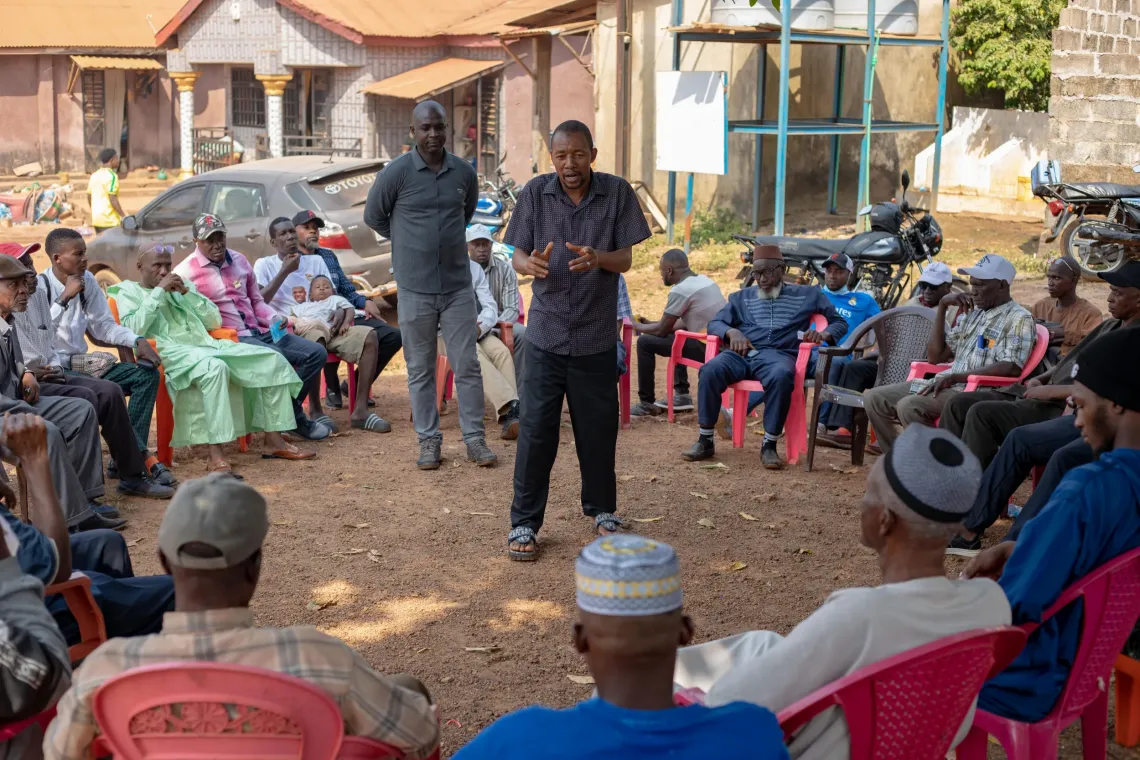
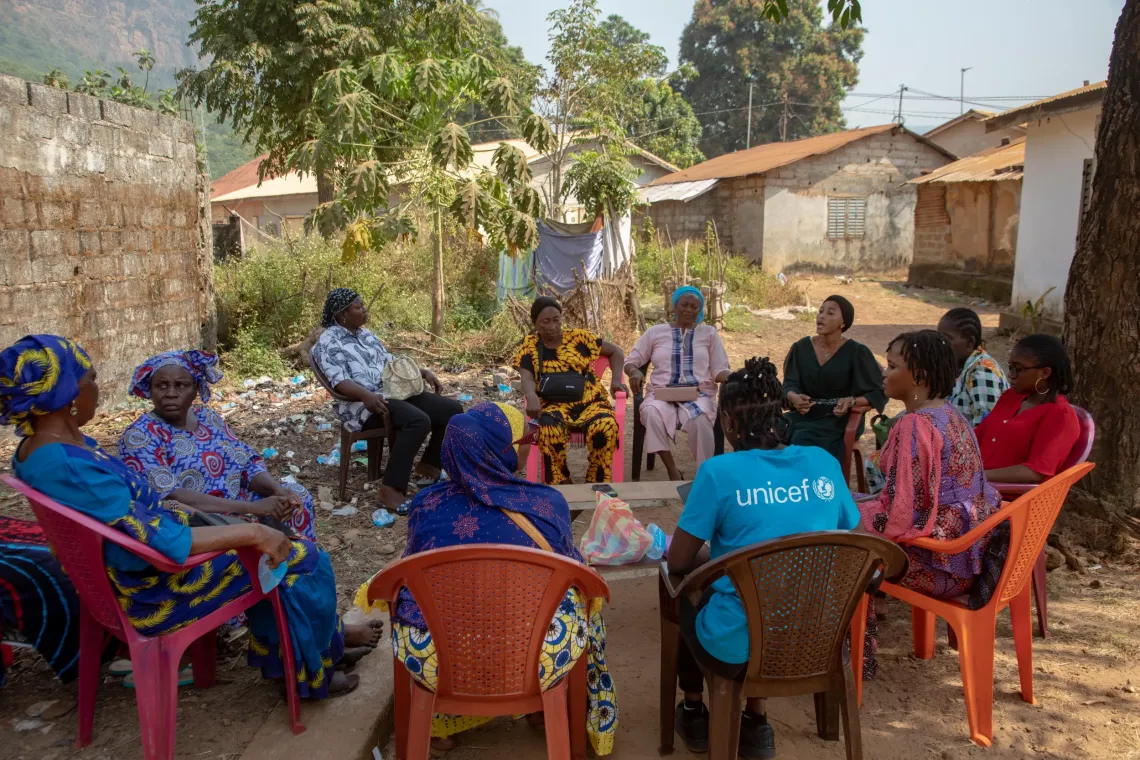
Together, godfathers and godmothers form a network of 100 community actors deployed across 11 health centres and 40 health posts throughout Dubréka prefecture. Trusted and influential in their communities, they conduct home visits, facilitate community discussions and work directly with health workers to identify and address the social, cultural and gender-related barriers that keep families away from vaccination.
This grassroots work is part of a broader momentum. The project supports the national gender and vaccination strategy led by Guinea's Ministry of Health and Public Hygiene, and contributes to developing communication tools grounded in local realities.
Beyond the vaccine drops administered, something deeper is taking hold in Dubréka, a culture of protection, listening and equity. Fanta is already heading to her next compound. Her message to parents has not changed:
"Accept vaccination. It is the only way for our children to grow up strong, walk normally and thrive."
In Dubréka, every home visit, every conversation on a shaded porch, every father won over brings the community one step closer to a shared goal: that every child, girl or boy, is protected against polio.
