Drinking water for the people of Kpagbaou
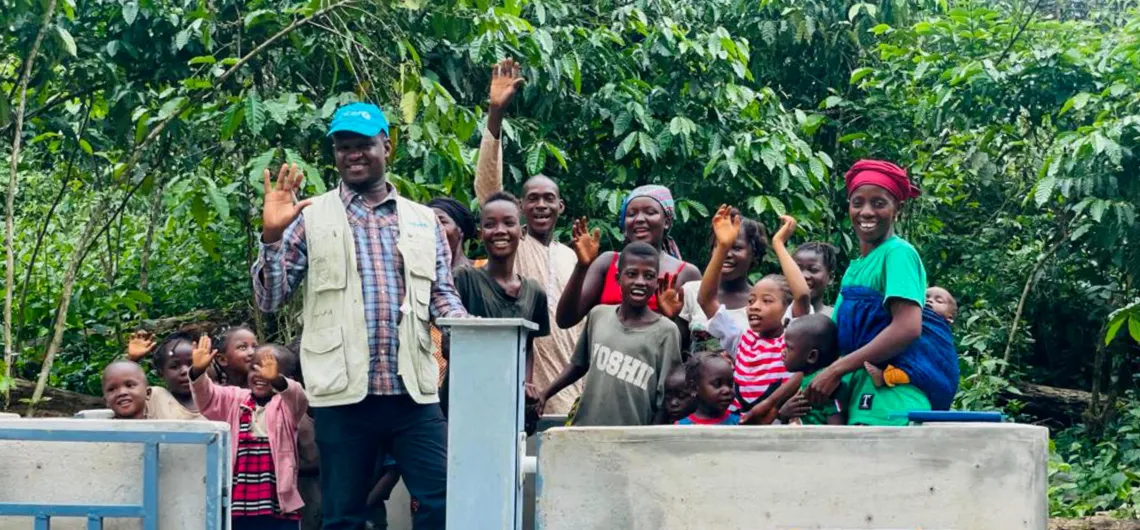
Thanks to the support of United States Fund for UNICEF, UNICEF has installed a hand well to provide access to drinking water.

- Français
- English
Kpagbaou, a landlocked village in the N'zérékoré region of Guinea, has a population of 295, including 157 women, living in 79 households. There is one school with an enrollment of 77 students, including 22 girls.
One of the main challenges facing the village of Kpagbaou is the lack of access to drinking water. In order to alleviate this situation, the inhabitants have developed a part of the marigot to provide them with water for both personal use and for their livestock.
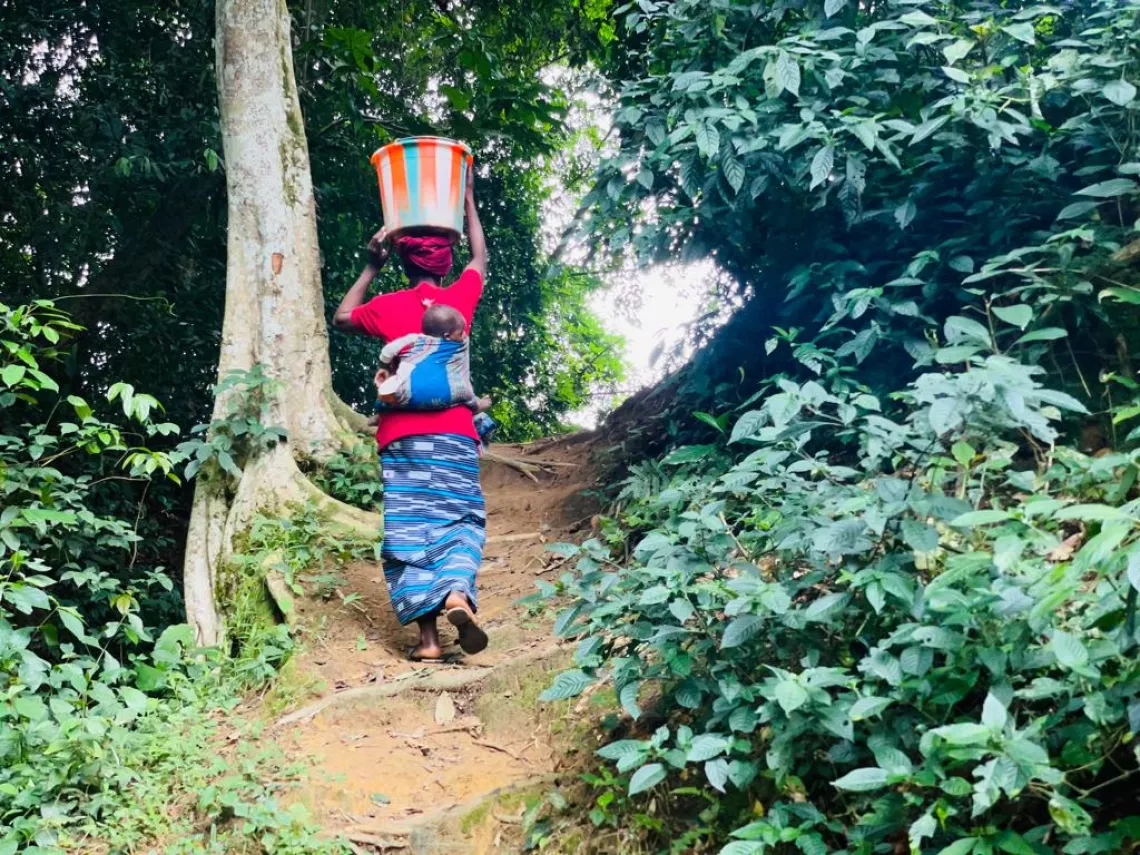
This marigot, located 400 meters from the village, is difficult to access. Residents have to cross a hill and a ravine to collect water, cans in hand. This makes collecting water dangerous, especially for children.
Although water is a vital resource for all of us, allowing us to live and grow in good health, far too many children are still deprived of this basic right, unable to drink drinking water, wash their hands with soap, or use a toilet. Children, whose bodies are more fragile, are the first victims of water-borne diseases.
The water from the marigot is unsafe, exposing the population to the risk of water-borne diseases. In addition, the practice of open defecation in this village contributes to worsening health problems. Legend has it that the lack of access to potable water has discouraged many women from marrying and settling in the village.
Women and girls continue to bear the brunt of the water supply burden. They have to carry heavy containers weighing up to 8 kg, which are often inappropriate for their age and weight. What's more, women and girls are particularly vulnerable to physical, sexual, moral and psychological violence while collecting water.
In support of the Guinean government and funding from the United States Fund for UNICEF, UNICEF installed a manual borehole to provide the villagers with a drinking water source. The work was technically supervised by Guinea's Service National d'Aménagement des Points d'Eau (SNAPE), which selected the site and built the borehole with the local community. A public water service management unit was created to ensure the proper management and maintenance of the water point.