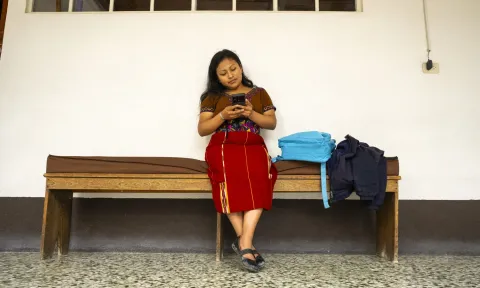
Regina and girls' right to play
UNICEF promotes sports and safe spaces for girls in Guatemala
- Español
- English
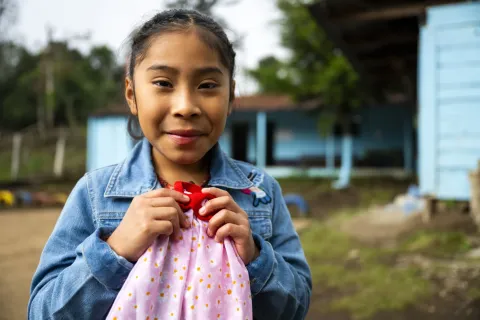
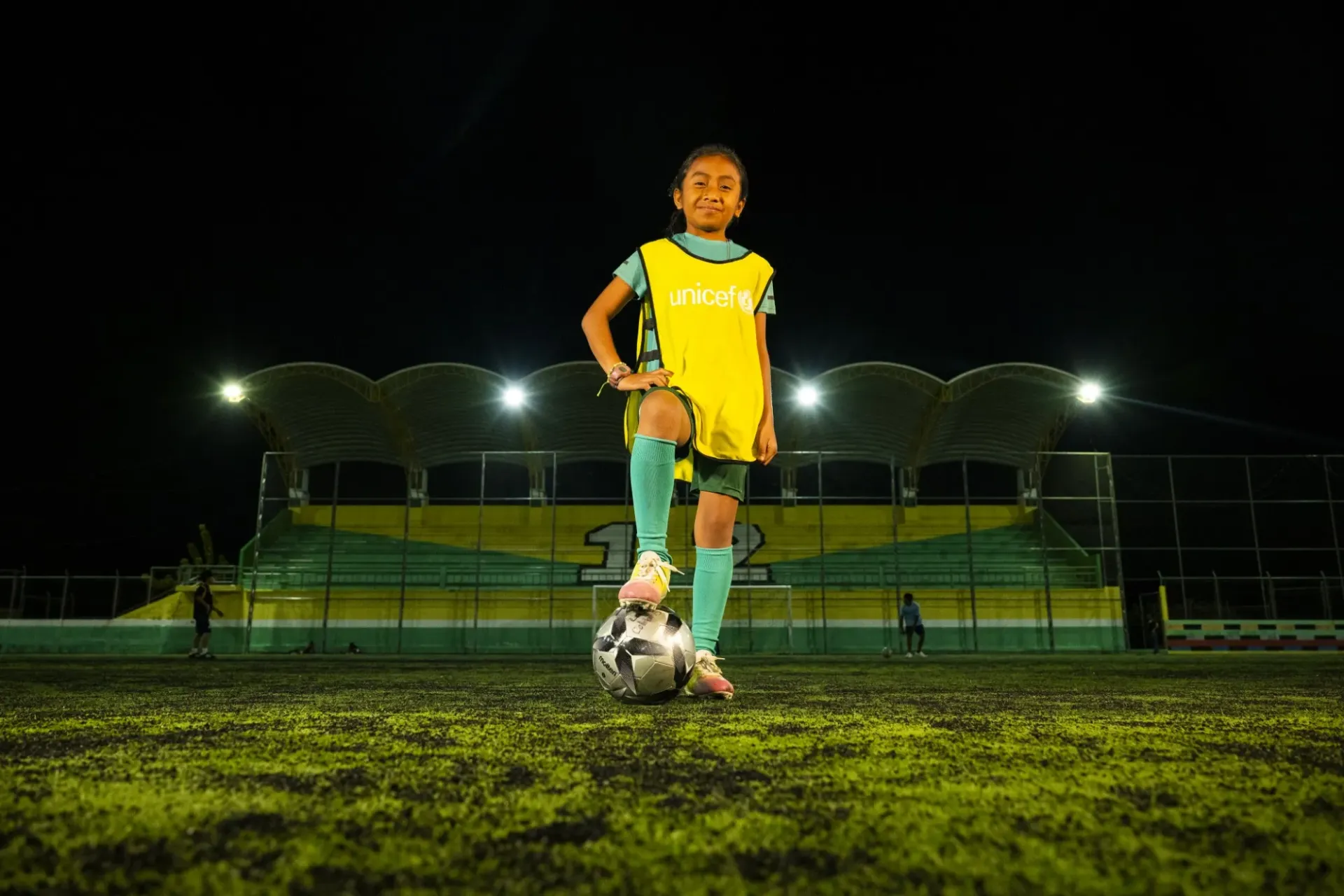
In a small house made of tin and dirt floors, surrounded by the mountains of San Pedro La Laguna, Sololá, lives Regina, an 11-year-old girl with a big dream: to become a professional football player.
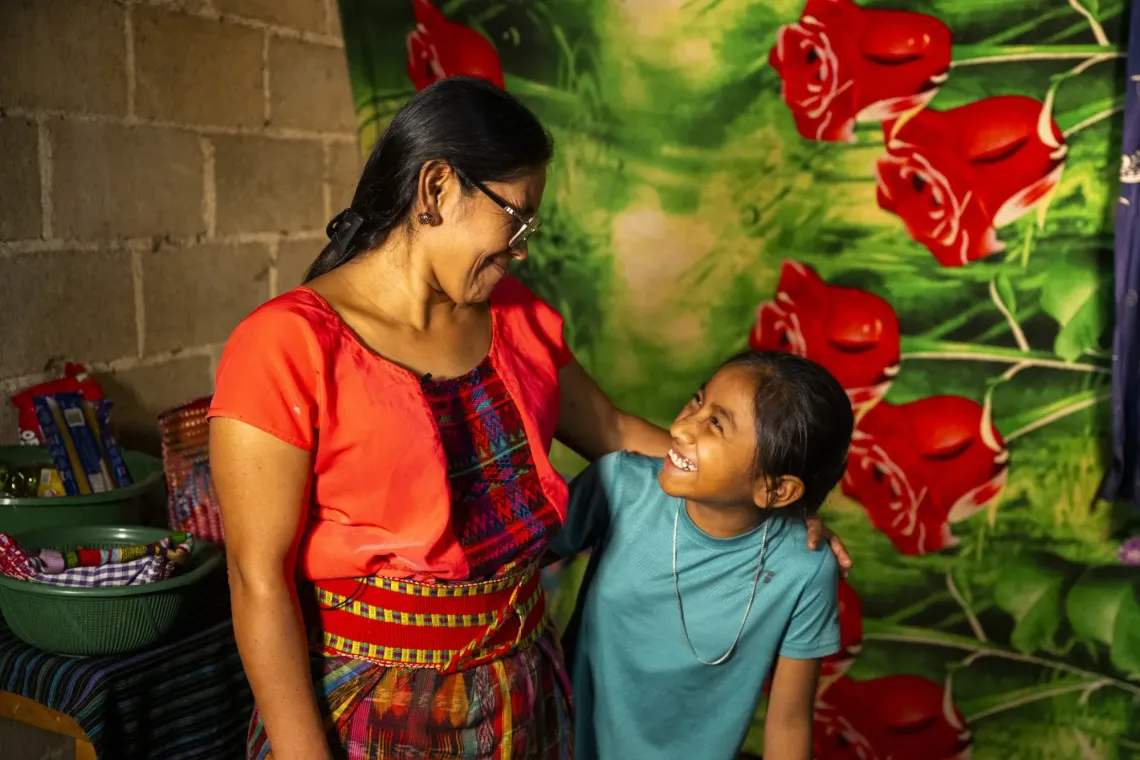
Her home, though humble, is full of hope. She lives with her mother, who works doing domestic jobs in other people’s homes to support them both. They do not have much, but through laughter and hugs, they face each day together. Regina’s father is no longer present; her parents separated years ago, and they have not seen him since.
Despite these challenges, Regina has a contagious energy and a determined gaze. When she talks about football, her eyes light up.
“I want to be a professional football player so I can help my mom,” she says with a shy smile, holding the ball she trains with.
Before, Regina’s days were very different. While her mother went out to work, she stayed home alone, doing small chores: washing dishes, cleaning, or folding her clothes. “I felt bored and sad,” she recalls.
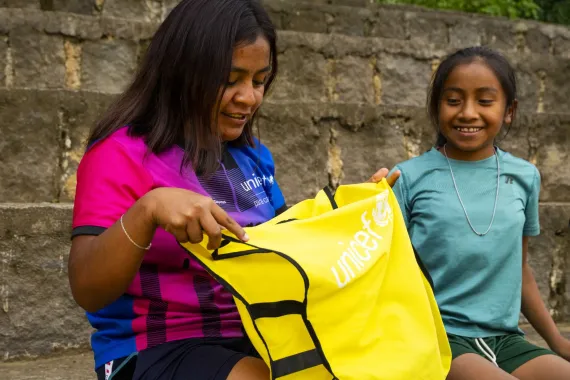
But everything changed when she heard about the Fair Play Programme, an initiative led by UNICEF in partnership with the Ministry of Culture and Sports. This programme promotes sport as a tool for the holistic development of children and adolescents, teaching values such as respect, empathy and teamwork through football.
Regina was the first girl in her community to join the programme. Since then, she has not missed a single training session. For Regina, Fair Play is not just a place to learn how to play football, but a space where she can be herself, laugh, run and share with other girls who have the same dreams. Every training session becomes an opportunity to learn something new, both on and off the field.
Only 30 per cent of the population in low-income countries such as Guatemala has access to safe public spaces like parks, plazas or playgrounds. This lack directly affects children’s and adolescents’ right to play and to participate in their communities.
The absence of adequate spaces limits the development of children and adolescents and affects their physical and mental health. In many cases, girls face additional barriers: fewer opportunities, risks of violence or discrimination, and the belief that sport “is not for them.”
That is why the Fair Play FEM Programme, a new methodology developed by UNICEF, seeks to change this reality. Adapted to the physical and emotional needs of girls and adolescents, the programme promotes inclusive and safe spaces where everyone can play, learn and dream without fear.
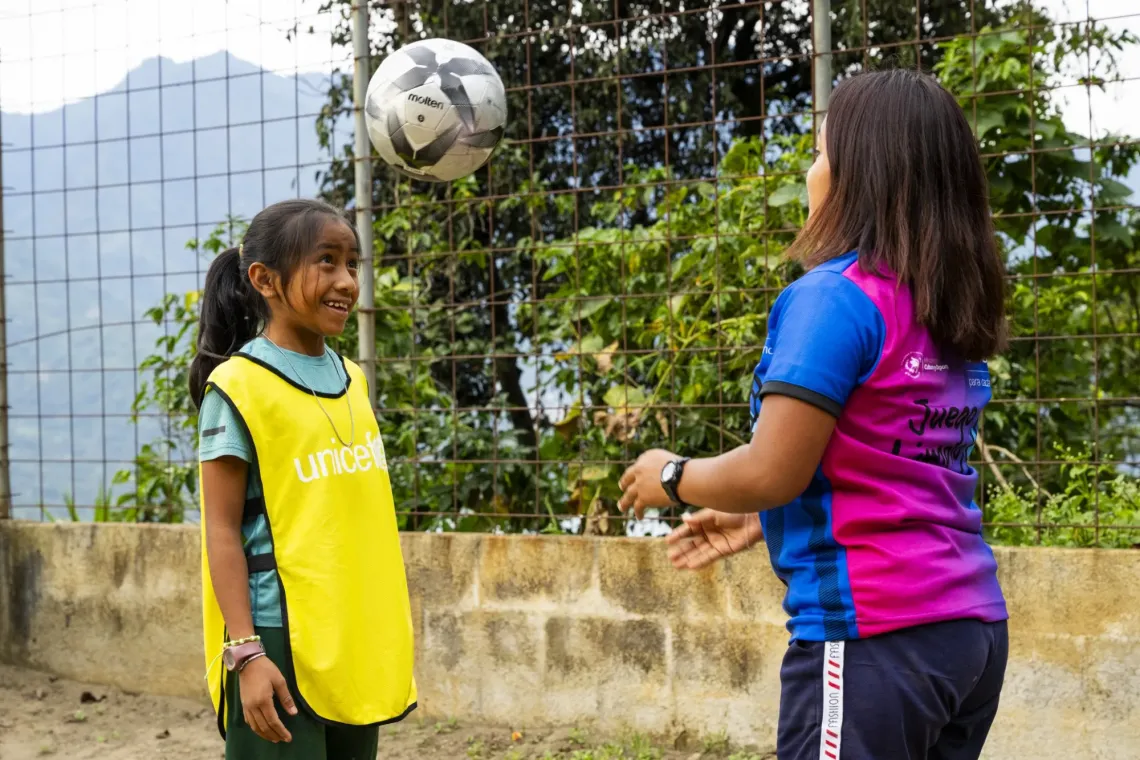
Juanita González, a Fair Play coach in San Pedro La Laguna, has seen how the programme transforms lives.
“Regina arrived very shy, but now she is one of the most enthusiastic. She always motivates the others and reminds us that we all have the right to play,” she says proudly.
Through sport in the Fair Play Programme, girls and adolescents not only strengthen their physical skills, but also their self-esteem and life skills. They learn to lead, to communicate, to resolve conflicts and to work as a team.
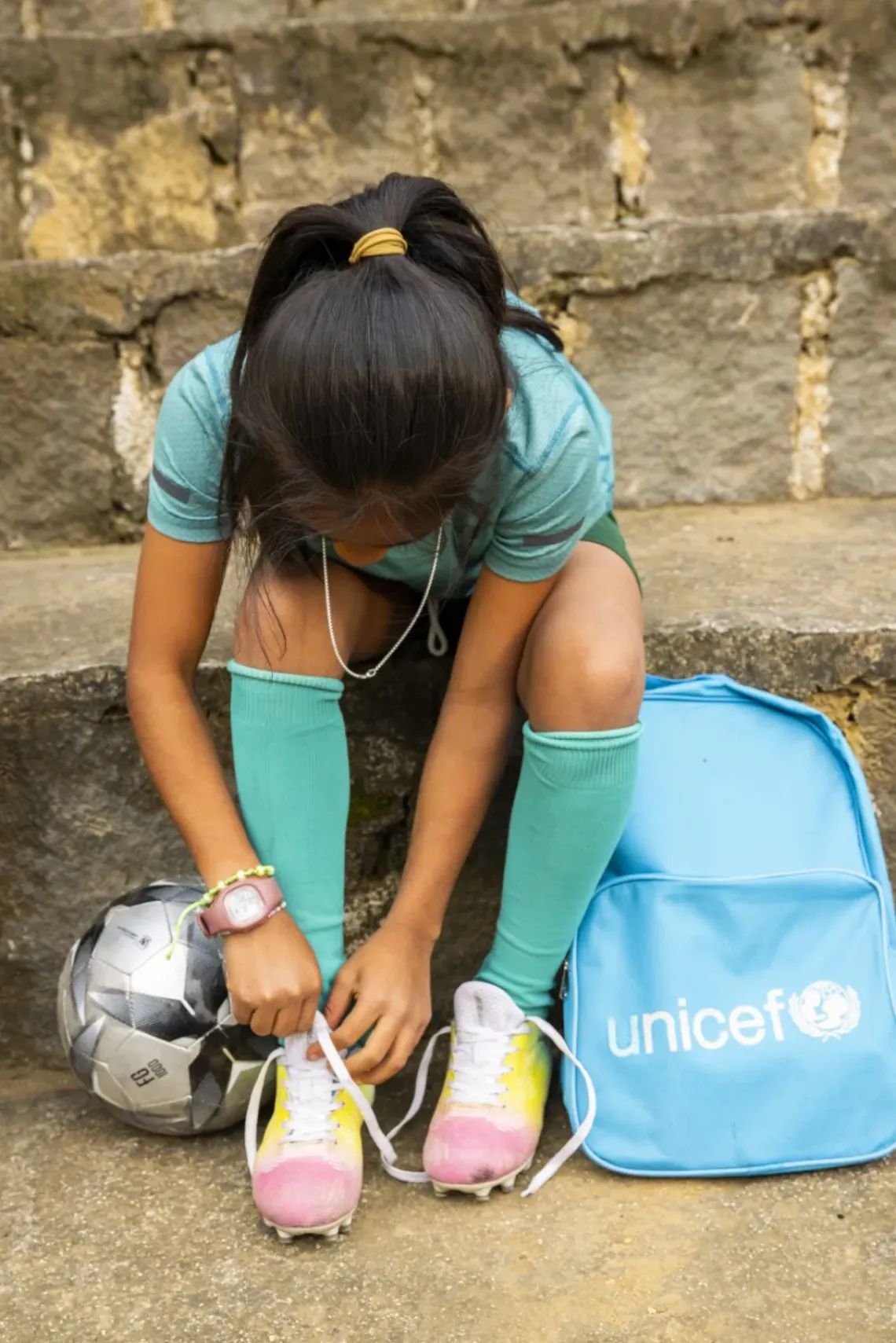
Regina eagerly waits for the time to go to the field. As she ties her shoelaces and picks up the ball, her mother watches her proudly and says, “I encourage her to chase her dreams and keep going,” smiling.
Through the programme, Regina has learned that play is not just about fun, but also a way to learn values, build dreams and strengthen the community.
UNICEF continues to promote programmes like Fair Play FEM because all girls have the right to play, learn and grow in safe and inclusive environments.