

Prevention of Child Labour
UNICEF works with partners in Ghana to ensure that children don't have to work to survive
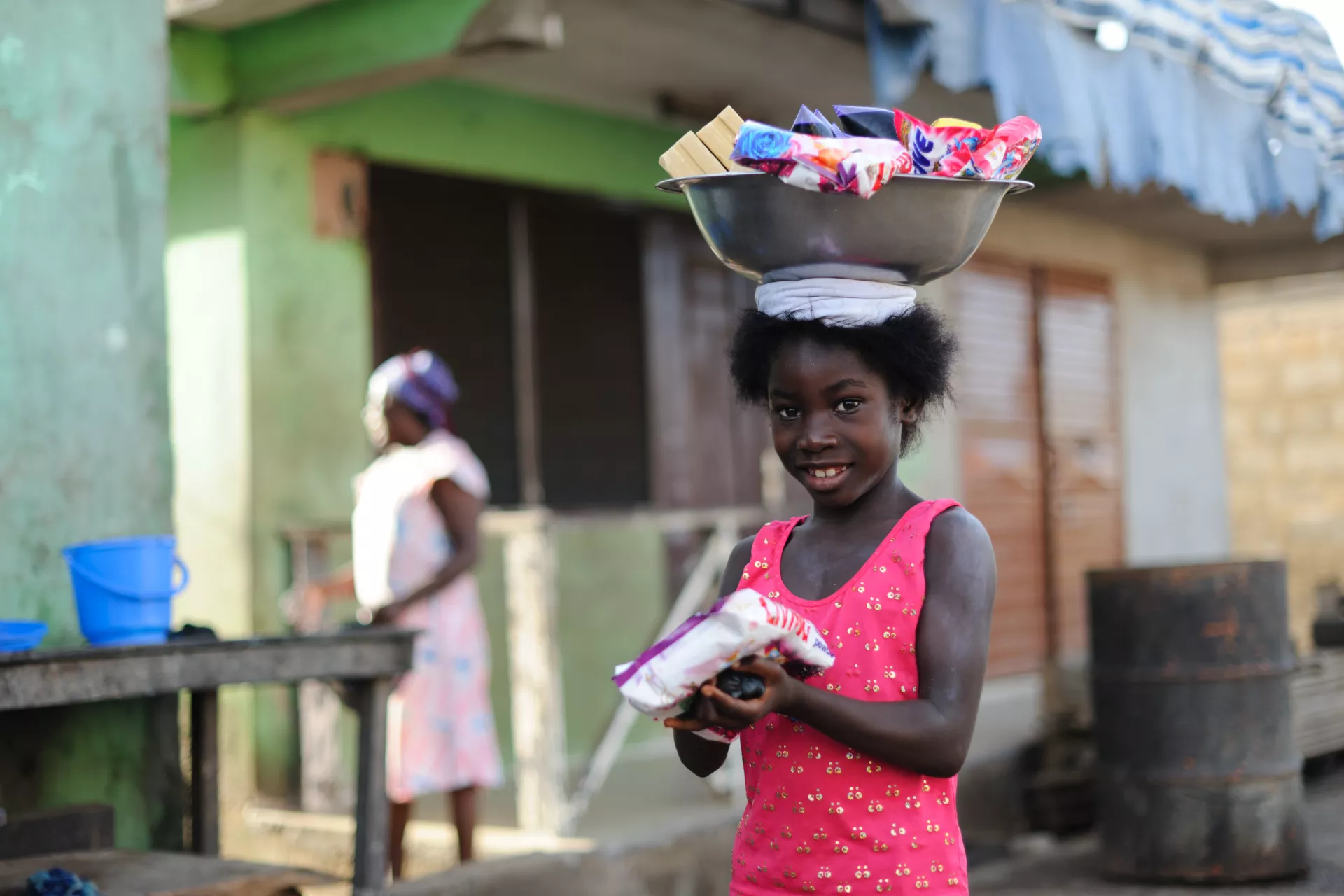
Challenge
Of all children in Ghana aged 5 to17 years, about 21 per cent are involved in child labour and 14 per cent are engaged in hazardous forms of labour. This is twice as common in rural areas.
For poorer households, child labour is a negative coping mechanism and most of the children are involved in agriculture and fishing industries. In all regions, the vast majority of working children are unpaid family workers between the ages of 5 and 7 years. While usually boys are more likely to be doing manual work, this could be due to the household interpretation of what constitutes child labour. Thus, the heavy domestic workload for girls, including childcare, is not considered as labour.
There are no reliable figures on the number of children affected by the worst forms of child labour (sale of children, child prostitution and trafficking) and children living and working on the streets of Ghana. While accurate numbers of human trafficking cases don't exist, it is believed that the large majority of all cases involve children, mainly girls.
Child labour is a significant problem in Ghana, affecting almost two million children
Elements that impede the prevention of child labour include social norms that consider it acceptable for children to work and promote the view that many adolescent children should be treated as adults, poorly enforced legislation and policies prohibiting child labour, insufficient allocation of resources for the prevention of and response to child labour, inadequate services to support working children or prevent child labour and family reliance on income generated by children due to extreme poverty.
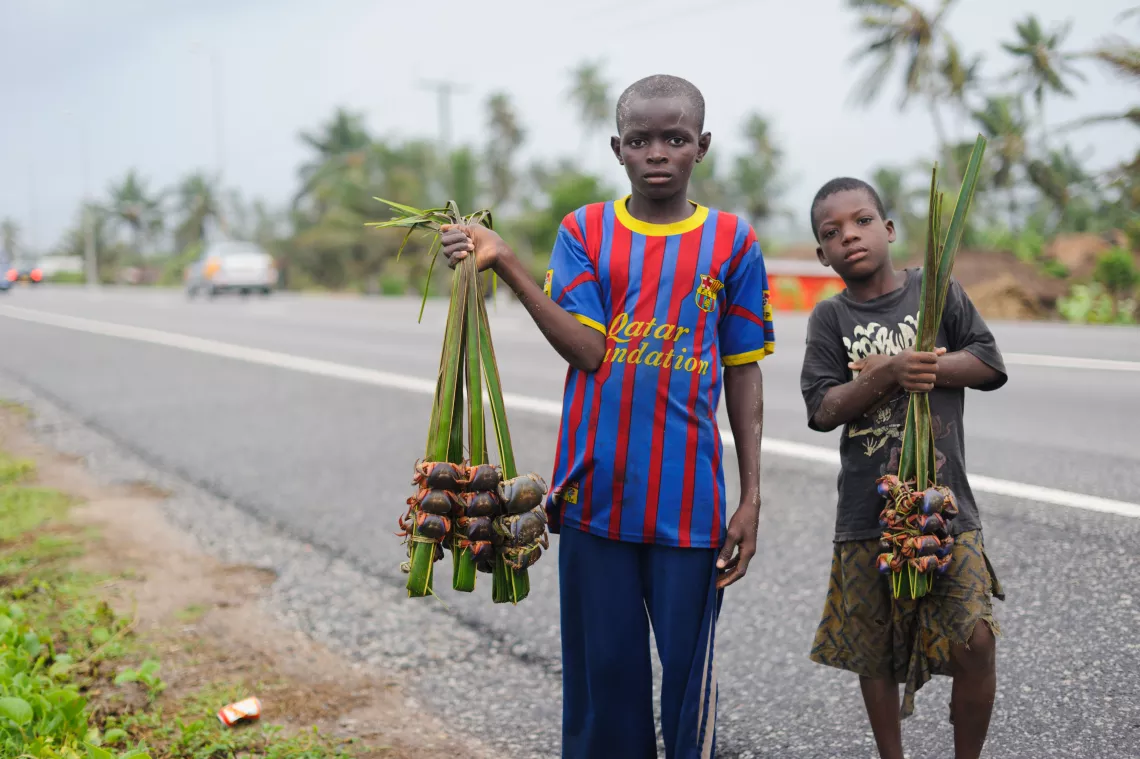
Solution
UNICEF supports the Ministry of Gender, Children and Social Protection to develop and implement a National Plan of Action.
This is a five-year plan aimed at reducing the number of children engaged in labour by 10 per cent and direct national efforts towards achieving the SDG 8.7 - (Take immediate and effective measures to eradicate forced labour, end modern slavery and human trafficking and secure the prohibition and elimination of the worst forms of child labour, including recruitment and use of child soldiers and by 2025 end child labour in all forms)