

Birth Registration
UNICEF works with partners in Ghana to ensure that every child has an identity

Challenge
Birth registration has increased to around 70 per cent in recent years, with more people in urban areas registering their children's births than in rural areas. This may be because factors like education and wealth are major influences.
While civil registration services have staff, not all posts are filled at the district level and there is often a lack of resources such as paper for printing birth certificates. To address this, a new automated, mobile birth registration system has been used in over 150 districts across the country since April 2016. The new system utilises mobile phone technology and reduces the need for manual forms and paper.
This new system is clearly improving the efficiency and effectiveness of the process, especially in remote areas of the country. However, the challenge of registering all children in their first year of life still remains.
A birth certificate is proof of age and helps to avoid violations of child rights
Some of the key road blocks to achieving universal birth registration in Ghana can be attribute to little importance attached to birth registration, insufficient allocation of resources at the local level for families to access birth registration services easily and internal confusion on the status of the Births and Deaths Registry.
The Solution
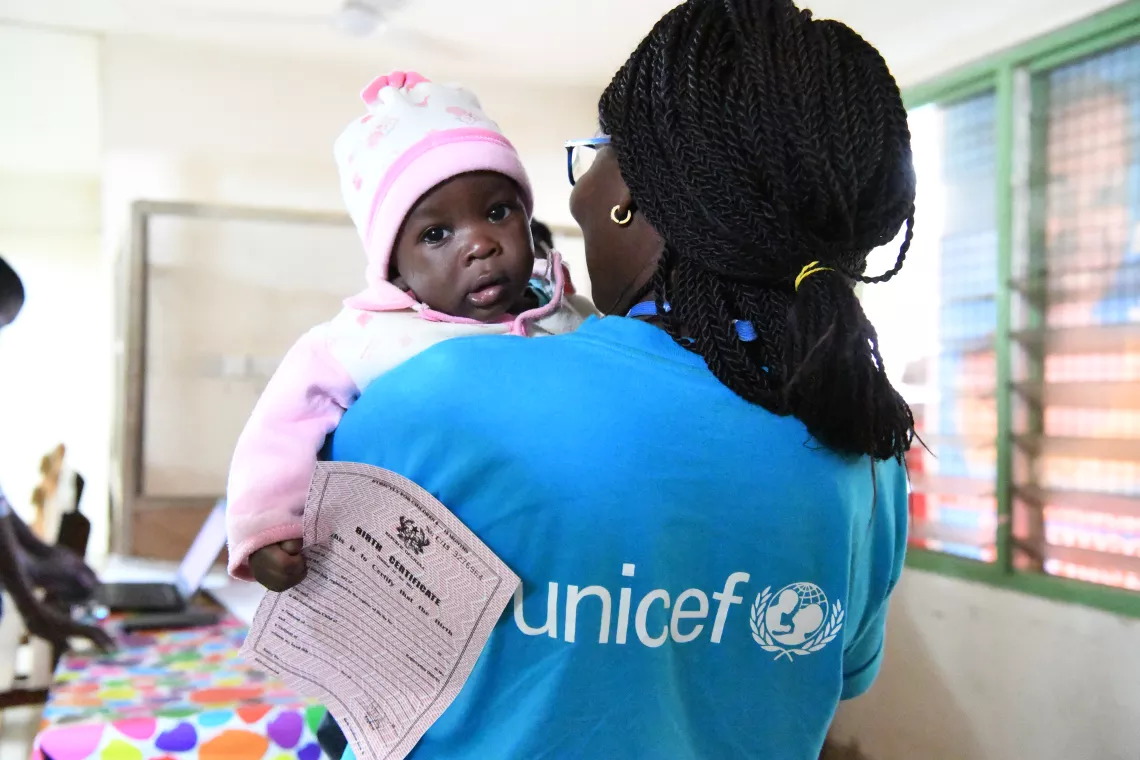
UNICEF continues to support the Births and Deaths Registry to register new births during 2017. Activities include a collaboration with the Ghana Health Service during the child health promotion week, which resulted in over 60,000 births being registered between the period of May and June 2017. However, there's still progress to be made. A total of 551,933 children below the age of one year were registered in 2017.
The Registry and the Ghana Health Service have signed an agreement that currently allows the two organizations to exchange data on newborn children to improve birth and death registration.