UNICEF and Tbilisi State Medical University introduce Interpersonal Communication training to shape Georgia’s next generation of doctors

- English
- ქართული
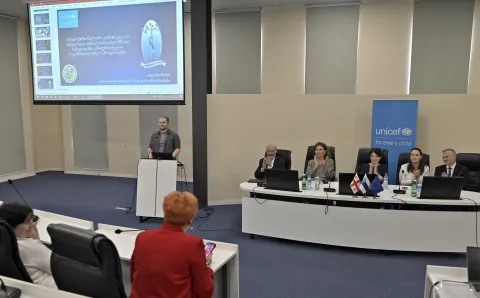
Tbilisi, Georgia – September 26, 2025 – UNICEF Georgia, in collaboration with the Tbilisi State Medical University(TSMU), the Association of Family Doctors of Georgia and with support of the Republic of Korea, has launched a new Interpersonal Communication (IPC) curriculum at Tbilisi State Medical University marking a major advancement in medical education and patient-centered care in Georgia.
The IPC curriculum, now integrated into undergraduate medical and nursing programmes, builds on a successful nationwide initiative that trained over 2,000 health professionals in child-centered communication. The main goal of the initiative was to improve the communication skills of primary care (PHC) medical personnel with children, when interacting with mothers, community, colleagues resulting in improved immunization outcomes. This training programme, accredited by the Ministry of IDPs from Occupied Territories, Labour, Health and Social Affairs, led to a 30 per cent improvement in immunization-related communication skills, significantly enhancing the quality of care and trust between health workers and families.
“Communication is not just a skill - it’s a cornerstone of compassionate, high-quality medical care,” - Jesper Moller, UNICEF Representative in Georgia.
“By embedding IPC into the core of medical education, we are ensuring that future generations of health professionals are equipped not only with clinical knowledge but also with the skills to connect, listen, and respond to patients with empathy and respect. We do believe that the institutionalization of communication training is a cornerstone of this systemic transformation of the medical system.”, Moller added.
The new curriculum is the result of a multi-year collaboration between UNICEF, TSMU, and the Association of Family Doctors of Georgia. It includes:
- Three structured IPC courses developed and taught across multiple semesters at TSMU’s Department of Family Medicine.
- A university-wide initiative to integrate communication into all clinical disciplines.
- A dedicated working group, established by the Rector of TSMU, to define core competencies in communication and relevant fields.
- Alignment with Georgia’s sectoral standards for higher medical education, which now formally recognize communication as a key component of medical professionalism.
Today’s launch event at TSMU brings together Georgian and international experts, to share best practices and discuss the future of communication training in medical education.
This initiative reflects UNICEF’s commitment to systemic change—ensuring that every child in Georgia receives care that is not only medically sound but also delivered with compassion and understanding.
Media contacts
About UNICEF
UNICEF promotes the rights and wellbeing of every child, in everything we do. Together with our partners, we work in 190 countries and territories to translate that commitment into practical action, focusing special effort on reaching the most vulnerable and excluded children, to the benefit of all children, everywhere.
For more information about UNICEF and its work for children, visit www.unicef.org/georgia/