Hazem’s Transformation
The Power of Love, Play and Positive Parenting
Mona and Elsayed are a typical hardworking couple from Alexandria devoted to providing a better future for their four-year old son, Hazem. Like many low- and middle-income families in Egypt, both parents work long hours, leaving little time to spend with their only child Hazem or for family interactions. Consequently, Hazem spent most of these days alone, immersed in a digital world on his mother's phone or tablet.
At Al-Mina Al-Sharkeya nursery, Hazem’s teacher, Eman Ibrahim, began to notice troubling signs. Hazem withdrew from classmates, avoided group activities, and displayed a growing behavior of isolation. He also showed physical aggression and, often, fought with his friends.
Concerned, Eman reflected on her training from the Positive Parenting and Learning Through Play programme, UNICEF and LEGO Foundation initiative in partnership with the Ministry of Social Solidarity. She suspected that Hazem’s behavioral struggles stemmed from his home environment.
Taking a proactive approach, Emam reached out to Hazem’s parents. In their conversation, they admitted they had little time for their son. "I used to come home exhausted, leaving Hazem to entertain himself with the tablet. Even on weekends, I spent my time resting over spending time with him." Mona, his mother confessed. Eman gently explained how Hazem’s feelings of frustration and neglect were manifesting in his behavior at the nursery.
Hazem’s parents also shared their struggles at home – his stubbornness, disregard for guidance or consequences, destructive tendencies and increasing aggression. His parents, frustrated by his conduct, resorted to punitive measures, including more isolation and physical discipline, exacerbating Hazem's fear and detachment.
Determined to help, Emam invited Hazem’s parents to attend Positive Discipline and Learning through Play Workshops at the nursery. Initially skeptical, the couple decided to give it a chance. What they learned changed everything. "We realized our approach, especially using punishment, was only making things worse,” said Elsayed, Hazem’s father.
Armed with new parenting strategies, Hazem's parents committed to change. They started prioritizing daily quality time with their son, turning ordinary household tasks into enjoyable bonding experiences. They also reduced his screen time and replaced punishment with open communication. “We talk every day now. He tells me how he feels, and I include him in everything I do, from choosing what to eat for dinner to helping with chores,” shared Mona.
Recognizing the power of play, Hazem’s parents also made an effort to engage with him more meaningfully. “Even if I come home late, I make sure to play with Hazem before he sleeps,” said Hazem’s father. These small but deliberate changes had a profound effect on Hazem, whose transformation was nothing short of remarkable.
Where Hazem once felt isolated, he now thrived. He eagerly looked forward to spending time with his parents, especially during the weekends. "My favourite thing is go to the bike shop and ride bikes with my dad," Hazem beamed.
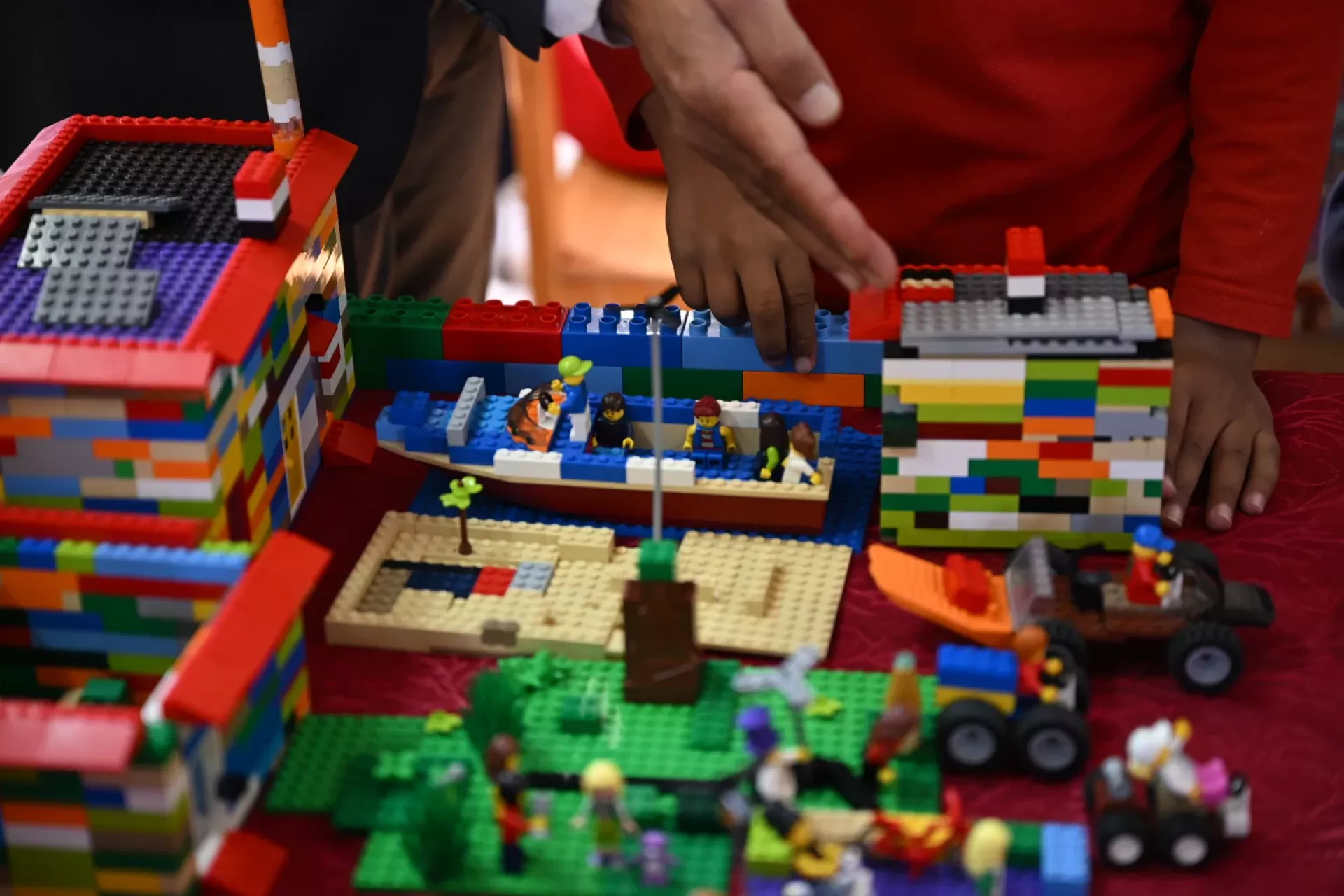
At nursery, Hazem found joy in learning and play. Using LEGO blocks, he began interacting more with his peers, forming a close friendship with Hassan. He started reading with his teachers, sharing his thoughts and feelings, and embracing a newfound confidence.
Hazem's journey—from isolation and aggression to happiness and social engagement – proves the undeniable power of positive parenting. Simple changes, like dedicating quality time, focusing on open communication, and encouraging play, can transform a child’s life.
Hazem’s story is that of hope and a reminder to parents everywhere that small, intentional acts of love and attention can shape a child’s future for better!