Embracing Inclusion
How UNICEF Training Empowered a Dedicated Educator to Foster Inclusive Learning for Children with Disabilities
- English
- العربية
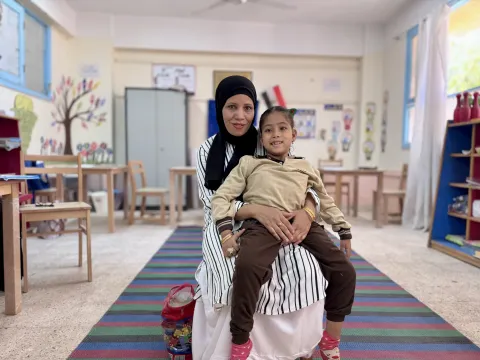
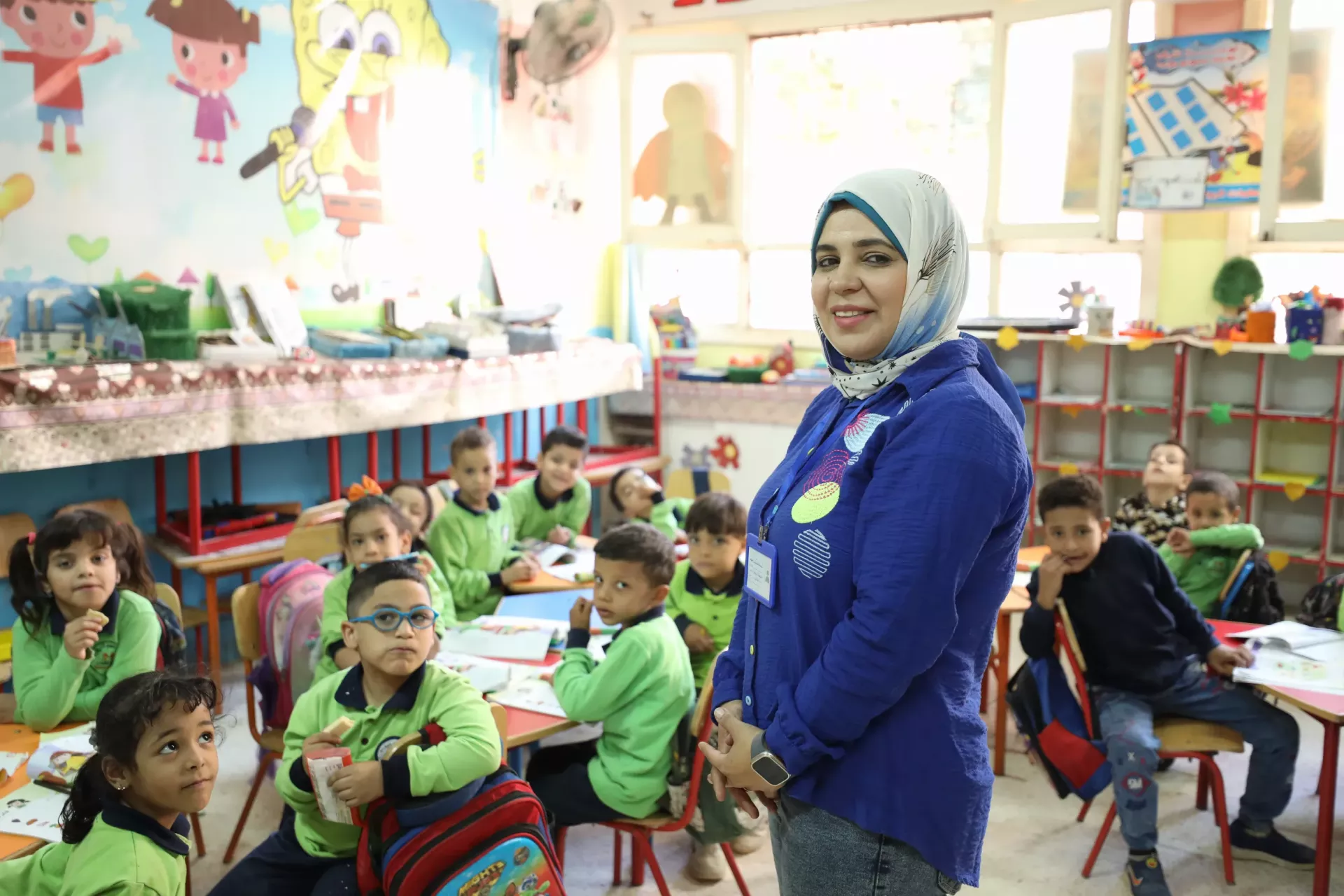
Each morning, Asmaa steps out of her home and heads to the school where she works – full of enthusiasm to teach her young students. With every passing day, her bond with the children has grown stronger. Over time, she has become like a second mother to every child in her kindergarten class. She understands them, knows how to reach them, and swiftly senses any change in their behavior, responding to it with care and attentiveness.
Asmaa Shoukry Ahmed, a native of Sohag in Upper Egypt, works as a kindergarten teacher at Ahmed Deif Allah Basic Education School. She shares her story within the walls of this school, recounting her experiences with kindergarten children and emphasizing the school’s vital role in meeting the unique needs of young children, particularly those with disabilities. She underscores the importance of early identification, describing it as key to providing support and resolving any challenges these children may face.
Through specialized training by various organizations, Asmaa and other educators have gained essential tools for understanding and interacting with young children, especially during such formative years. Asmaa’s dedication to her profession and her students, especially those with disabilities, is evident. For her, these children hold a place beyond all others. She is constantly on the lookout for new and advanced training to expand her knowledge, refine her skills, and deepen her connections with all her students, especially those in inclusive programmes.
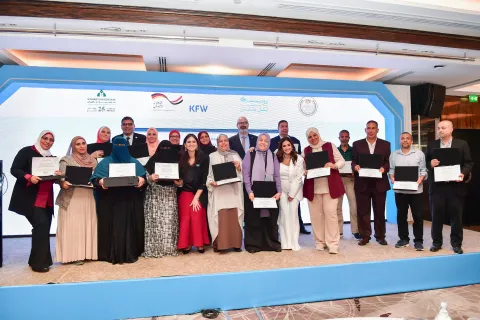
Among the numerous training programmes Asmaa has attended, she highlights one as especially transformative: a programme by UNICEF in partnership with the Ministry of Education and Technical Education, supported by the Sawiris Foundation for Social Development, and implemented by the Faculty of Education at Ain Shams University through its Center for Educational Excellence. Reflecting on this experience, she says, “The training provided by UNICEF was an incredibly enriching and rewarding journey for me and my colleagues. We gained invaluable insights into both teaching strategies and scientific content, along with specific tools designed for inclusive kindergarten classrooms.”
Asmaa elaborates on the training: “The first module focused on understanding how to assess each child’s needs and identify potential learning difficulties from the very first encounter, when parents bring their children for enrollment. During this stage, we look for particular traits and signs to determine whether a child may benefit from inclusion and requires further assessment by the medical insurance and health specialists. We may also identify issues such as learning difficulties or speech delays, common at this age as language development typically completes around age five. These early assessments were a crucial part of the training.”
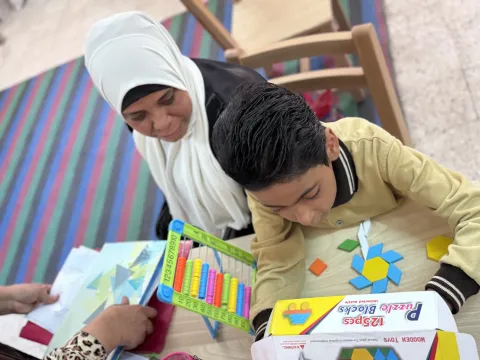
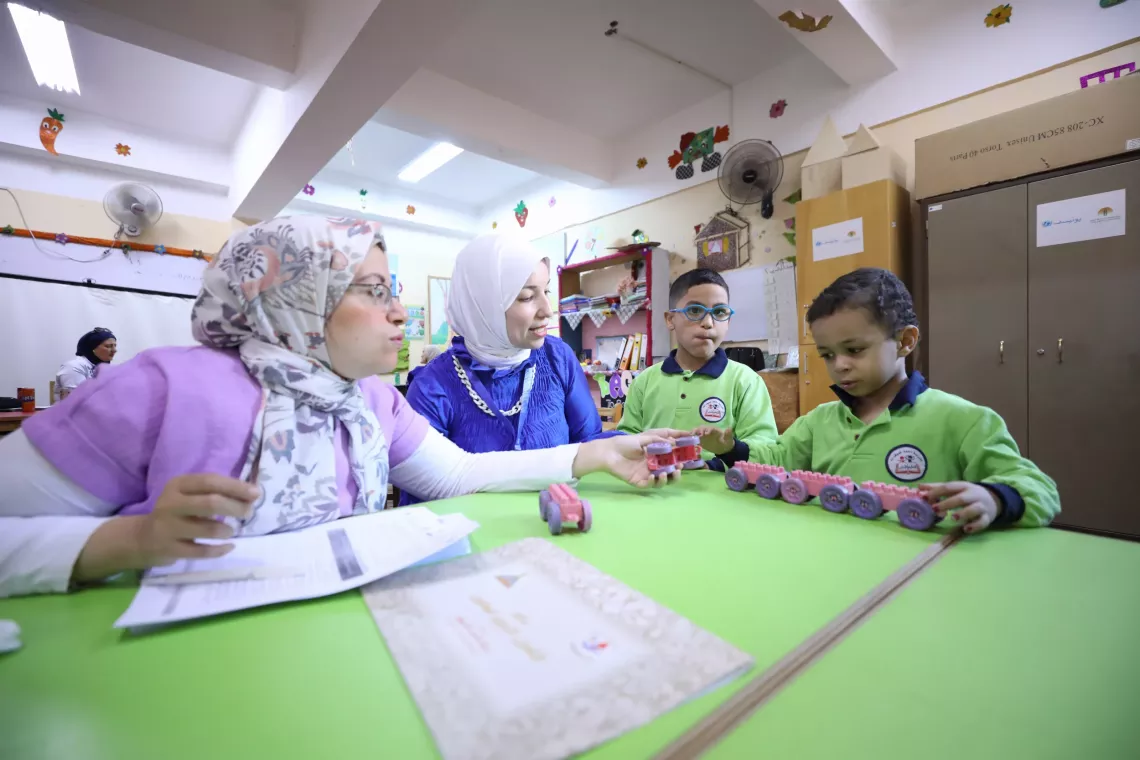
Asmaa also appreciated the tools and strategies for teaching children with disabilities in kindergarten. She said, “At this young age, children benefit from a broad array of educational materials and tools for instruction. The training taught us how to create teaching aids by recycling available resources in the environment to support learning for children with disabilities."
In a groundbreaking initiative to foster a more inclusive society, the Ministry of Education and Technical Education, in partnership with the Sawiris Foundation for Social Development, has launched the "Inclusion of Children with Disabilities in Kindergarten" programme for the academic year 2023-2024. This ambitious programme seeks to enhance access to quality education tailored to the individual learning needs of children with disabilities by implementing an inclusive model in 153 public schools across Assiut, Sohag, and Beheira governorates. To support this endeavor, the programme will equip resource rooms with appropriate learning materials, train teachers and caregivers working with children with mild disabilities, and develop a guide to raise awareness among parents about disabilities to reduce social stigma and encourage parents to integrate their children into society fully.
Implementing the Law: Supporting Education for Children with Disabilities
Egypt’s commitment to children with disabilities has become foundational to expanding inclusion in public schools. Until the 1960s, the prevailing view was that public schools were unsuitable for children with disabilities, who were often enrolled in specialized institutions, which isolated them from their communities. However, with Ministerial Decree No. 252 issued in 2017, children with mild disabilities were granted the right to join mainstream public schools alongside their non-disabled peers, participate in various extracurricular activities, and become fully integrated. This decree, bolstered by support from development partners, has paved the way for success stories like Asmaa’s students.
Awareness: The Foundation of Inclusion
The training went beyond child engagement, extending to the entire support network surrounding each child, from families to supporting institutions, especially school staff. Despite the various resources and awareness efforts promoting inclusion and understanding of disabilities, there remains a gap in how society—particularly in Upper Egypt—perceives and interacts with individuals with disabilities. There is a pressing need for widespread, intensive awareness, particularly in understanding disabilities and rejecting the notion that inclusion is to be met with pity or disdain.
Asmaa recalls, “After the training, we organized a seminar for parents, and it was surprising to discover that many of them had limited knowledge about inclusion, its significance, or the laws enabling children with disabilities to join public schools. Once we explained these aspects, the seminar left a profound impact on the parents.”
She adds, “To bridge the gap with parents and provide them with ongoing support and guidance, we created a 'communication group' on WhatsApp for the parents of children in inclusion programmes and those eligible for inclusion. Through this group, we can share timely information on how to address learning difficulties based on individualized educational plans—an approach we learned in the UNICEF training. The training provided us with valuable insights on guiding parents through the challenges of identifying different types of disabilities, early detection, and how to manage any arising issues.”
Resource Rooms
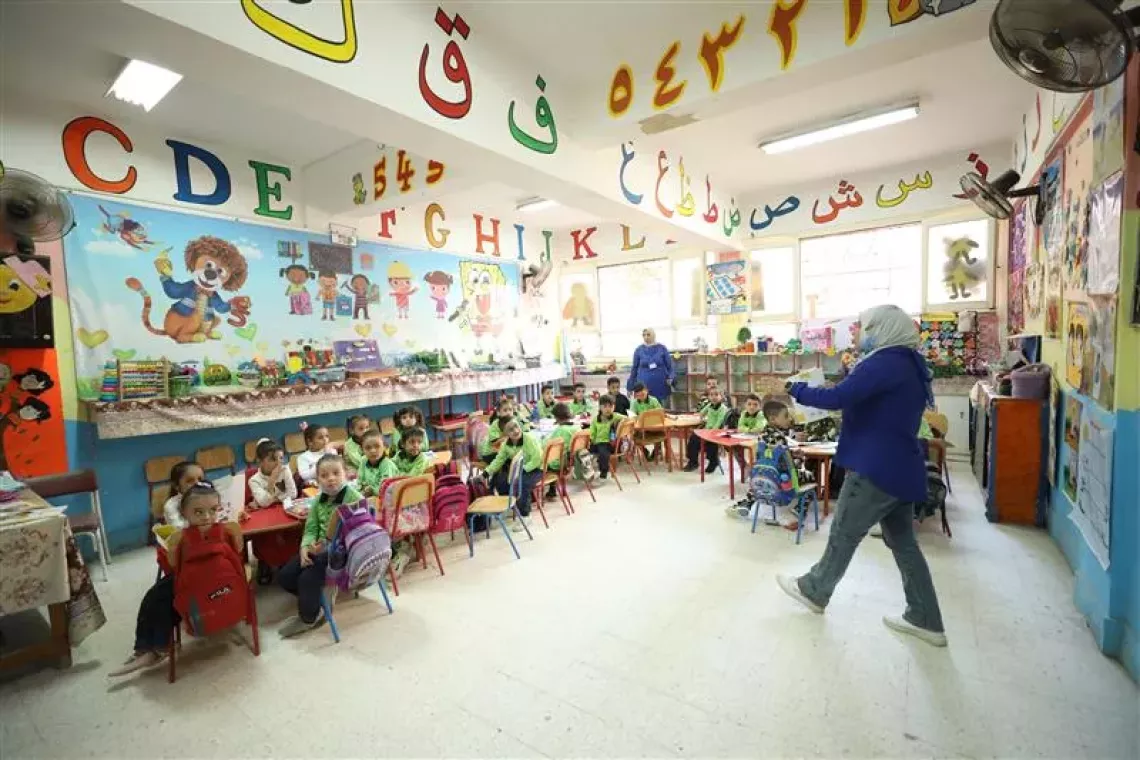
Asmaa explains, “A resource room is a designated space within the school, meticulously crafted in terms of size, tools, layout, furniture, and seating, all designed to support the learning needs of each age group through individual or peer learning.”
She continues, “The resource room also includes a variety of educational tools that assist teachers in guiding children with disabilities on their learning journey. These include self-care tools that teach children essential skills like dressing, undressing, and using the restroom independently, alongside tactile learning materials like point cards.”
The resource room also maintains documented records of seminars and sessions held, along with individual files for children in inclusive programmes.
Asmaa concludes her account of the UNICEF training journey, highlighting how this experience has deeply enriched her skills in working with children with disabilities. Yet, she emphasizes that her journey is far from over, as UNICEF continues its mission to support inclusive education that addresses the unique learning needs of every child.