Your common questions about measles and the MMR vaccine, answered
A parent's guide to understanding measles and MMR vaccination
- English
- русский
What is measles?
Measles is a very contagious disease caused by a virus. Although many people know about the disease because of the rash it causes on the skin of the infected person, measles can also cause a high fever, cough, and a runny nose. In severe cases, it causes encephalitis, pneumonia, blindness, immune system suppression, subacute sclerosing panencephalitis (SSPE), respiratory and neurological complications and can be fatal.
How contagious is measles?
Measles is one of the most contagious viruses among humans – more contagious than COVID-19, influenza, varicella (chickenpox), or Ebola. For every one person who has measles, 12 to 18 other people will be infected, if they are unvaccinated. It is so contagious that if one person has it, up to 90 per cent of people exposed to the virus who are not immune will also become infected. This is partly why recent measles outbreaks have spread so quickly, particularly among populations with lower vaccination rates.
How is measles spread?
Measles can spread to others when an infected person coughs or sneezes. Other people can become infected if they breathe the contaminated air or touch an infected surface and then touch their eyes, nose or mouth.
The measles virus can live for up to two hours in the air or on a surface.
What are the first symptoms of measles?
Measles symptoms appear seven to 14 days after contact with the virus, and usually include a high fever, a cough, a runny nose and red and watery eyes. The measles rash appears three to five days after the first symptoms. The rash usually begins as flat red spots that appear on the face at the hairline. They then spread downward to the neck, trunk, arms, legs, and feet.
How severe is measles?
Measles is a very severe disease, as well as one of the world's most infectious diseases. Of all of those who contracted measles in the European Region in 2024, 60 per cent were hospitalized. It is especially dangerous for children, pregnant women, and people who are immunocompromised. You can read more about how dangerous measles is here.
Are people with no underlying conditions, who are well nourished, safe from measles?
No. Complications can affect anyone, and it is not always apparent who will be affected most. The best guarantee against a measles infection is vaccination. Two doses offer more than 97 per cent protection.
How likely is it that someone with measles will need to be hospitalized?
Throughout 2024, more than half of people who contracted measles in the European Region were hospitalized. Measles is not just a mild childhood illness – it’s a serious, potentially deadly disease that often requires hospitalization. The exact risk of hospitalization depends on the infected person's personal risk factors and age, among other criteria.
Can vitamin A supplementation protect people from measles?
When it comes to lowering the risk of both contracting and developing complications from measles, there is no substitute for vaccination. This includes vitamin A. It is true that being vitamin A-deficient is one risk factor for developing measles complications that can lead to disability or death. It is also true that, if an individual contracts measles, the World Health Organization recommends that they are given two high doses of vitamin A to help reduce the risk. However, even in populations with a high prevalence of vitamin A deficiency, supplementation is not a replacement for vaccination.
What are the most common complications from measles?
In middle- and upper-income countries, such as those in Europe and Central Asia, out of every 1,000 measles cases, one to two people will die. Additionally, one in 1,000 cases will develop encephalitis; inflammation of the brain. Meanwhile, out of every 1,000 children who contract measles, 70 to 90 children will develop an ear infection, 80 will develop diarrhoea, and 10 to 60 will develop pneumonia, a lung infection which can be especially risky for young children.
How many people die from measles each year?
Before the introduction of the measles vaccine, around 2.6 million people globally died of measles every year. These numbers fell dramatically after the vaccination's large-scale roll-out. However, people still die from measles– the vast majority are unvaccinated children. In 2023, around 107,500 people died from measles. Most of them were children under five years old.
What is the risk of death from measles?
The risk of death from measles varies according to the population, as well as the person's age. In general populations with adequate access to healthcare, one in every 500 to 1,000 measles cases results in death. In lower income countries, the risk is far higher: for every 1,000 children who contract measles, 30 to 60 will die. Of children under the age of five, about 2.2 per cent of those infected died. In some populations – such as children who have been displaced, who are unlikely to be vaccinated – outbreaks have seen up to 32 per cent of those infected with measles die.
What is the death rate for measles in Europe in 2024?
24 deaths have been reported for 2024. However, this number is likely an underestimate due to delays in reporting, underdiagnosis, and gaps in surveillance systems. Many measles deaths are caused by complications such as pneumonia or encephalitis, which may not always be recorded as direct measles fatalities. We also know that more than 40 per cent of reported cases in the European Region – more than 45,000 – were children under five, who are the most at risk of severe complications and death.
I heard that measles can affect our immunity to other diseases. Is this true?
Yes, measles can have a significant impact on the immune system. Research indicates that measles can erase the immune memory of previous infections and vaccinations, a condition known as "immune amnesia." This means that the immune system forgets how to fight off previously encountered pathogens, increasing susceptibility to infections. In one study of unvaccinated children who were infected with measles, the virus wiped out anywhere from 11 to 73 per cent of their pre-existing antibodies. Some scientists estimate that, before vaccines, up to 50 per cent of all childhood deaths from infectious disease might have been partly caused by this "immune amnesia" due to measles. Studies in Europe and the US have found that after measles outbreaks, childhood deaths overall remain higher than normal for two to three years.
If everyone used to get measles, why are we afraid of getting it today?
Millions of children did not survive the disease or suffered long-term complications or disabilities. These included loss of hearing, loss of vision, kidney damage, liver disease, brain damage and comas. It is estimated that, over the last 50 years, the measles vaccine has saved 94 million lives, most of them children.
Common questions about the measles vaccination
When was the vaccine introduced?
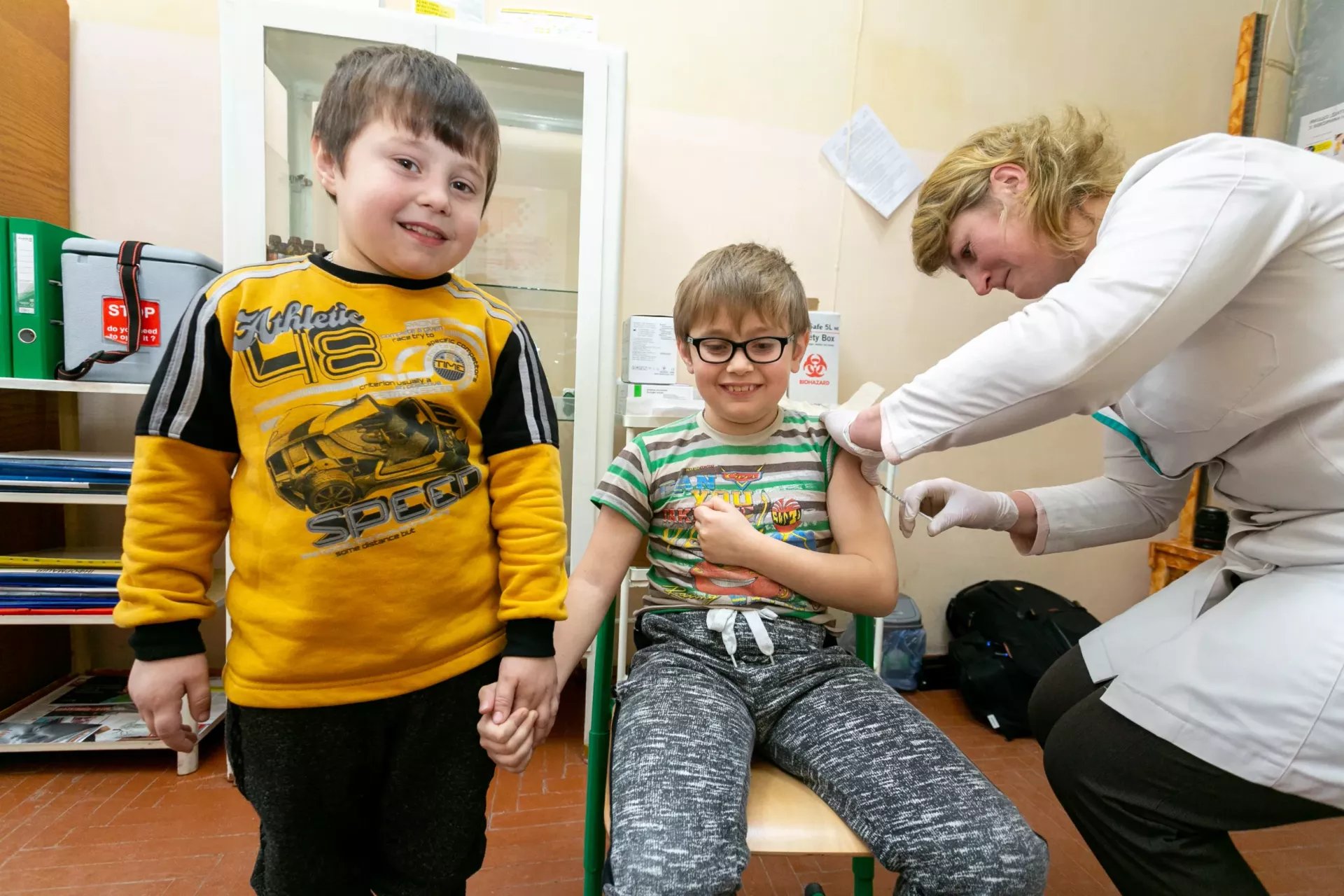
The MMR vaccine, which protects against measles, mumps, and rubella, has been available since 1971. Mumps, which is asymptomatic in about one third of those infected, can cause nerve damage and encephalitis, while rubella, also called German measles, can cause birth defects in pregnant women. The MMR vaccine is safe and effective. In the more than 50 years since the vaccine was first introduced, tens of millions of babies and children have been followed and studied to track both the immediate and long-term impacts of the vaccine.
What has the impact of the vaccine been?
Since the World Health Organization launched its Expanded Programme on Immunization in 1974, millions of lives have been saved. It is estimated that, over the last 50 years, the measles vaccine specifically has saved 94 million lives, the vast majority of them young children. Increased coverage rates, and the roll-out of two doses (rather than one), decreased measles deaths further. In 2000, more than 800,000 people died of measles worldwide. In 2022, deaths were one-eighth of this number.
However, with vaccine hesitancy on the rise as well as immunization coverage falling during the pandemic, progress is backsliding. In 2023, 500,000 children across the 53 countries in Europe and Central Asia missed the first dose of their measles vaccine. Less than 80 per cent of eligible children in Bosnia and Herzegovina, Montenegro, North Macedonia and Romania received their first dose of the measles vaccine. In large part, as a result, in 2024, the European Region recorded the highest number of measles cases in more than 25 years.
Why are some people not vaccinated?
Because most countries recommend the first MMR vaccination around the age of one, infants under that age usually are not vaccinated. Neither are the small minority of people who are immunocompromised and not recommended to get the vaccine. Other than these categories, people may not be vaccinated for different reasons. Some are not vaccinated because of misunderstanding around which categories of people have contraindications for the vaccine. Often, marginalized communities with less access to healthcare overall, such as Roma or refugee and migrant populations, have lower rates of vaccination. The ongoing persistence of misinformation about vaccines, now also spread through social media, mean that many families may be making the choice not to vaccinate based on false claims that this is protecting their children.
Why are two doses of the MMR vaccine recommended today?
The first dose of the vaccine offers about 93 per cent immunity, while two doses confer more than 97 per cent. While this difference might seem slight, it results in millions more children protected every year when they receive two doses instead of one.
When should children get the MMR vaccination?
Immunization schedules vary by country depending on which diseases are most prevalent, as well as a child's individual risk factors. In some countries, babies as young as six months of age might be eligible for the MMR vaccine depending on whether there are local outbreaks or if a family is traveling abroad. In general, in the European Region, however, the first vaccination is recommended around 12 months of age. You can find an overview of the recommended vaccines and approximate dates from your local health centre, doctor or your government’s Ministry of Health.
What side effects are caused by the MMR vaccine?
Most children who receive MMR or MMRV (combined MMR and varicella) vaccine experience no adverse effects. However, temporary and common reactions can include mild swelling, soreness at the injection site, or a low-grade fever. These effects are short-lived and far less severe than the dangerous complications of measles, mumps, or rubella.
What about developmental delays and disorders?
The vast majority of scientists agree that MMR vaccine does not cause developmental delays or disorders, including autism. You may have heard this idea before, but it originated from a retracted 1998 paper on a skewed sample of 12 children that was riddled with problems, errors and undisclosed conflicts of interest. It has been debunked many times. Since then, scientists have tracked the development of hundreds of thousands of children around the world after receiving the MMR vaccine. No credible study has found any evidence of a link between the MMR vaccine and autism. For example, one study of 537,303 children in Denmark found that vaccinated children were no more likely to have autism than unvaccinated children. Another study of 535,544 vaccinated children in Finland found no trend in terms of children being diagnosed with autism after an MMR vaccination. Many more large-scale studies have come to the same conclusion. This scientific review provides a good overview of the research that has been done on more than a million children since then, all of which has found no link.
How do vaccinations impact the ability to fight other infectious diseases?
Vaccinations do not increase the risk of contracting other infectious diseases. In fact, there is evidence vaccines may help the immune system fight against even those viruses that weren't specifically vaccinated against, thanks to how they help the body to recognize similar types of infections.
Multiple studies have found that vaccinated children are no more likely to get sick from unrelated infections than children who are not vaccinated. The risk may even be reduced. For example, over the three months after receiving the measles, mumps and rubella (MMR) vaccine, vaccinated children were no more likely to get either an unrelated bacterial or viral infection than children who were not vaccinated. On the other hand, children who contract measles are at a greater risk of contracting other infections in the months, and even years, afterwards because of how measles "erases" parts of our immune memory.
Do vaccinations overload a baby's immune system?
No. Vaccinations do not overload a baby's immune system. In fact, it's the opposite. Even when multiple vaccines are given at once, the number of antigens is minuscule compared to the daily exposure to germs babies encounter from the environment, such as bacteria and viruses. Babies' immune systems are designed to handle far more than the small number of antigens present in vaccines. Vaccinated children even have the same overall levels of antigen exposure as unvaccinated children, proving that vaccines do not overwhelm the immune system but instead strengthen it to fight disease effectively.
What is in the MMR vaccine?
Like all vaccines, the MMR vaccine contains an antigen that trains the immune system to recognize and fight off the disease in the future. The MMR vaccine, specifically, contains live, weakened (attenuated) viruses that do not cause disease in healthy individuals but stimulate strong and long-lasting immunity.
Is it better to get immunity 'naturally', through contracting measles?
No. Immunity acquired through contracting a disease can be less reliable and not last as long as the immunity acquired through the body's natural response to a vaccination. In addition, there are serious risks that come from the infection itself.
What is herd immunity?
If enough people in your community are immunized against a certain disease, you can reach something called herd immunity. When this happens, diseases can’t spread easily from person to person because most people are immune. This provides a layer of protection against the disease even for those who cannot be vaccinated, such as infants.
Herd immunity also prevents outbreaks by making it difficult for the disease to spread. The disease will become more and more rare, sometimes even disappearing entirely from the community.
For measles, it is normally estimated that about 95 per cent of a community must be vaccinated to reach herd immunity.
Are there benefits to delaying your child's vaccine schedule?
No. There is no benefit to delaying or "spacing out" a child's vaccines, but there is risk. Any time a parent delays a vaccine, they are increasing their child’s vulnerability to severe diseases, as well as the possibility that the child might infect other people, including those who are not eligible for vaccination. Read more about common misconceptions about delayed vaccination schedules and talk to your family’s doctor.
Can you 'catch up' your child, if you didn't vaccinate at the recommended time?
For most vaccines, it is never too late to catch up. Talk to your family's doctor about how to get any missed vaccination doses.