Joint statement by UNICEF Executive Director Catherine Russell and WHO Director-General Dr. Tedros Adhanom Ghebreyesus ahead of World Breastfeeding Week
Countries urged to strengthen breastfeeding support and health systems to give every child a healthy start in life
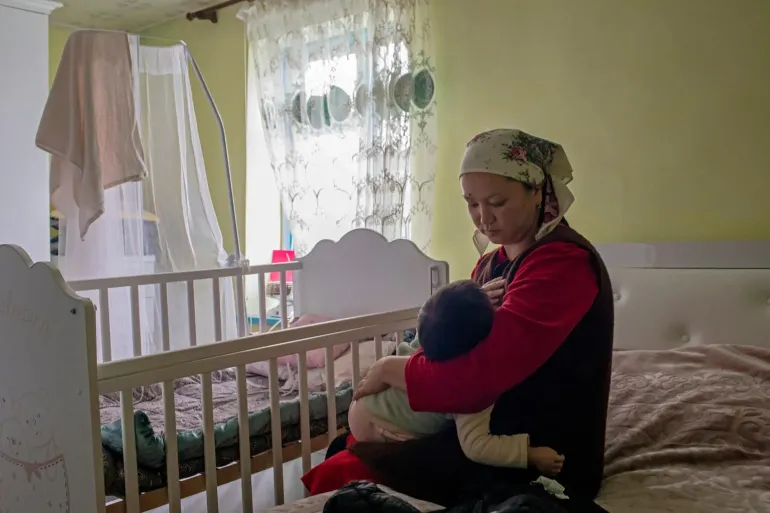
GENEVA/NEW YORK, 31 July 2026: Too many mothers and families around the world still lack access to services and interventions that enable and support breastfeeding.
Yet breastfeeding is one of the simplest and most powerful ways to protect a child’s health. It provides infants and young children with essential nutrition, increases immunity, helps protect against serious illness, and supports cognitive development.
For mothers, breastfeeding brings important health benefits too, helping reduce the risk of non-communicable diseases such as breast and ovarian cancers, and type 2 diabetes.
Encouragingly, breastfeeding rates around the world are going up. Exclusive breastfeeding in the first six months rose from around 37 per cent in 2012 to over 47 per cent today. In the past five years, the prevalence of breastfeeding up to two years of age rose from 38 per cent to 50 per cent.
These gains show that sustained investments in policies and programmes for mothers and families are working. Yet progress remains uneven, with many countries lagging behind global targets. Coverage of services supporting breastfeeding remains low, policies are inconsistently enforced, and service quality is often inadequate, especially in low-income, fragile, and humanitarian settings.
The evidence is clear: Cost-effective interventions include skilled breastfeeding support in health systems, community-based counselling, maternity protection policies, and protection from the exploitative marketing of commercial milk formulas.
The returns are significant. Scaling up breastfeeding could prevent almost 400,000 child deaths and around 140,000 maternal deaths each year. Every US$1 invested in breastfeeding promotion generates an estimated US$59 in economic returns through lower healthcare costs, improved cognitive development, higher educational attainment, and increased lifetime earnings.
This World Breastfeeding Week, under the theme, “Breastfeeding for a Sustainable Start in Life: Strengthen What Works,” UNICEF and WHO are calling on countries to:
- Strengthen health systems to provide quality breastfeeding support for mothers and newborns.
- Expand community-based counselling and peer programmes.
- Fully implement and enforce the International Code of Marketing of Breast-milk Substitutes.
- Invest in paid maternity leave and supportive workplace policies.
- Integrate breastfeeding interventions into antenatal, perinatal, and postnatal health care services.
- Sustain breastfeeding support in humanitarian and fragile contexts.
Breastfeeding is vital. By investing in proven solutions, we can give every child the best possible start in life and ensure every mother gets the care and services she needs.
Media contacts
About UNICEF
UNICEF promotes the rights and wellbeing of every child, in everything we do. Together with our partners, we work in 190 countries and territories to translate that commitment into practical action, focusing special effort on reaching the most vulnerable and excluded children, to the benefit of all children, everywhere.
For more information about UNICEF and its work for children, visit https://www.unicef.org/eca/.
Follow UNICEF on Twitter and Facebook.
About WHO
Dedicated to the well-being of all people and guided by science, the World Health Organization leads and champions global efforts to give everyone, everywhere an equal chance at a safe and healthy life.
We are the UN agency for health that connects nations, partners and people on the front lines in 150+ locations – leading the world’s response to health emergencies, preventing disease, addressing the root causes of health issues and expanding access to medicines and health care. Our mission is to promote health, keep the world safe and serve the vulnerable.
“Together for health. Stand with science”, the theme of World Health Day 2026 marks a year-long campaign to highlight science as the foundation for protecting health and well-being worldwide.