Learning for the future: How Ukrainian youth in Poland are creating new opportunities
How refugee youth from Ukraine in Poland are shaping solutions, leading initiatives, and building pathways for themselves and their peers
- English
- Українська
- Polish
Artur was only 12 when the war escalated in Ukraine, forcing his family to leave their home in Kyiv for Poland. Their journey brought them first to the city of Puck, then to Sopot. Despite the upheaval, Artur adapted quickly, enrolling in a Polish school while continuing his Ukrainian education online so that, one day, he might be able to get his Ukrainian diploma. But what weighed on him most wasn’t the double workload; it was being so far from familiar faces and friends.
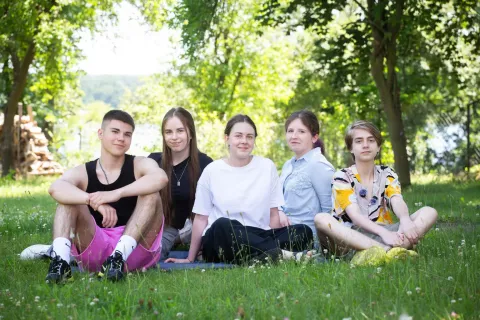
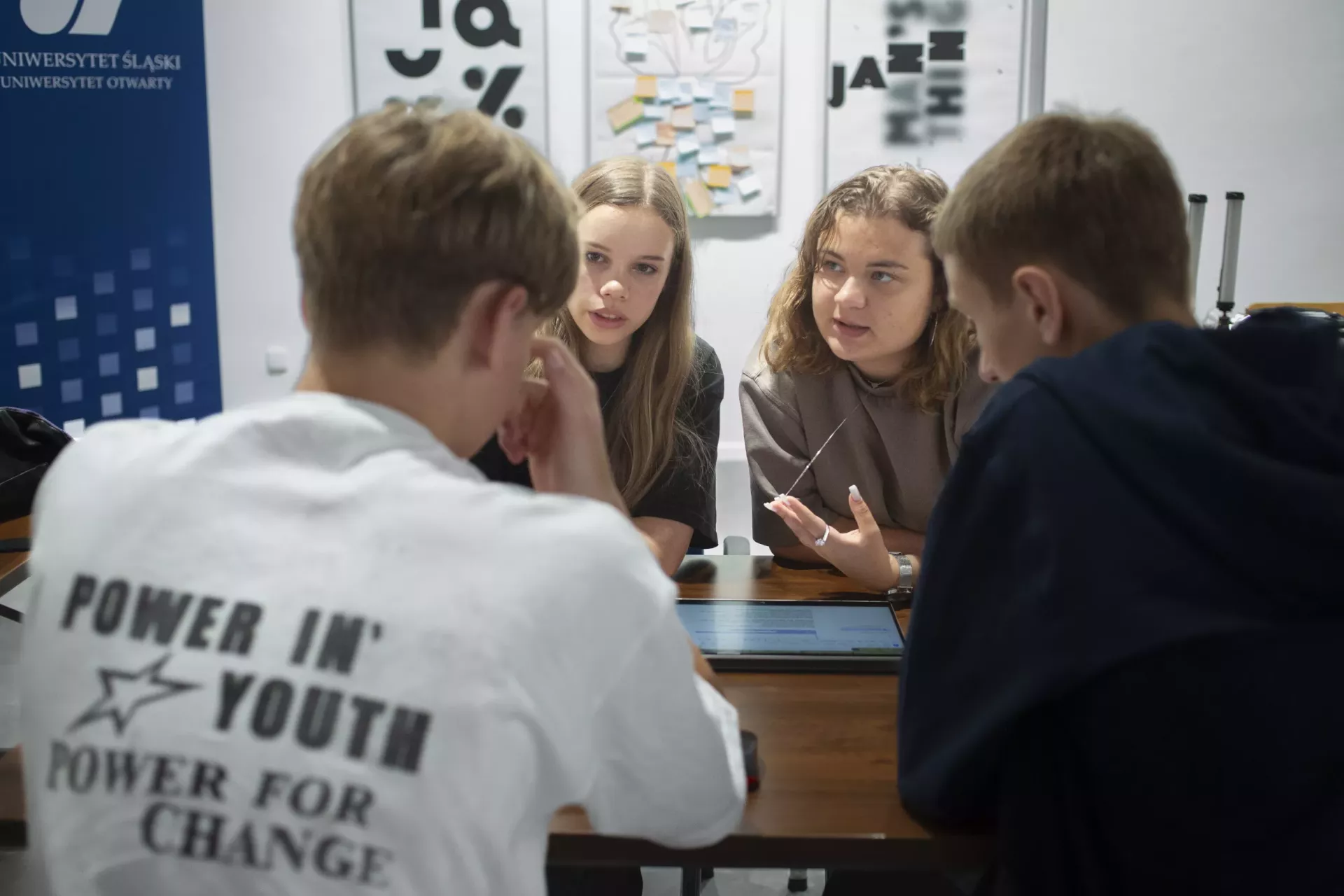
To build connections and find support, Artur joined UPSHIFT, a UNICEF-supported programme for youth and adolescents. Together with five other young Ukrainians who fled after the conflict escalated, he co-created the “University of the Dream”, a peer-led project helping refugees navigate their new realities and look ahead to brighter futures. The team visited universities in Warsaw to meet with students and learn first-hand about the admission process and opportunities for Ukrainians. They then shared this knowledge with 180 peers in their schools.
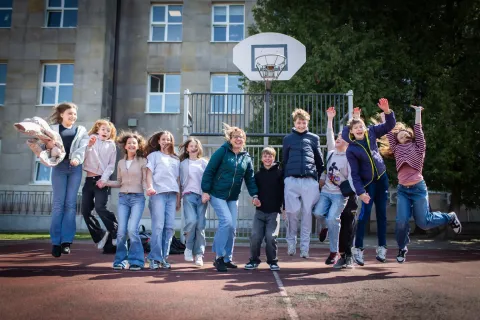
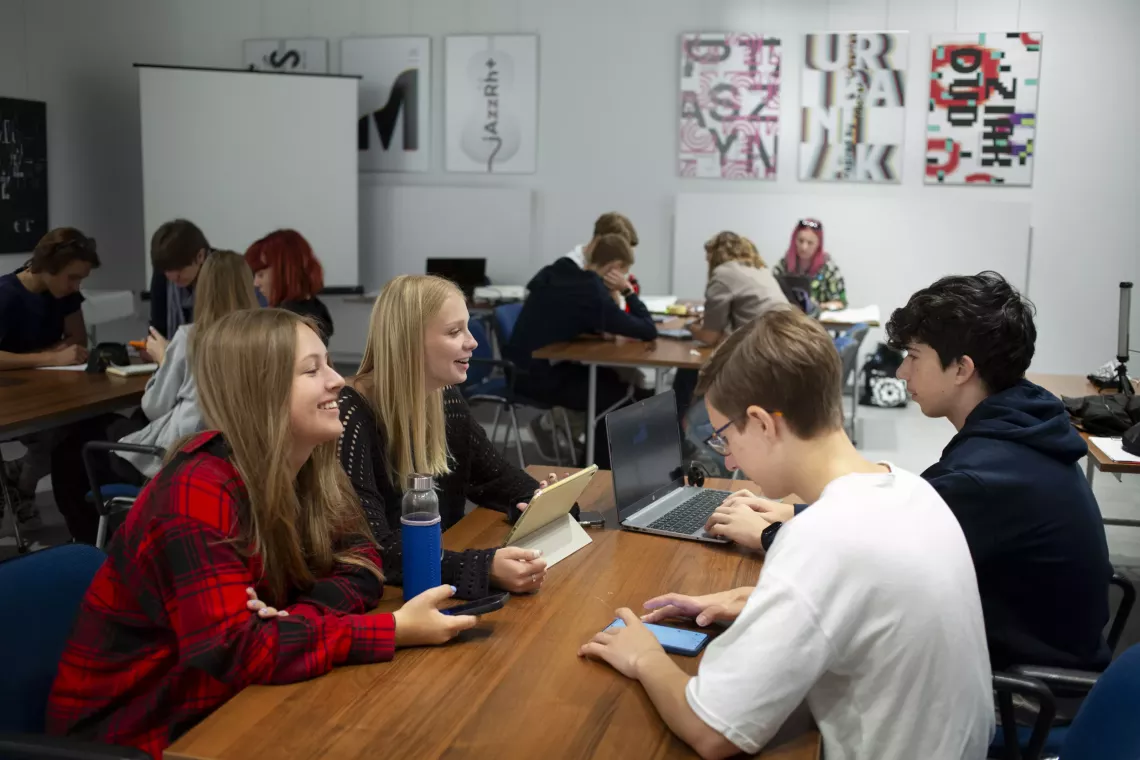
This summer, his journey continued at a camp near the Polish-Czech border, organized by UNICEF and the University of Silesia. Sixteen young Ukrainians worked alongside mentors to shape the creation of the “Back to Learning” initiative, a collaborative effort with the Polish Ministry of National Education focused on supporting refugee children and adolescents in the Polish education system. The project highlights the challenges for refugee adolescents trying to enter and stay in the Polish education system.
The “Back to Learning” initiative provides refugee children, adolescents, parents, and teachers with the information, tools and support they need to succeed in school. For young people, this means practical guidance on enrolment, resources to help them adapt in a new education system, and opportunities to build advocacy and leadership skills through youth-led activities. For parents and teachers, the campaign offers training, easy-to-use materials, and clear information to support children’s learning and well-being in multicultural classrooms. By combining direct support with awareness-raising, “Back to Learning” helps ensure that every child can access education, feel included, and thrive.
A 2024 report by UNICEF and the Centre for Education Development (CEO)shows that the largest group of newly enrolled Ukrainian refugee students are aged 15 to 17. The same age group also faces language barriers, difficulties in connecting with Polish peers, and the pressure of often balancing school with work – challenges that can affect their grades, self-confidence and long-term prospects.
This year’s “Back to Learning” initiative concentrates on adolescents and youth from Ukraine, the group most at risk of dropping out of school in Poland. In workshops, participants crafted messages aimed at their peers from Ukraine, who may be reluctant to enroll or stay in school; Polish youth, whose empathy and solidarity plays a key role; teachers, who are at the core of the support for refugee students; and refugee parents, many of whom struggle to guide their children’s education in a new system.
“I understand those who are still outside the system – I could have been one of them,” said Artur. “That’s why I want to encourage them to stay in school. If I hadn’t enrolled in a Polish school, I wouldn’t have the opportunities I have now or the possibility to make my dreams come true.”

Artur’s dreams are big. In Sopot, he continues learning Chinese, a language he became fond of while still living in Ukraine. Recently, he won first place in a national Chinese language contest and now prepares for an international competition in China, with a chance to earn a scholarship at a top university there.
Seventeen-year-old Mariia, another Back to Learning participant, came to Poland from Berdyansk in southern Ukraine. Upon arrival in Wrocław, she enrolled in a Polish school while, like Artur, continuing her Ukrainian studies online. This year, she started a technical secondary school, specializing in advertising. Mariia hopes to attend university one day but faces tough choices: “With only one parent working, I need to start earning soon. That’s why I chose this type of school. If I can, I’ll work and study and maybe go to university later.”

Stories like Mariia’s are common. The “Back to Learning” initiative shows young refugees that dropping out isn’t their only option – schools can provide practical skills and multiple pathways to success.
But obstacles run deep. Bullying is one such barrier, often lowering academic performance, increasing absenteeism, and sometimes leading to anxiety or depression. Vulnerable children – including those from low-income families, with disabilities, or with refugee and migration experiences – are disproportionately affected.
“Some children change schools to escape it. Others stop attending Polish schools altogether, studying online or even returning to Ukraine,” says Kateryna Pankiv, psychotherapist and educator at the Ukrainian Educational Hub in Poland.

To address this, UNICEF Refugee Response Office in Poland works with schools through the Anti-Bullying in Schools (ABS) programme, a school-focused initiative designed to prevent and respond to bullying. ABS operates on multiple levels – individual, class, family, school and community – offering support of trained specialists and practical tools tailored to each school’s needs. The programme fosters safe environments, strengthens collaboration within schools, and equips the entire school community to prevent and respond effectively to bullying.
Yet bullying is not the only challenge weighing on young refugees. Many adolescents who have fled the war also struggle with broader mental health issues. The trauma of displacement, separation from loved ones, and uncertainty about the future often create an invisible burden that goes beyond the classroom.
“They grow up in the shadow of war, even far from the front lines. The constant stress at home, the flood of information – all that impacts these young people deeply,” Kateryna says.
That is why UNICEF not only addresses bullying but also strengthens mental health and psychosocial support programmes in schools and communities across Poland. These initiatives equip teachers, psychologists, and caregivers with tools to recognize distress, provide safe spaces for young people to share their feelings, and ensure timely professional help when needed. By normalizing conversations around mental health and making support more accessible, UNICEF helps refugee children and adolescents rebuild a sense of stability, resilience, and hope for the future.
Stories like Artur’s and Mariia’s illustrate how refugee adolescents in Poland are breaking down barriers to education, leading initiatives, and inspiring their peers and communities to support every child’s right to learn.
This work for refugee children and caregivers from Ukraine in Poland is made possible thanks to the generous support of the Bureau of Population, Refugees, and Migration of the US Department of State (PRM) and the Government of the Republic of Korea and the Government of Japan.