How children’s experiences are transforming child protection and child justice systems in Bulgaria
Over the past two decades, a transformation in child protection and child justice systems has been unfolding across Bulgaria – one driven not by institutions alone, but by children’s own voices

The integrated protection models Zona ZaKrila and Zona ZaKrila Plus, together with the national school‑based prevention programme Steps Together, all developed with UNICEF support, help to create a safer, more supportive world for children – one in which their voices have real impact.
The story began in 2008 when Bulgaria opened its first Blue Room, a child‑friendly space for forensic interviews with young victims or witnesses of violence. Those early interviews with children revealed how a justice system built for adults was failing to respond to the needs of children. Listening to children’s experiences exposed the gaps and set reform in motion.
“The model did not emerge overnight,” says Prof. Neli Petrova-Dimitrova, Chair of the Institute of Social Activities and Practices (SAPI). “It grew step by step, from Blue rooms to centres for integrated provision of support providing services that respond to children’s complex needs.”
Developed by SAPI and the Animus Association Foundation and supported by UNICEF in partnership with local authorities, Zona ZaKrila is a child-centred approach inspired by the Barnahus model. Initially piloted in Sofia, Shumen, and Montana, it combined crisis intervention, psychological, legal, social services and child-friendly interviewing under one roof, providing child victims of violence, including witnesses of violence, a protected space for comprehensive, free support. Teams work closely with child protection departments, schools, police, prosecutors, and courts, ensuring that all institutions act in the child’s best interests.
By listening to how children experienced interviews, investigations and court processes, the model starts reshaping professional practice nationwide.
In 2024, Zona ZaKrila standards informed Bulgaria’s National Methodology on Child-Friendly Interviewing, a benchmark across the country. Today the UNICEF-supported model operates in 11 regions, with multidisciplinary teams established in eight additional municipalities.
As Zona ZaKrila expanded, children’s experiences revealed another blind spot, particularly for children in conflict with the law, whether victims or perpetrators.
In response, Zona ZaKrila Plus was created. Piloted in Sofia and Vidin, the Plus model extends the same listening-based, trauma-informed approach to children who have traditionally seen only through a punitive lens. It recognizes that harmful behaviour often grows out of unmet needs, exposure to violence and adult failure to protect children, and reframes justice by focusing on what has happened to the child and what support they need.
“Zona ZaKrila Plus is at the heart of Bulgaria’s multisectoral efforts to prevent and respond to violence against children and children in conflict with the law,” said Regina De Dominicis, UNICEF Regional Director for Europe and Central Asia. “We are grateful to partners and young people driving safer, more inclusive world for every child.”
While the Zona ZaKrila models work to protect and support children affected by violence, the Steps Together programme strengthens safety in schools by preventing violence and empowering children.
One way it does this is through its “Peacemaker” club, where children learn to foster a more supportive environment for all.
“Becoming a Peacemaker helped me turn my own experience of bullying into a commitment to support others and promote empathy among peers,” says 16-year-old Amalia Pancheva from the Vocational High School in Berkovitsa .
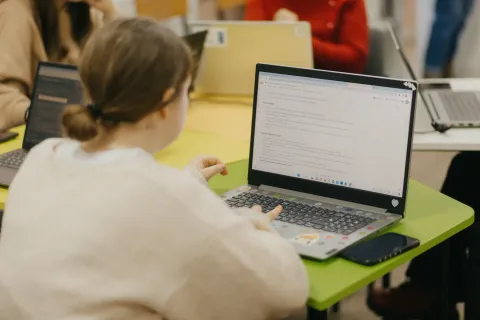
The timing of the initiative is crucial. The PISA 2022 report found that 24 per cent of Bulgarian students feel lonely, 28 per cent feel like outsiders, and up to 24 per cent experience bullying several times a month. Steps Together addresses this with a whole-school approach where students are equal participants in the process of change, together with their teachers and parents. Since last year, a new digital literacy and online bullying prevention component also responds directly to students’ voices, keeping the programme relevant to today’s challenges.
By the end of 2025, both the Zona ZaKrila models and Steps Together programme together reached more than 20,000 children and parents.
Both show that by treating children as credible narrators of their own experiences, Bulgaria can build a child protection and child justice system that are more humane, more effective – and genuinely child-centred.