Healing away from home
A generation of children who will shape the future of Ukraine
- English
- Polish
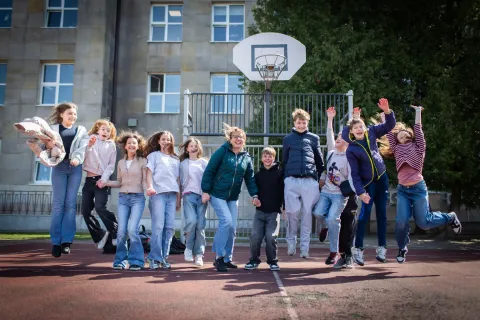
Each lived experience, each journey, each emotion builds a unique story of an individual, but if you gather them all, they are a story of a whole generation. A generation of children forced to flee their homes to survive. Millions of refugees, mostly mothers and children, crossed the border from Ukraine into Poland since the war escalated there in February 2022. Many of them had to rely on strangers to reach safety, to have a place to sleep, to eat a warm meal. If they arrived with any baggage at all, it was packed with emotional struggle. Today, around one million refugees are still in Poland, where they are looking for ways to recover.
It’s been two years now. Two years of uncertainty, separated from familiar environments, from friends and loved ones.
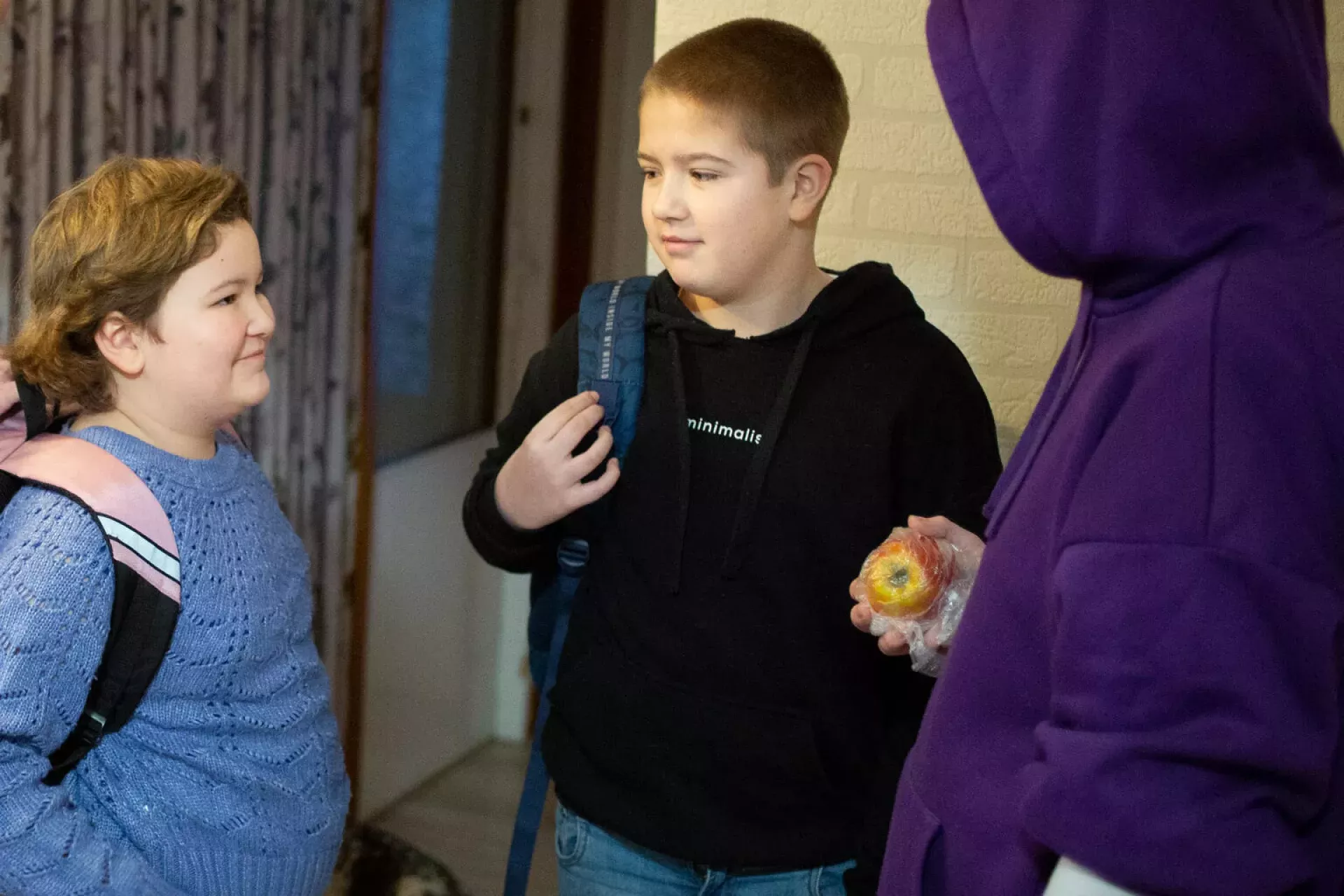
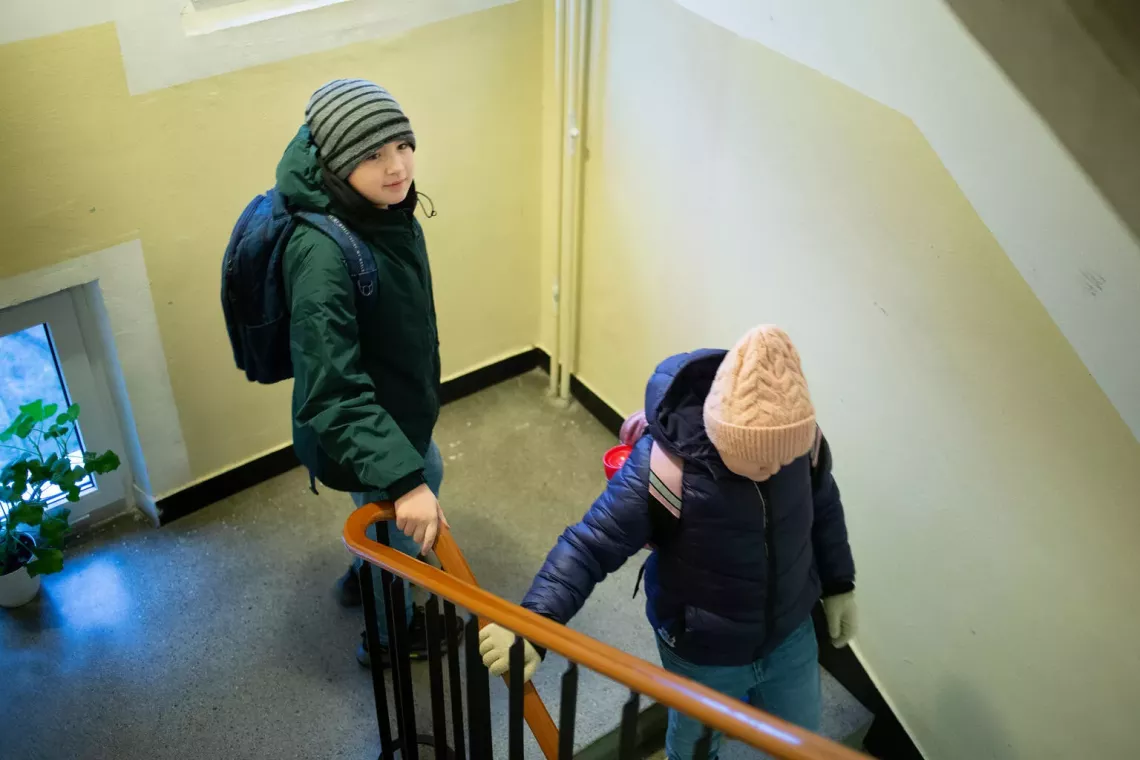
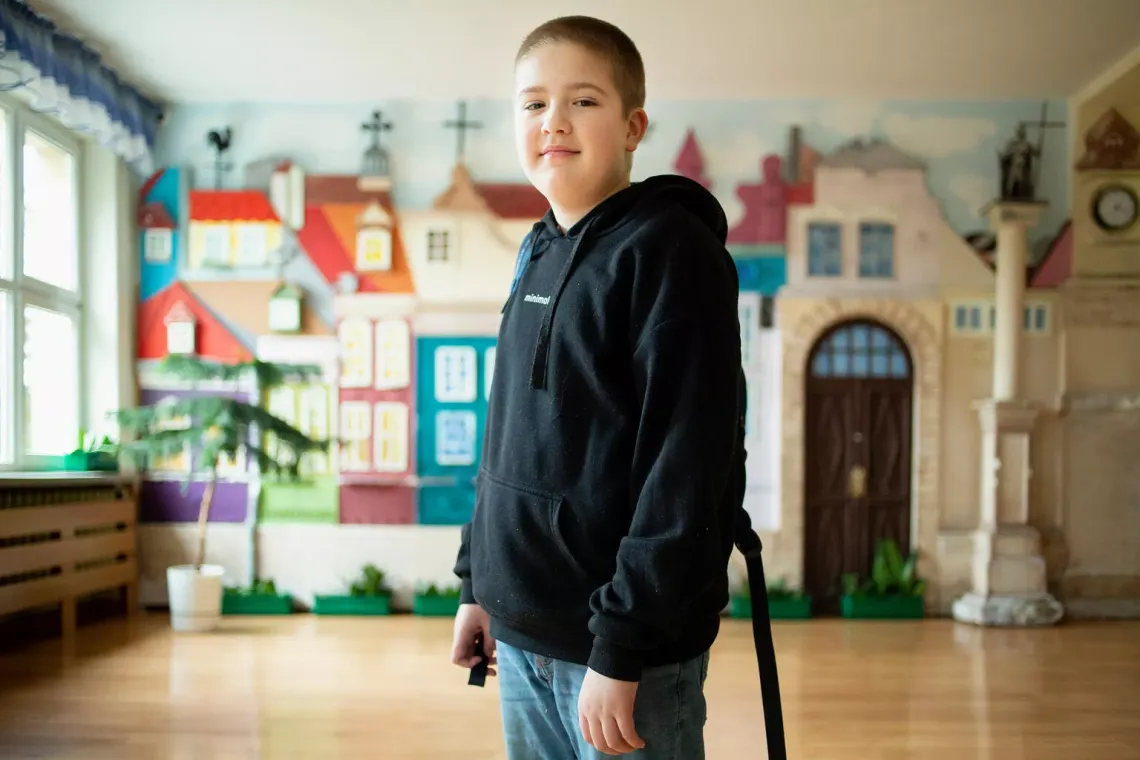
Dawlat is 11 years old this year. He came to Poland from Kharkiv with his mother, Olena, and younger sister, Natalia in March 2022. When they first arrived, Olena says that she was doing everything mechanically to survive. Before the war escalated, she worked at a hospital as a psychologist for women who lost their babies, so she was familiar with what happens to a person in crisis. At first, Dawlat also continued studying online with his school in Ukraine, as he was used to, but Olena soon decided to enroll him into a full-time school in Poland.
“I could not bear to see him scared and heartbroken watching his classmates and teachers run for life every time the air raid alarms would go off during lessons,” Olena shares. “I am glad we did that. It helped him start recovering psychologically, and he learnt Polish very quickly. He is now helping other pupils from Ukraine with Polish words if they don’t know how to explain something.”
According to statistics from the Ministry of Education of Poland, only around 54% of children and youth from Ukraine (age 5-19) attend the formal education in Poland in 2023-2024 school year, despite schools being open to accepting them.
The reasons for not enrolling are manifold: from psychological wellbeing and desire to preserve cultural identity to language difficulties and recognition of diplomas. According to a survey conducted by UNICEF through U-Report, a digital platform that engages young people on issues that matter to them, 45% of children and young adults said the biggest challenge for them, since leaving Ukraine, was adjusting to life in a new place. 34% responded that mental health is where they need most support in, while support in education came as the second top answer with 16%.
To support students from Ukraine overcome these challenges and transition to life in a new country, UNICEF in cooperation with its partner cities established 62 Education and Development Centers (EduHubs) around Poland. Among them is the EduHub established in collaboration with the Education Department of Warsaw Municipality, which provides a safe space for learning as well as support on promoting skills for mental health. In addition, through the UNICEF-Z Zurich Foundation partnership, the Institute of Mother and Child – an academic and research institution under Poland’s Ministry of Health – developed tools to facilitate mental health promotion and prevention activities, which were rolled out in Warsaw’s schools.
Dawlat comes to EduHub almost every day. At first, he was attending Polish language classes, but he liked it so much that he started staying for other activities. ‘’I like it here. I like solving riddles, analyzing the unknown and coming up with ideas – it is relaxing for me,” he says.
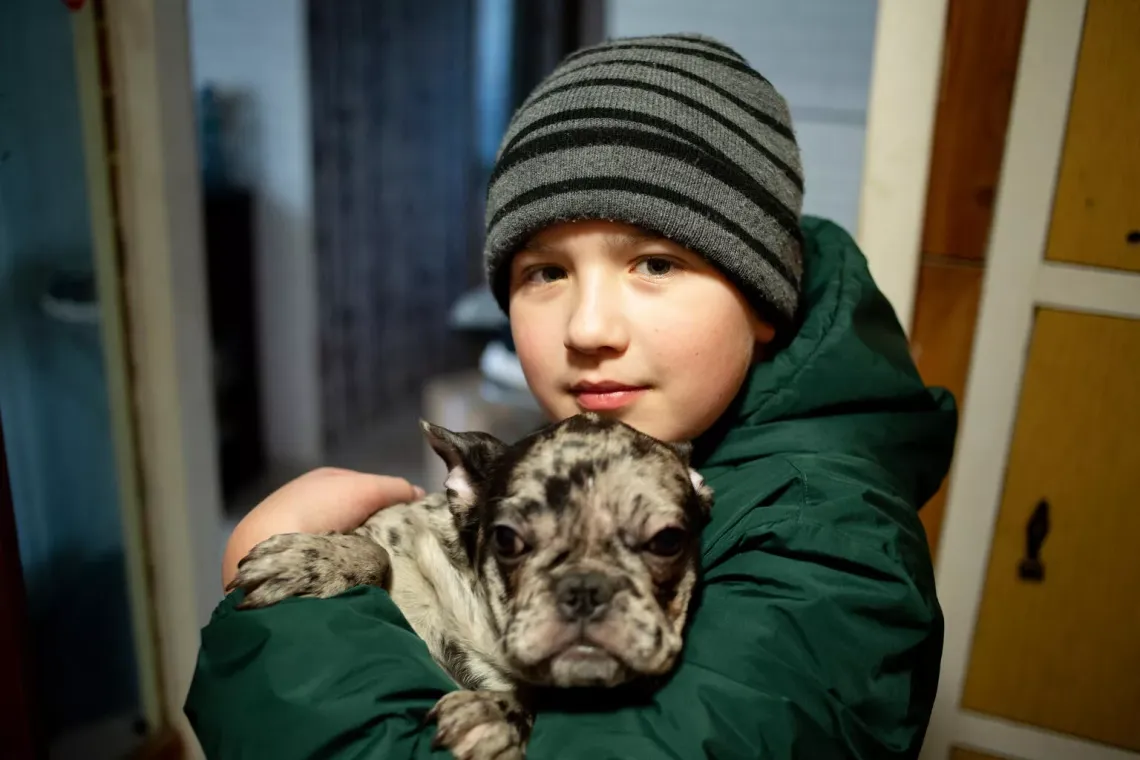
When Dawlat joined a photography workshop at EduHub, the homework was to photograph something that makes him feel good in Poland. Dawlat shares a picture of his family dog. “I don’t have many friends,” he comments on his choice. “She gives me love and I love her more than anything.” Other children seem surprised – after all, Dawlat is often surrounded by children and seems to have many friends. But not everything is visible on the surface. Just like some memories are so strong that they seem to have no expiry date.
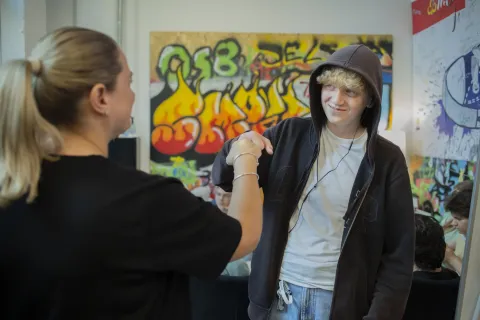
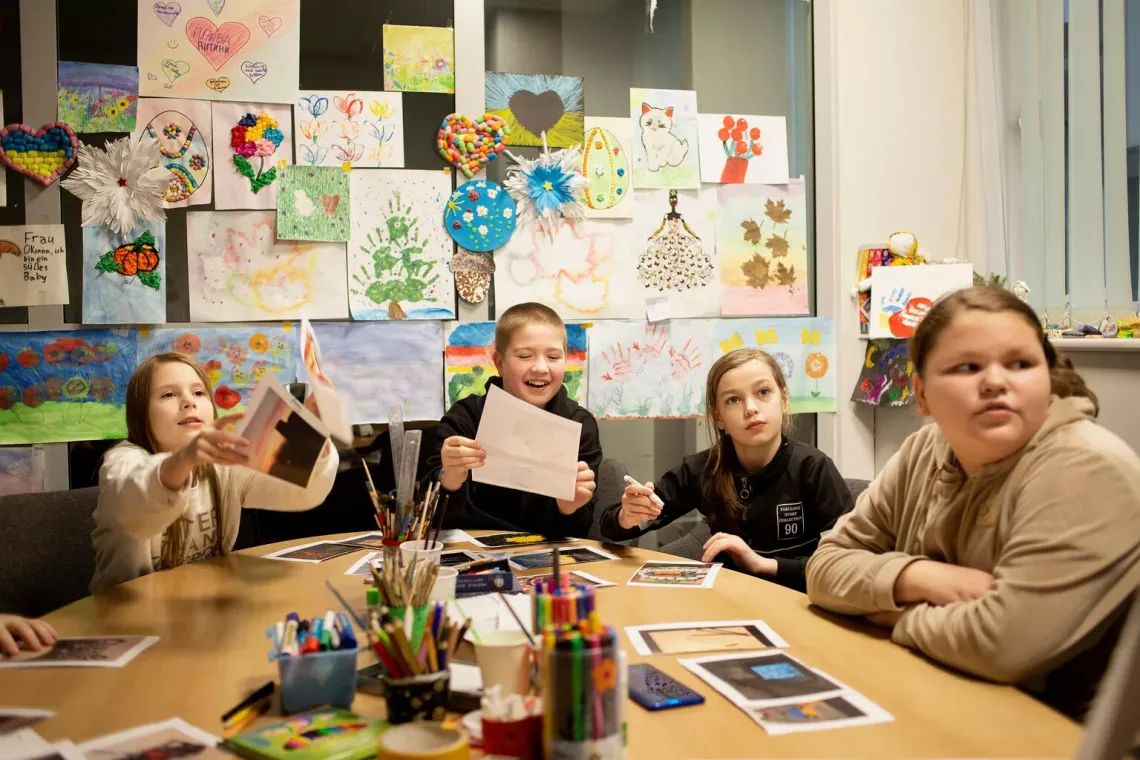
The workshops at EduHub help adolescents to identify and express their feelings. It also provides a structured way to build relationships with peers, which is particularly critical for social and emotional development at this age.
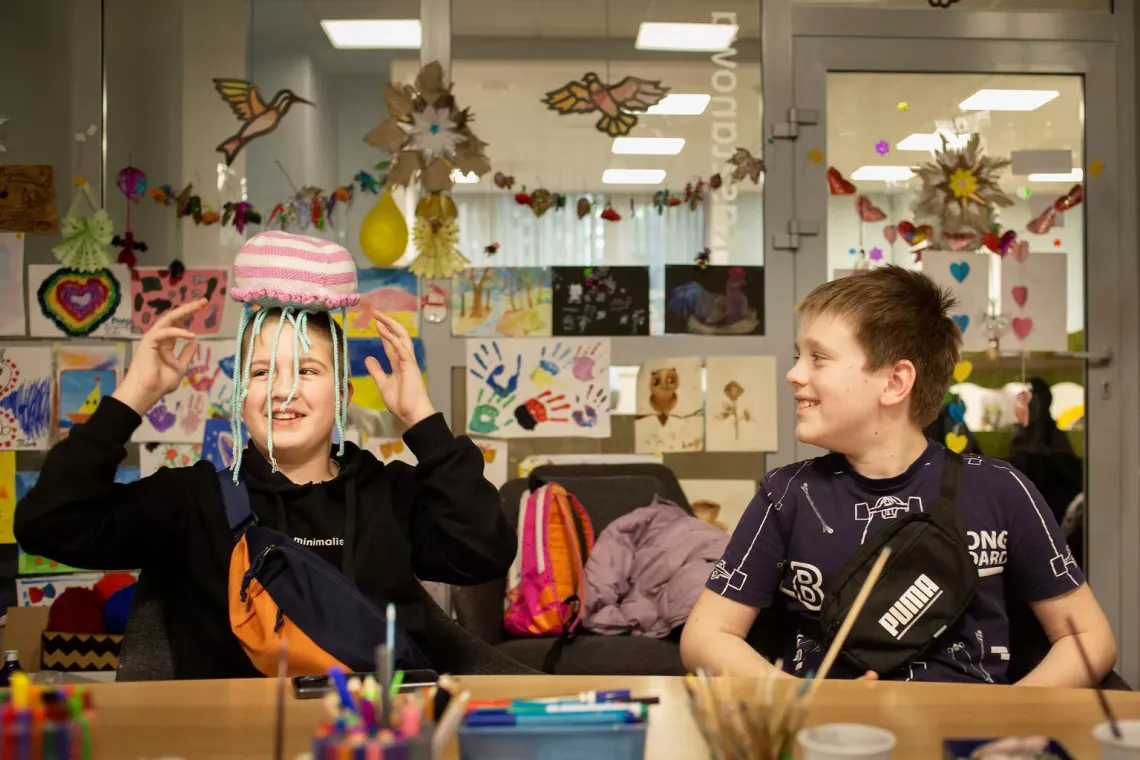
“It can be very difficult for children and adolescents to understand and express their emotions. In this context, art is a perfect tool to work with both children and mothers,” Oksana, who is a psychologist at EduHub and a refugee herself, comments. Oksana leads art therapy sessions for children and occasionally adults that help them identify and express their emotions through art. She says that having one place that offers a range of different services for refugees is not only convenient, but lifesaving, because of the stigma that still exists around mental health.
“Not every child can tell you what they experienced or what is on their mind. Through the session, we look at what children draw, collage, photograph, paint and it allows us to understand their experience without words. These images are often like a map to their past. We then use different techniques to heal these invisible wounds. It is not quick and easy, but it allows us to start the process of recovery.”
Mental health issues experienced in childhood can have prolonged impacts on health and educational outcomes unless identified and addressed early and effectively. According to Multi-sector Needs Assessment conducted in 2023, 40% of children from Ukraine in Poland are still at risk, and in need of protection and support services.
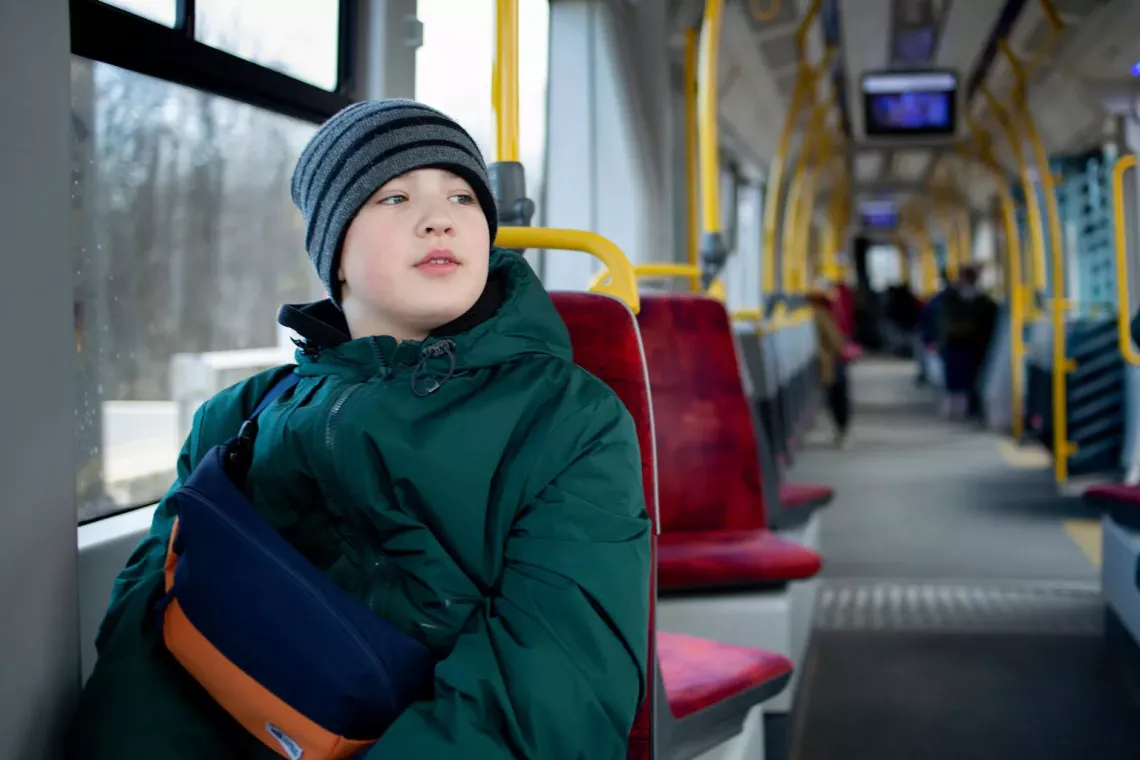
When Dawlat first arrived to Warsaw, his family did not know anyone here. Now he says he knows all the tram schedules perfectly, and easily navigates his way around the city. His teachers say that he is a very bright and open child who likes to take part in competitions, that he is a quick learner. He helps others a lot and made friends with both Polish and Ukrainian children in his class.
Just before lent starts, Poland widely celebrates “Fat Thursday” with eating enormous amount of pączki – Polish donuts. Dawlat likes the sweet treat and when he finds out that according to the Polish tradition, the more pączki you eat on this day, the more luck you will have, he asks if he can have another one.
“I need more luck,” he says. “I hope to come back to Ukraine one day.”
This work to support refugee children and families from Ukraine in Poland has been made possible thanks to generous contributions from public and private donors from around the world, including the people of Switzerland through the Swiss National Committee for UNICEF, the Z Zurich Foundation, and the Zurich Insurance Group.