Celebrating the resilience of Ukraine’s displaced mothers
Even in displacement, Ukraine’s mothers provide hope and healing to their children and communities.

- English
- Українська
- Polish
“For many of us who fled our homes, the full weight of caregiving – emotional, physical and financial – now rests on our shoulders,” says 27-year-old Vasylyna.
Vasylyna arrived in Kraków, in southern Poland, with her two young children, two-year-old Artem and three-year-old Yuliana, shortly after the escalation of the war in Ukraine in 2022.
“When we first arrived, my children became completely withdrawn from the world. They stopped speaking, even in Ukrainian, and of course they didn’t know Polish so they couldn’t communicate with anyone – not even at the playground,” Vasylyna recalls.
With time and support, things began to change. Thanks to services at the UNICEF-supported Sun Centre in Kraków, Yuliana’s speech improved significantly, while Artem, who was diagnosed with autism spectrum disorder, received specialized support. The centre – part of a municipality-run network of psycho-pedagogical counseling centers – offers tailored therapeutic support for children and caregivers, including developmental assessments, individual and group therapy, speech and language therapy, and psychological counselling.
Both Artem and Yuliana regularly attend sessions at the Sun Centre, and Vasylyna has also received much needed support there.
“It was very hard at the beginning – just me and the children in a new country. My son needed all my attention, but so did my daughter. At the same time, I had to earn money. It seems like I fell into deep depression. When I brought my children to the Sun Centre to help them, I was offered psychological support for myself there as well. This helped me get back on my feet,” she says.
Today, Vasylyna works as an administrator at the Sun Centre, while her children continue to attend therapeutic sessions.
Forty-year-old Iryna, another mother supported by the Sun Centre, fled Ukraine in 2022 with her two sons in search of safety. Her eldest, 13-year-old Maksym, has autism and a rare genetic disorder.
Before the war shattered their lives, the family lived peacefully in Vinnytsia, where Iryna taught Ukrainian to international students. She also trained as a psychologist to better support Maksym’s complex needs.
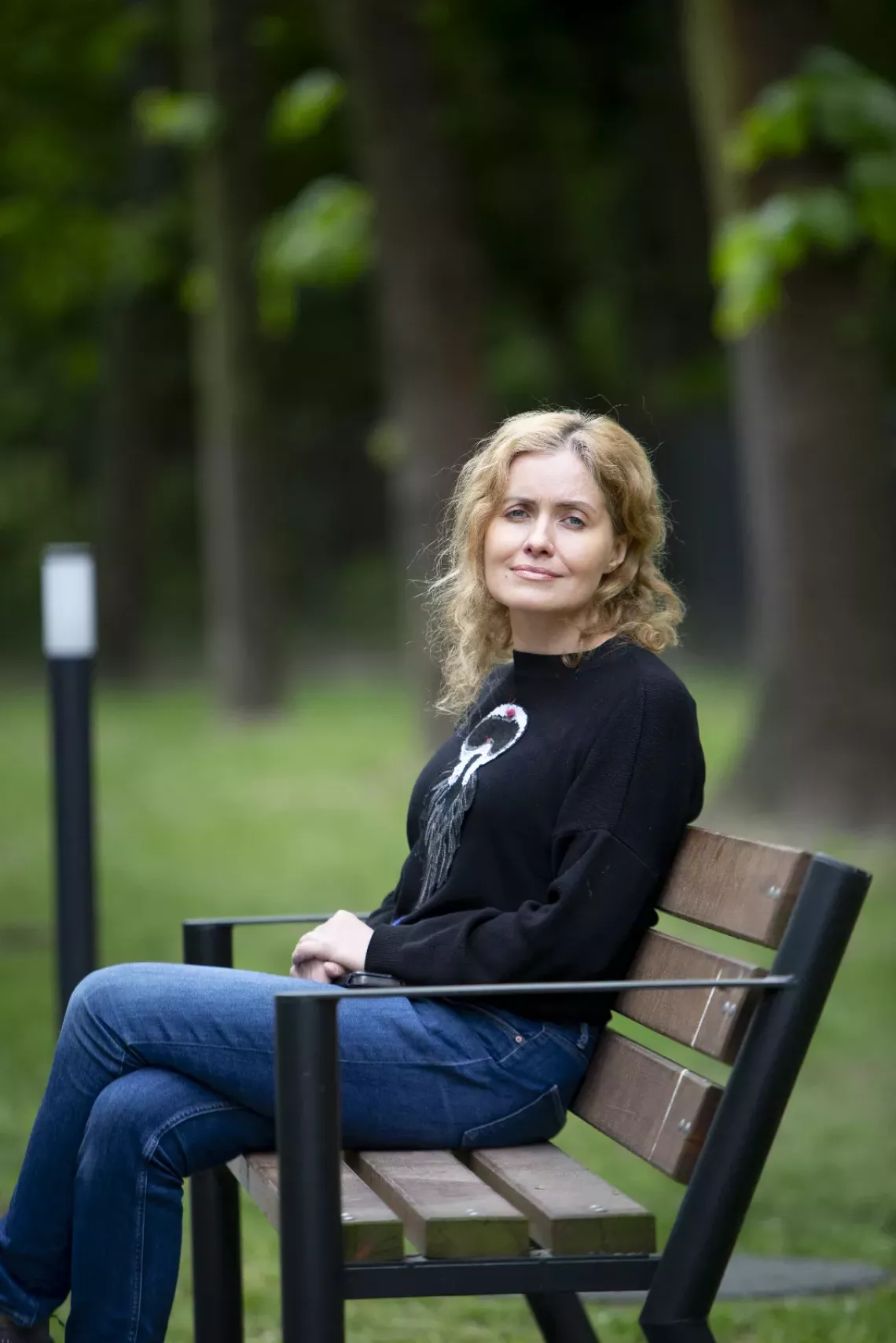

“I used to attend every one of his classes – he simply couldn’t manage school without me,” she recalls. But when the war escalated, the stress and fear overwhelmed Maksym: “He stopped sleeping. He stopped eating. He just screamed. That’s when I knew we had to run.”
At first, they found shelter in a church in Poland, sharing the space with 30 other displaced people. Eventually, they moved into a small apartment in Kraków.
“The Sun Centre became our anchor,” she says. “While our children attend sessions, we, the parents, talk to each other. We share advice and build a network of support.” For mothers who have been displaced and separated from the support networks they once had at home, building new relationships and sharing daily experiences and challenges is essential.
Her younger son, Zakhar, also attends sessions at the Centre. It was only after arriving in Poland that Iryna began noticing he was also showing signs of developmental delay. Shortly after, he too was diagnosed with autism and a genetic disorder.
“Right now, while he’s still so young, is when we have the best chance to help him,” says Iryna. “The specialists at the Sun Centre are exceptional,” she adds. Her younger son Zakhar regularly works with psychologist Ruslana, who, like many of the staff, is also a refugee.
Ruslana, an experienced psychologist, fled her home in Ukraine with her twin teenage sons and 27-year-old daughter Roksolana, who was in the final weeks of pregnancy.

Ruslana found employment at the Sun Centre early on, determined to help families like Vasylyna’s and Iryna’s find their footing in Poland.
While supporting other displaced families, Ruslana also had to care for her own. Her twin sons were finishing school and needed guidance in navigating their future in a new country. She also became a grandmother in circumstances different from what she’d ever imagined. With Roksolana’s husband absent, Ruslana also carried financial responsibility for the entire family.
Today her sons are students at the Jagiellonian University, and her granddaughter now attends kindergarten.

“Being a mother means juggling everything – your child’s needs, your own wellbeing, your home, your relationship. It’s a full-time, multi-tasking role,” says Roksolana, who went through the hardships of fleeing her country pregnant and gave birth in Poland, far from home.
On Mother’s Day, UNICEF celebrates the strength, resilience, and unwavering commitment of mothers like Vasylyna, Iryna, Ruslana and Roksolana.
This important work for refugee children and caregivers from Ukraine in Poland is made possible thanks to the generous support of the Bureau of Population, Refugees, and Migration of the US Department of State (PRM) and the Government of the Republic of Korea.