In Focus: Leveling the playing field for children with disabilities
Fostering inclusion of children with disabilities in their homes, schools and communities
Highlights
While progress has been made on the inclusion of children with disabilities in schools and communities across the Europe and Central Asia region, many continue to face discrimination that denies them their rights to education, health care, justice, protection and their full participation in society.
From the stigma to a lack of services tailored to their individual needs, these challenges can work in combination to exclude many children from the decisions that concern them, and from the communities around them.
They live in a region where disability has traditionally been defined and addressed in medical terms, children with disabilities are less likely to be viewed as individuals with abilities and potential. As a result, they are confronted with sometimes insurmountable barriers to accessing the vital support they need, and face heightened risks of isolation, violence and long-term institutionalization, including in so-called ‘special’ schools that often fail to provide proper care, let alone a quality education.
UNICEF is working to change this pattern. We work with governments to reinforce and implement policies that guarantee the rights of all children with disabilities. We support outreach services for families with young children that can identify and respond to developmental delays and disabilities at an early age, helping families stay together and giving children a chance to reach their potential. We aim to tackle the discrimination that excludes them from schools and communities, working to make schools more inclusive and to change attitudes towards disability.
We support efforts to shift resources for children with disabilities from residential institutions to family- and community-based services and assistive technology. We also aim to make health services and care accessible to every child with a disability. And we build alliances with organizations of people with disabilities, parents’ groups and the private sector to ensure the full inclusion of children with disabilities in family life, in schools and across communities.
Disability itself is diverse, and no two children with disabilities experience the world in the same way. Like every other child, each child with disabilities has their own unique combination of personal characteristics, family dynamics, socioeconomic backgrounds and more. That is why we focus on holistic approaches to meet the needs of each individual child, recognizing that ‘one size-does-not-fit-all’.
Files available for download
Key facts


Key policy frameworks

Convention on the Rights of the Child (1989)
Article 2: All rights apply to all children in every country without discrimination of any kind, irrespective of the child’s disability or other status.
Convention on the Rights of Persons with Disabilities (2006)
Article 7:
- States Parties shall take all necessary measures to ensure the full enjoyment by children with disabilities of all human rights and fundamental freedoms on an equal basis with other children.
- In all actions concerning children with disabilities, the best interests of the child shall be a primary consideration.
- States Parties shall ensure that children with disabilities have the right to express their views freely on all matters affecting them and are assisted to realize that right.
The European Child Guarantee (2021)
Working through National Action Plans in each EU Member State, the Guarantee aims to increase access to core social services for children at risk of poverty and social exclusion, including a special focus on children with disabilities.
The European Union’s Strategy for the Rights of Persons with Disabilities 2021-2030 (2021)
This aims to improve the lives of persons with disabilities in the EU and beyond, with an emphasis on addressing the needs of children and young people with disabilities.

Challenges
Stigma around disability drives the exclusion faced by children with disabilities across Europe and Central Asia. In Serbia, for example, 45 per cent of parents of children with disabilities say that they or their children have experienced insults, degrading treatment or harassment. Stigma and prejudice may also stop families seeking help or information, which leaves them struggling to cope and increases the risk that their child may be institutionalized.
Children with disabilities are more likely to live in poverty than other children, with parents often giving up work to care for them, and face higher costs for their healthcare, transport and other essentials. Every country in the region provides disability benefits for children, and some offer benefits to those who care for them. But these are not always adequate or accessible, and do not reach many children who need them. In Turkmenistan, for example, 60 per cent of those with severe disabilities do not receive a disability cash benefit.
The region still has the highest rate of child institutionalization worldwide – 232 out of every 100,000 children live in institutions – double the global rate. Across Europe and Central Asia, nearly half a million children aged 0-17 years remain in residential care facilities. Governments across the region have been shifting the focus from residential institutional care to family-based options for decades, but these reforms have often left children with disabilities behind. In the absence of specialized family-based options to meet their needs, children with disabilities are up to 30 times more likely to be in formal residential care than those without disabilities.
Health issues among young children may not be identified by service providers or parents early enough to prevent long-term impairments and specialist services are not always available – particularly in rural areas. Families may face long waiting lists for disability assessment, as well as high expenses. The services that are available often follow a medical approach to disability that aims to change the child, rather than the environment around them. Children and young people in the region are also at a high risk of mental health issues, and often lack support services to meet their needs.
Children with disabilities are more likely to miss out on education than their peers. The gaps start early: in 2022, only around 43,000 children with disabilities across 16 countries took part in early childhood education. The gaps widen during adolescence: in Georgia, almost 1 in 5 children are out of school at upper secondary school level, compared to 1 in 10 children without disabilities. Around 7 per cent of children with disabilities in Montenegro and Turkmenistan have never been to school.
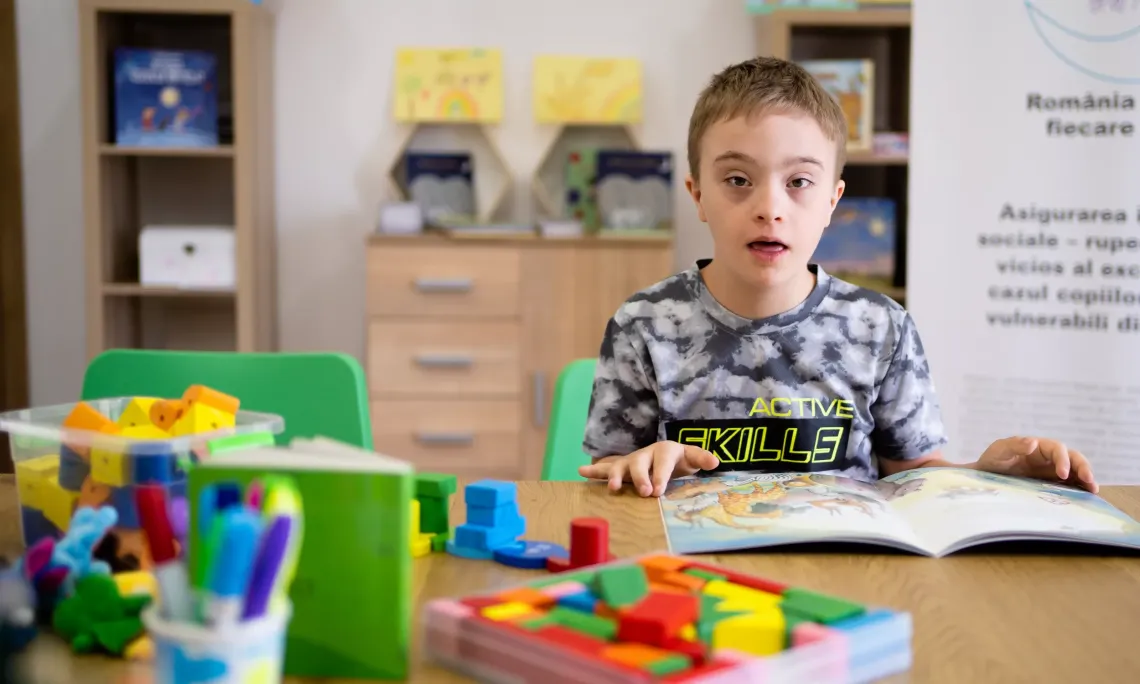
With mainstream schools often unable to cater for children with disabilities, there were 210,000 children with disabilities in special schools across the region in 2022, and thousands more in special boarding schools, isolated from their families and communities.
Assistive technology (AT) – such as hearing aids, wheelchairs and alternative augmentative communication (technology that helps children communicate with others) – helps children with disabilities to function in the world. But a lack of access to assistive technology in the region is linked to a lack of awareness about its importance, a lack of AT products and services, and poor integration with other services such as education, as well as a shortage of trained AT professionals.
Children with disabilities face higher risks of violence and abuse, often linked to their isolation, either in residential institutions where they are often unseen, or in their own homes. At home, children with disabilities face high risks of corporal punishment, abuse and domestic violence. More than 80 per cent of children with disabilities in Kyrgyzstan and North Macedonia, for example, have experienced psychological aggression from their caregivers. In Georgia, North Macedonia and Uzbekistan, they are more likely to experience severe physical punishment. There is also a lack of referral and support services for survivors.
Children with disabilities find it hard to access justice. The barriers can be physical, including stairs and doorways that make it difficult to visit courts, police stations and more. But they also include a lack of accessible communication techniques, which makes it harder for children to understand legal proceedings and share their views, and a lack of qualified professionals to help them communicate. UNICEF research in Albania, Georgia, Kyrgyzstan and Montenegro reveals a lack of support for children at risk of discrimination in the justice sector. Stigma about the capabilities of children with disabilities also discourages families from seeking justice.
Children with disabilities are particularly vulnerable during emergencies, yet they are often overlooked in humanitarian action – as they are in everyday life. Children with disabilities who have been affected by the war in Ukraine, for example, struggle to access essential services, medication, transport, bomb shelters or relocate to safer areas. Before the country’s full-scale war, around 45,000 children with disabilities were living in the country’s residential care institutions. Tens of thousands were sent home as the war escalated, often without the necessary support. Others remain in institutions where they are at risk of abandonment, neglect or evacuation without proper consideration of their needs. Research from Poland shows that refugee families of children with disabilities struggle to find information on the support available and face long procedures to validate disability certificates and access specialist care.

UNICEF’s work for children
UNICEF has promoted the full inclusion of children with disabilities in Europe and Central Asia for more than three decades. We started with deinstitutionalization reforms in Bulgaria, Romania, Moldova and the Western Balkan countries, expanding our work over time to inclusive education, early detection and identification, early childhood intervention, and disability-inclusive social protection.
Today, we aim to ensure that children with disabilities are empowered and recognized as their own best advocates and are seen as being essential to the creation of sustainable, cohesive and inclusive societies. We work to make sure that they receive the support they need during childhood so that they can live independently as adults – and as part of their communities. This means building enabling environments around them where they have full access to resources, such as assistive technology, as well as opportunities to reach their full potential.

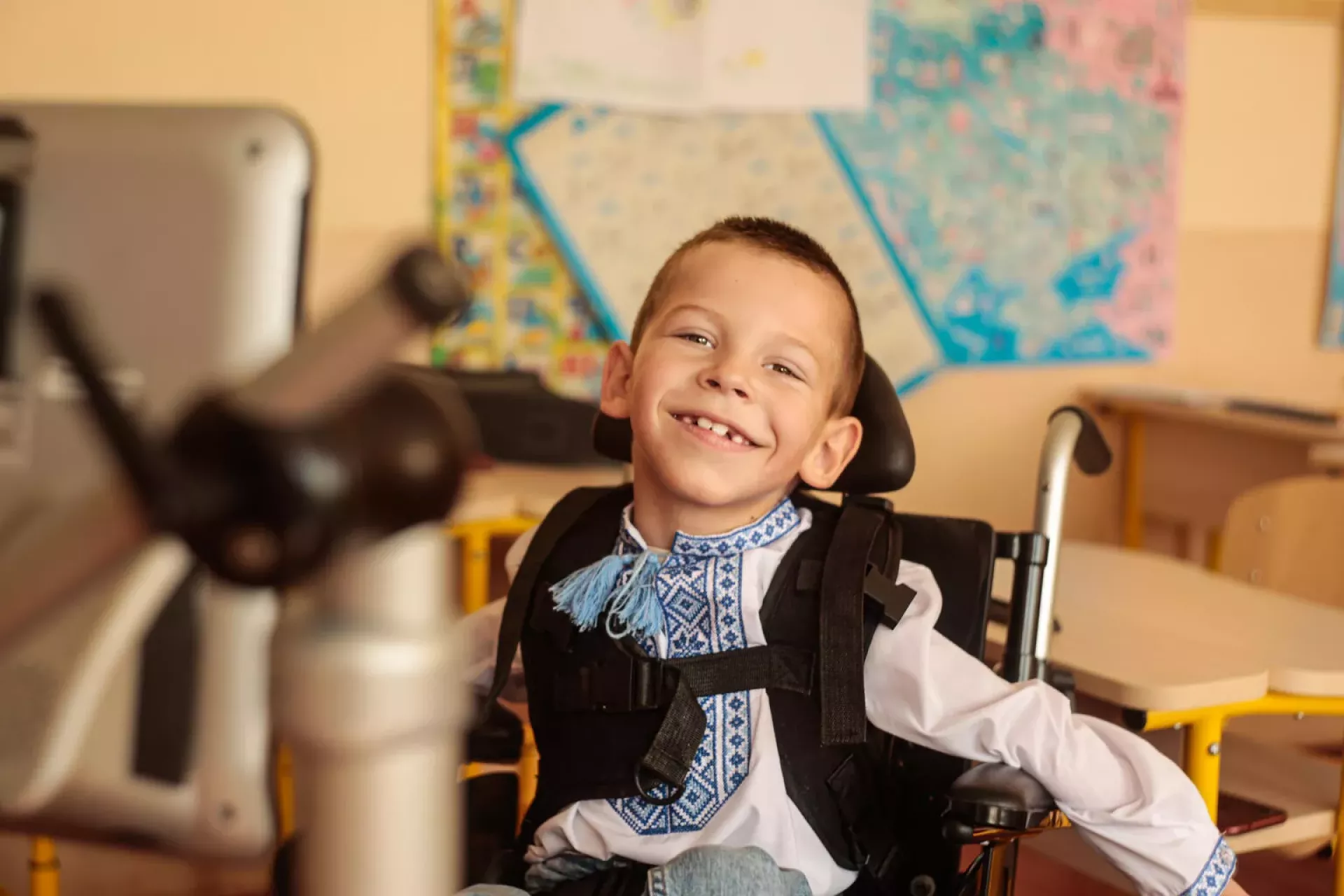
An eye tracker makes education accessible for Denys in Ukraine
Denys is going to school for the first time this year. As a result of a complex developmental disorder, this eight-year-old boy cannot walk or talk on his own. But now he can communicate with his teachers and classmates, as well as his parents, having become the first child in Ukraine to receive an eye-tracker provided by UNICEF.
As Denys prepared for school, his mother Natalya wondered how he would manage. “And I started looking for a tool that he could use at school and everywhere outside the home.”
The eye-tracker uses a special camera to record the movements of his eyes as he looks at images on a computer screen. During his very first lesson at school, Denys used it to read a rhyme to his classmates.
“Denys very quickly figured out how to use an eye tracker,” says Natalya. “He likes to communicate. He can write what exactly he wants at the moment, and we no longer need to ask him a lot of clarifying questions.”
As well as helping him to communicate and learn, the device contains a library of educational games that Denys enjoys. Denys spent a lot of time in his early years in rehabilitation institutions, and now Natalya wants to do everything she can to make sure he is included in the life of society, and that he communicates with other people as much as possible. She hopes that the device will help him to study not only at school, but also perhaps,
in a higher educational institution in the future.
“For me, the main thing is to see that the children around him, first of all, see Denys as a friend, a classmate, and not a child with some kind of limitations,” Natalya says.

UNICEF helps to strengthen capacities, systems and legislation for adequate child and maternal nutrition and health, as well as the early identification of – and early interventions for – children with developmental difficulties. We have, for example, piloted the open-source mobile app, ‘Cboard’ in Croatia, Montenegro, and Serbia to support young children with complex communication needs.
We have supported inclusive education reforms in the region since the late 1990s, contributing to significant advances in national inclusive education policies. Today, we promote major, long-term reforms, with a focus on the permanent embedding of inclusive education.
Sara’s inclusive education story
Sara, 11, enjoys her classes and socializing with her classmates at her school in Baku, Azerbaijan. She loves sports, gymnastics, reading and spending time with her friend Melisa.
“She has the same interests and dreams as other children,” says Sara’s mother Nurlana. When she was born, Nurlana worried about her daughter’s education. So she is thankful that her daughter now attends an inclusive school with her peers. The scale-up of inclusive schools has been spearheaded by the Ministry of Science and Education with support from UNICEF, enabling children with disabilities – and those without – to learn together.
Sara’s school is one of 40 in Azerbaijan that provide inclusive learning spaces for children with disabilities, helping them to learn, grow and be included. UNICEF and the Institute of Education support teachers, school leaders and psychologists, parents and communities to increase awareness and cooperation in inclusive education.
The impact goes beyond the classroom, according to Nurlana: “It changes our society, as children are raised seeing the diversity in the classroom and accepting it as the social norm.”
In 2023, more than 250 children with disabilities enrolled in inclusive schools across Azerbaijan. UNICEF continues to support the expansion of inclusive education for children with disabilities and the preparation of schools to provide quality inclusive lessons to children of all abilities.
UNICEF is a key partner for governments across the region on ending the institutionalization of children with disabilities and keeping families together wherever possible, strengthening family- and community-based care. We work, for example, to strengthen the capacities of social workers to support families of children with disabilities, including those with severe and complex conditions. The impact can be seen in Moldova, where institutions housing children with disabilities have been closed down.

Moldova closes its residential special schools
UNICEF has supported reforms by the Government of Moldova to close every residential special school and to channel resources to family-based care and inclusive education in mainstream schools for children with disabilities. As a result of these reforms, the number of children with disabilities in formal residential care fell by 95 per cent between 2009 and 2021, and every mainstream school in Moldova is now inclusive. Some of the old special schools have been repurposed to provide services for children with disabilities in their communities.
This achievement was made possible by wide-ranging reforms, based on cross-sectoral collaboration, changes in training and processes, and expanded support for families, as well as high-level political commitment and leadership. UNICEF helped to make the investment case, demonstrating that while the closure of boarding schools requires more investment in community-based education and social services, it offers major social and financial benefits in the long run.
We support the participation of adolescents with disabilities in policy development and in our own programming. In Belarus, Bulgaria, Kosovo1, Serbia, and Tajikistan young people with disabilities are members of UNICEF’s Youth Advisory Boards. In Kazakhstan, Ukraine and Uzbekistan, UNICEF empowers adolescents with disabilities by equipping them with advanced information and communication technology (ICT) and employability skills. And across the region, UNICEF works to include children and adolescents with disabilities in research and evaluations – a crucial investment in generating evidence on their situation and on their perspectives.
Finally, we work to ensure that children with disabilities are not overlooked in the humanitarian responses to crises.
1 All references to Kosovo should be understood to be in the context of United Nations Security Council resolution 1244 (1999)
Armenia: Support for children with disabilities during an emergency
When more than 100,000 ethnic Armenians were forced to flee to Armenia in 2023, UNICEF worked to ensure that children with disabilities and their families continued to have access to the support they needed. Four regional rehabilitation centres were equipped with specialized soft and wooden equipment and their staff members were trained to support children with multiple disabilities. Together with the SOURCE Foundation, UNICEF successfully identified and assessed 115 refugee children with multiple disabilities (including 30 from host communities), and provided them with specialized support, including assistive technology equipment for 30 children, and training and psychological support for 115 parents. This support during a humanitarian crisis demonstrated the importance of initial awareness and identification efforts, a holistic family approach, and investments in intensive family support to identify and assist more children with disabilities.
Call to action
The ground-breaking Global Disability Summit in 2018 stressed the need to break down the siloes between the sectors that are relevant for children with disabilities, from health and education to child protection and humanitarian assistance. There is also a growing recognition that no single government ministry, sector or UN agency, working in isolation, can create a more inclusive region for children with disabilities.
Looking ahead, UNICEF is focusing on five key and cross-cutting priorities, working with a wide range of partners, particularly organizations for people with disabilities, to:
- prevent stigma and discrimination
- enhance disability-inclusive services, programmes and workplaces
- ensure access to comprehensive community care and support services
- facilitate access to assistive technology
- promote disability-inclusive actions in humanitarian, emergency, and fragile contexts
- ensure the full and meaningful participation of persons with disabilities.