In Focus: The best start in life for every child
Supporting early childhood development

Highlights
Every year, nearly 6 million babies are born in the Europe and Central Asia region.
Every year, over 20 million children under the age of five in the Europe and Central Asia region learn their first words, take their first steps, draw their first pictures, and learn to socialize and empathize with others.
Each of these children comes into the world with immense potential and a unique set of social, economic and cultural circumstances. Some are born into safe, nurturing environments, while others face adversity, toxic stress, poverty and other challenges that undermine their growth and development from the start.
Young children cannot choose their beginnings or voice their needs. Yet, the conditions and circumstances they face when they are born and in their early years of life will determine how much of their potential will be realized.
It is UNICEF’s job to meet this challenge and help governments overcome the disparities young children are facing today, to re-write some of these beginnings and set children and societies up for success. And it is our mission to support families, caregiving networks, policies and programme systems that protect and nurture children across the region.
We have decades of knowledge, resources and know-how on what it takes to ensure that every baby, and every child, has the best start in life – the foundation for an equal chance to thrive and to succeed in life. We base our work on robust scientific evidence and our longstanding experience to support the policies, programmes and practices needed to nurture young children. We aim to ensure their optimal health and development, adequate nutrition, and opportunities for early learning and responsive caregiving, as well as their security and safety.
We also know that accelerating progress for young children and their families is an urgent priority. The early years are a short but critical window of opportunity, when investment in children and action to safeguard their rights has an outsized impact on their potential and, ultimately, on the future of our societies.
Files available for download
A once-in-a lifetime opportunity for growth and development
- At three years of age, a child’s brain is twice as active as an adult brain – a window of opportunity for their growth, development and learning that is starting to close by the age of seven.
- Up to 75 per cent of the energy a child consumes during their first years of life is used for brain development because they are growing faster and learning more than at any other time in their life. Their brains are 80 per cent of adult size by the age of three and 90 per cent by the age of five.
- This unique opportunity can be disrupted by stress, poverty, abuse, neglect or the deprivations triggered by conflict, climate change and forced displacement, heightening the risk of a lifetime of health and developmental problems. Deep and chronic adversities create toxic stress by producing high levels of cortisol, a hormone that disrupts brain development, limits the proliferation of brain cells, and damages health, learning and behaviour.
To reach their full potential, every young child, everywhere, needs:
- nutrition to feed their brain.
- good health that supports their growth and well-being.
- safety and protection that shield their brain and body from stress.
- stimulation and early learning to spark and sustain the neural connections that are being built at extraordinary speed in their brains.
- continuous and responsive caregiving and healthy interactions with other people, which reduce the impacts of stress and illness.

Key facts






Key policy frameworks

Convention on the Rights of the Child (1989)
- Article 24 (e): ensure that everyone, particularly parents and children, has access to information, education and support on child health and nutrition.
Convention on the Rights of Persons with Disabilities (2006)
- Article 25 (b): provide the health services needed by persons with disabilities, including early identification and intervention, and services to minimize and prevent further disabilities, including among children.
- General comment No. 4 on the right to inclusive education: ensure access to quality early childhood development, care and pre-primary education, and support and training for parents and caregivers of young children with disabilities.
The Barcelona Targets (2002) relate to countries in the EU and its accession countries. They aim to increase female labour-market participation by expanding early childhood education and care (ECEC), with at least 45% of children under the age of 3 (and at least 96% of children between the age of 3 and primary-school age) taking part in ECEC.
The Tashkent Declaration (2022) sets the international agenda for early childhood education for 2030, including commitments to encourage free, compulsory and equality pre-primary education.
Other European frameworks are also relevant for young children in Member States, accession and candidate countries, including the European Child Guarantee, the Pillar of Social Rights, the Care Strategy, and the EU Strategy on the Rights of the Child. They include the Belgrade Early Years Call to Action (2024) a call to governments, partners, donors, academics, practitioners and parenting associations to commit to strengthening early childhood development and parenting support systems across Europe and Central Asia.

Challenges
Europe and Central Asia is one of the few regions worldwide where there are relatively advanced systems and ample resources to meet the needs of every young child. Yet many young children do not have the support and services they need to give them a strong launch pad for the rest of their lives.
At least 1 in 5 of all children in the region (8.4 million) are at risk of not reaching their developmental potential, and there are wide disparities between and within countries on child mortality, health and nutrition. As a result, many young children across the region are being left behind, particularly those from the poorest households, those affected by migration, children with disabilities and children from Roma communities.
While most children are born healthy, there are many who face challenges from birth, such as congenital conditions, low birthweight and other biological and environmental risks. In countries such as Azerbaijan, Tajikistan and Türkiye, almost 1 in 10 babies are born with low birthweight. Child poverty – a crucial risk for child development – stands at 34 per cent, 46 per cent and 38 per cent in Armenia, Kyrgyzstan and Romania respectively. The COVID-19 pandemic also curtailed access to quality early education, health care and affordable childcare, food and housing security, and services for family support, and its impact is still being felt today – particularly by the most vulnerable children.
Young children in the region face four key challenges.
A lack of support for the nurturing care of young children by health care systems
Newborn infants are increasingly ‘surviving’ but are not always ‘thriving’ – developing to reach their full potential – as a result of risks in the environment around them. A lack of information and support for positive child-rearing practices is exacerbated by economic distress and the limited quality and coverage of services. While the region has strong health care systems that deliver services during pregnancy, labour and delivery, and provide support such as growth monitoring, immunization and home visiting services for young children, they are not yet systematic in their integration of services and approaches that support holistic, nurturing care and child development.
A lack of access to quality, inclusive early childhood education and care (ECEC)
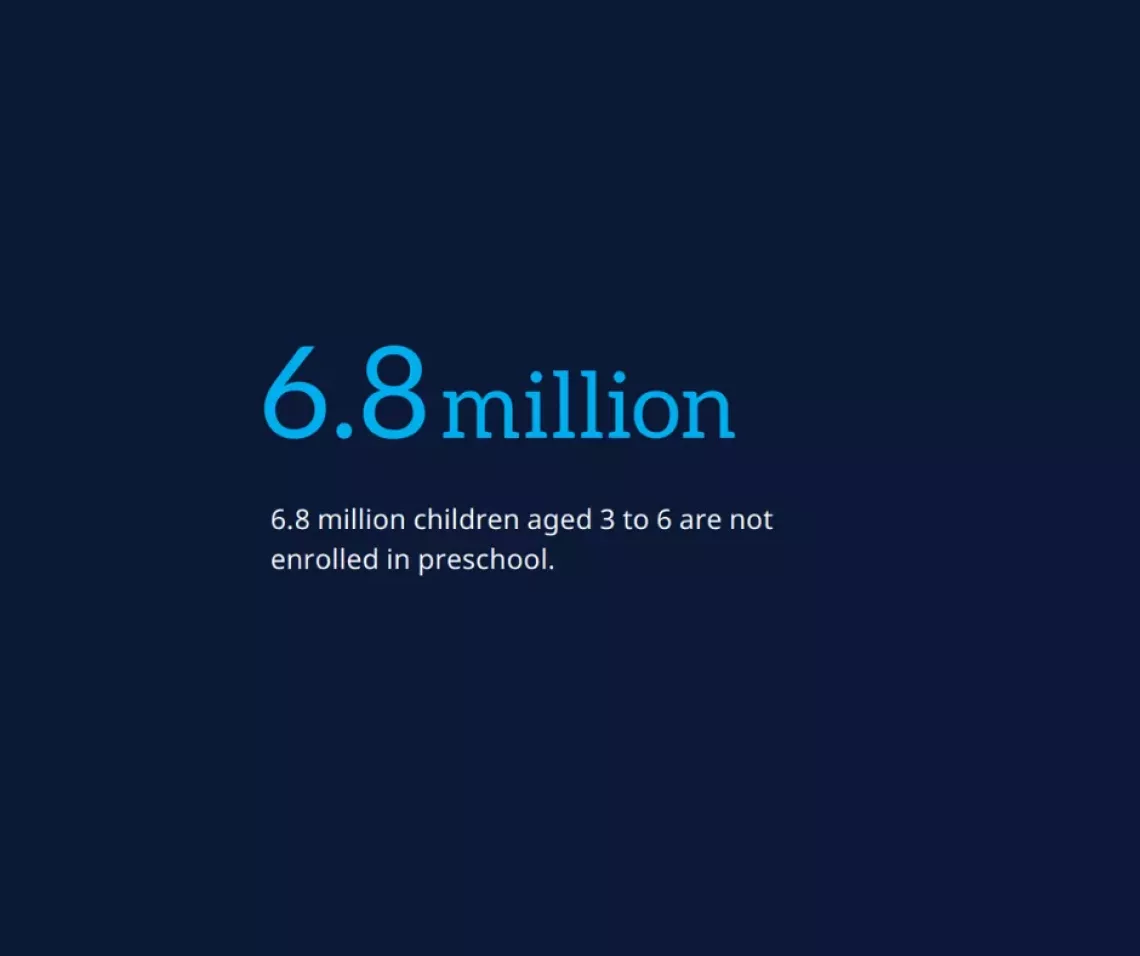
Early childhood education and care (ECEC) services are crucial for the early learning, care and development of the youngest children in particular – those under 3 years of age. They also enable mothers to return to the workforce. However, around 6.8 million young children of pre-primary age (3 to 6 years) are not in preschools across the region. Access is particularly low in Central Asia and in many Western Balkan countries, standing at only 24 per cent in Bosnia and Herzegovina and 41 per cent in North Macedonia. This can leave parents facing difficult decisions as they try to balance the care of their children with the need to earn an income.
Remote and rural communities are particularly under-served, and where services exist there are issues with their quality and inclusion. Even when well-established preschools are available, they are in dire need of modernization to ensure that they all meet quality standards and that all children have access. ECEC approaches do not always use modern, play-based approaches to teaching and learning. As a result, many preschools create highly-structured environments with an academic focus, and do not allow enough time for young children’s free play, creative pursuits, social-emotional learning and exploration outdoors. This ‘schoolification’ of ECEC, as seen in parts of the region, hampers the nurturing care that young children need in their early years to build the foundations for life-long learning.
Meanwhile, the region faces a chronic lack of good data on ECEC services for children under the age of 3, which makes it difficult to identify the services parents and caregivers are using to support the care, early learning and development of their young children.
A lack of support for the early detection of disability and early intervention
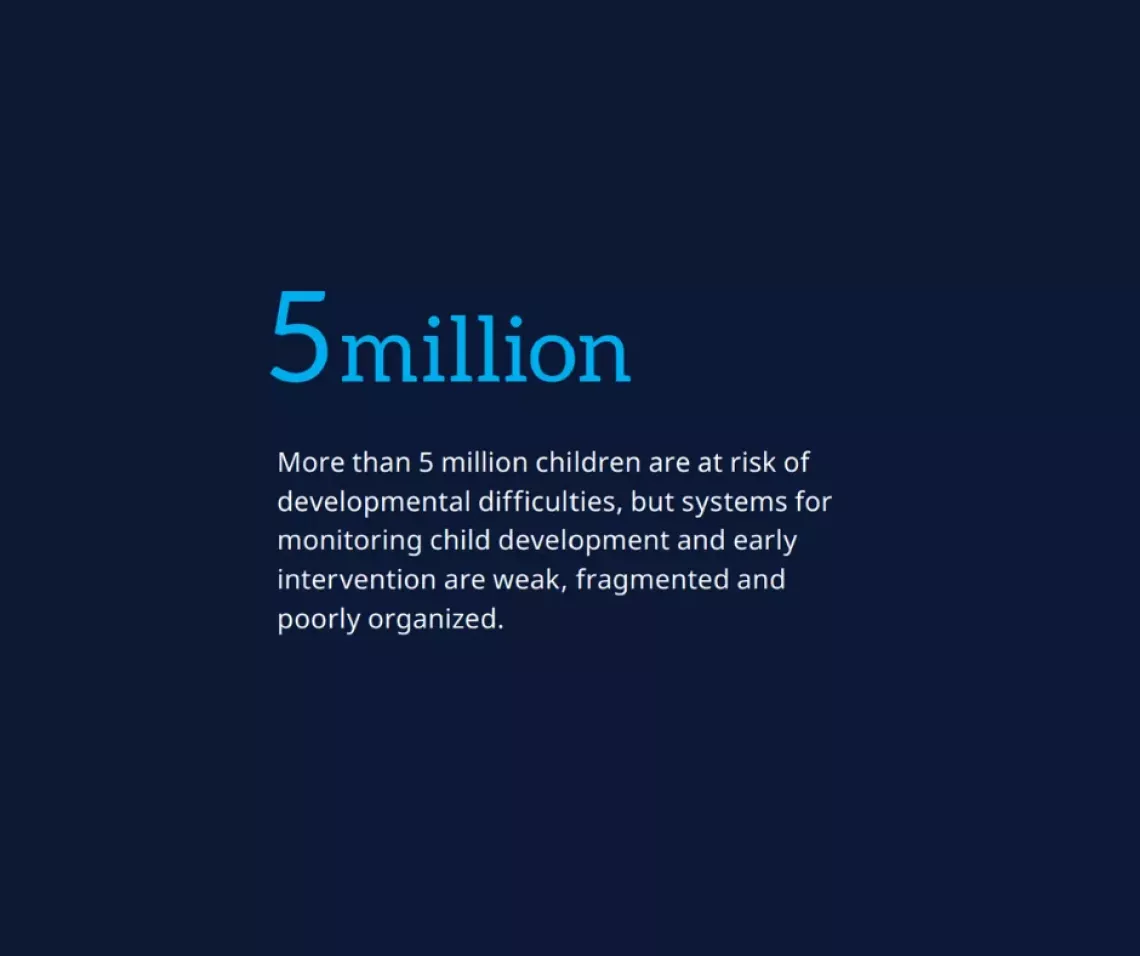
Services for the early identification and support of young children who are at risk of, or who have, development delays, disabilities or behavioural and mental health conditions are chronically underdeveloped in the region. Of its estimated 5.1 million children with disabilities (at least one third of whom are in their early childhood), only 1.5 million are recognized as having disabilities, leaving some 3.6 million invisible and unregistered. Stigma and discrimination - reinforced by a medical approach to disability - has resulted in the continued institutionalization of young children with disabilities, their segregated education and their exclusion within the home, with parents often left alone and unsupported as they try to meet the complex needs of their children.
A lack of support for parents
Support for young children has to include support for their parents. They are the main source of nurturing care and protection for children and the strong bonds between a parent and young child are the best foundation for happy and healthy development and learning. Much depends on parental knowledge on early childhood development.
All families need some support, especially new parents, but some families – those in vulnerable situations – need all the support they can get. For the most disadvantaged children and families, interventions must start in their first months if they are to meet their many interconnected needs.
But parents across the region are under pressure as a result of many interlinked crises, from the long-term disruption triggered by the COVID-19 pandemic to the cross-regional impact of the war in Ukraine, and from accelerating climate hazards to the spiraling costs of food, fuel and shelter. Many parents struggle to earn a living and support their families in times of uncertainty and stress that affect their own mental health, and are in urgent need of support and guidance.


UNICEF’s work for children
With a special commitment to meeting the unique rights of young children, UNICEF supports efforts to mainstream early childhood development in health, nutrition, education, child protection, social protection and emergency planning. We promote effective programmes, based on hard evidence, to ensure that all children, including the most vulnerable, reach their development potential, and to strengthen entire systems that need to work together to support every child from birth until the age of six.
Our ‘3 x 3 strategy’ focuses on the three main sectors that connect to children and their families in the early years – the health sector, the education sector, and the social welfare sector – aiming to strengthen the connections across all three. This approach is underpinned by support for parents, a strong focus on early inclusion of the most vulnerable children, and cooperation across every sector. UNICEF supports and influences governments to develop strategies, effective policies and legislation, and to expand early childhood development services. At the same time, we build the skills of families to provide a loving, supportive and safe environment for their children.
We support nurturing care within health systems. Across the region, UNICEF engages with policy-makers, experts and health practitioners to ensure that all expectant and current parents and young children, particularly those from the most vulnerable groups, have access to enriched, high quality health services that support nurturing care. We are supporting a shift in health systems from a medical model focused on a child’s survival to a holistic model focused on their well-being and development; from approaches that focus only on the child to approaches that support the whole family; and from siloed services to cross-cutting support to meet the varied needs of vulnerable families. We do so by bringing different services, disciplines and sectors together, and by empowering health systems to monitor child development, provide parental counseling for nurturing care and ensure effective early intervention.
UNICEF supports quality inclusive preschool education. We are working to transform ECEC to ensure that programmes and services support young children’s effective learning and development. We support governments and ministries to strengthen their policies to build a ‘continuum of care’ for every young child from birth to school entry. This work aims to ensure that ECEC services are affordable, high-quality and inclusive for all young children and that services respond to the unique needs and circumstances of each family. These include approaches that recognize the changing nature of today’s working practices, with parents and caregivers often working outside the traditional ‘9 to 5’ working day.
We advocate to ensure that ECEC services use modern and developmentally appropriate approaches to learning that are based on play and that are accessible to all children with disabilities and developmental delays. And we innovate: UNICEF and the Global Partnership for Education have developed the Early Childhood Education (ECE) Accelerator Toolkit, which is being used to strengthen ECEC policies and scale up ECEC provision across the region.
UNICEF supports early intervention and the inclusion of children with disabilities, and a sharp focus on the strengths and abilities of every child with disabilities: on what they can do if they have the right support – rather than on their limits. This includes continuous support for the whole family, from a child’s conception right through to their enrolment in primary school. Our support focuses on the early identification of risks, development delays and health issues, effective family-centred and multi-disciplinary early intervention, and the smooth transition to inclusive ECEC. We also support campaigns and other initiatives to transform stigma and discrimination into inclusion and respect.

Bulgaria: Early intervention helps Vasko communicate
An ordinary conversation is a dream come true for Vasko’s parents. A few years ago, he could not get dressed or go to the bathroom by himself, and he was not talking. At kindergarten, he did not play with the other children. Now, with the support of his family and UNICEF’s Early Childhood Intervention Programme in Nova Zagora, Bulgaria, Vasko can communicate and play with his peers.
Vasko’s doctor, Stela Draganova encouraged his parents, Desi and Dimo, to have him assessed by the UNICEF-supported programme, which tracks children’s development and identifies potential problems. Vasko and his parents met Maria Stoyanova – a specialist
in early childhood development – receiving support from the programme in his own
home, as children learn best when they are in a familiar environment. The programme also recognizes parents as the best therapists for children, and focuses on the whole family.
Maria advised Desi and Dimo to turn off all ‘screens’, such as TVs, phones and tablets, because the information they provide is a ‘one-sided’ form of communication. Instead, she encouraged them to play with Vasko, involve him in household chores, and to communicate with him as much as possible to help him build his vocabulary.
And then, on Vasko’s fifth birthday: “He started chattering,” says Dimo. “He just got up in the morning and started talking.” Today he can eat and dress by himself and he plays with his friends at kindergarten. Above all, says Dimo “we can now have a conversation with Vasko.”

UNICEF supports parents. We see parents as key partners and agents of change for every young child, rather than beneficiaries or observers. We work to ensure that they have timely, high-quality information, guidance and a range of services, so that they can provide the best possible care for their children and take care of their own mental health and well-being. We promote national parenting support programmes and better coordination of support for parents across different sectors, including the social protection that reduces poverty. We also work with both the public and private sector to push for and support family-friendly policies and approaches, including paid parental leave, flexible work arrangements, support for pregnant and breastfeeding women, and access to quality, affordable childcare.

Supporting parents: the Bebbo mobile app
UNICEF developed the Bebbo mobile app during the COVID-19 pandemic to support anyone caring for children aged 0-6. The app was developed in consultation with parents and early childhood development professionals to share the best possible information and practical guidance on child development, nutrition, health, safety and protection, early learning and stimulation. It also boosts parents’ confidence and helps them to care for their own mental health during times of stress. The app is now available in 15 countries (Albania, Belarus, Bulgaria, Greece, Kosovo1, Kyrgyzstan, Moldova, Montenegro, North Macedonia, Romania, Serbia, Slovakia, Tajikistan, Ukraine and Uzbekistan), and is free and accessible to all parents with smartphones, in on-line and off-line modes. By August 2024, it had more than 1.2 million users.
1 All references to Kosovo should be understood to be in the context of United Nations Security Council resolution 1244 (1999)
Call to action
Early childhood development is all about equity. It shouldn’t matter where a child is born or who they are: all children need an equal foundation to thrive and reach their full potential. If we fail them now, at this crucial stage, it is almost impossible to make up the lost ground later on.
Investment in the early years, timed to make the most of a unique stage in a child’s development, can help to break cycles of poverty, violence and disadvantage. It matters for the future of the most disadvantaged and vulnerable children across Europe and Central Asia, and for their societies, as the human capital of a nation can be created in its young children. The returns to such investment are enormous, and include:
- improved survival, physical growth, cognitive development, health and school readiness, including a strong foundation for learning
- improved nutrition, health, productivity and wages in adult women and men
- improved prosperity and cohesion in societies.
Governments across Europe and Central Asia have now adopted the Belgrade Early Years Call to Action: a pledge to prioritize the needs and rights of young children and their families, aiming to give every child the best start in life. UNICEF stands ready to turn this pledge into concrete action for children, working to support:
- a whole-of-government approach to the early years, including the prioritization of early childhood development and parenting support in policies and budgets, with collaboration across all sectors, from health and education to social welfare, including during humanitarian crises
- access to universal health care and comprehensive child health, nutrition, development and responsive caregiving, as well as high-quality, inclusive early childhood education and care services, and early childhood interventions
- family-friendly policies, including parental leave for both parents, support for breastfeeding, child benefits, and affordable, quality childcare
- child protection and social protection to support families, prevent institutionalization, and shield children from poverty and violence
- stronger partnerships, particularly with the parents who are the key allies in early childhood development.