Czechia introduces a new framework to monitor the quality and accessibility of early childhood education and care
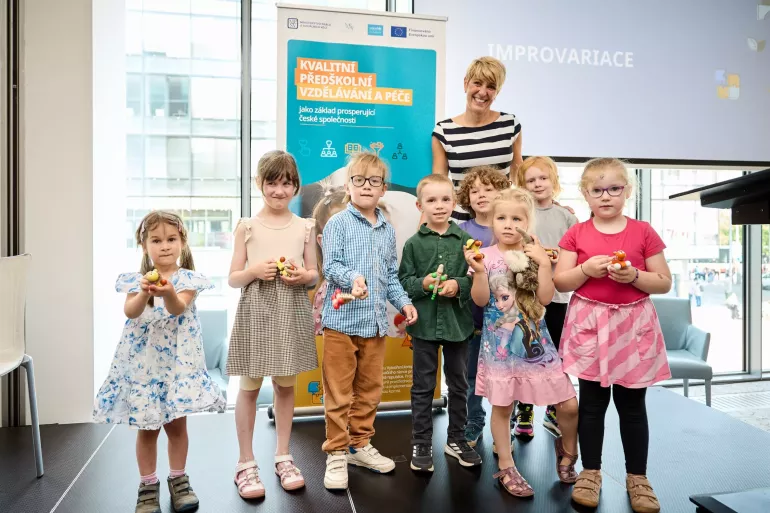
4 June 2025, Prague - Czechia has completed the development of a comprehensive framework to monitor and evaluate the country’s early childhood education and care (ECEC). The framework, which focuses mainly on kindergartens and children’s groups, marks a major step towards ensuring access to good quality ECEC services for the country’s youngest children.
The two-year process to develop the framework was led by the Ministry of Labour and Social Affairs (MoLSA) in cooperation with the Ministry of Education, Youth and Sports (MoEYS). It was financed by the European Union through the Technical Support Instrument and implemented by UNICEF in partnership with the European Commission.
Growing capacities, growing need for quality
Fewer than 7 per cent of children under the age of three are enrolled in Czechia’s childcare services, well below the EU average of 37.5 per cent. Up to 40,000 children aged three or four – many of them from disadvantaged backgrounds – do not attend kindergarten. However, ECEC services for children aged 0-6 in Czechia have almost tripled in recent years, with places increasing from around 10,000 in 2018 to more than 26,000 today. By providing a unified system to monitor and evaluate ECEC performance, the new system aims to ensure that expanding access is accompanied by improved quality.
"In recent years, we have been intensively expanding the capacity of children's groups, because the availability of care for the youngest children is crucial not only for their healthy development, but also for balancing the family and working lives of their parents. We know that investing in early childhood education pays off in the long run through higher productivity and benefits for society as a whole. But accessibility is not enough - that is why, together with the Ministry of Labour and Social Affairs and our partners, we have created a system that will allow us to monitor and actively support the quality of care across services," said Marian Jurečka, Minister of Labour and Social Affairs.
The new framework: defining quality in five areas
The robust monitoring and evaluation framework focuses on five key aspects of quality:
- Access - ensuring equal and inclusive access to services for all children
- Staff – the qualifications, professional development and working conditions of employees
- Curriculum - the content and structure of programmes and interactions to support the development of young children
- Evaluation and monitoring - systems to monitor and ensure the quality of services
- Governance and funding – the effective management and sustainable funding of services
The framework includes a shared vision, specific quality statements and indicators that paint a picture of the overall system, its capacity and accessibility. They examinethe quality of processes such as interactions among staff, their interactions with children and parents, and children's experiences and well-being.
A model of inter-ministerial cooperation
"This project is proof that inter-ministerial cooperation brings concrete results. By creating a unified monitoring and evaluation framework, we have a tool that will allow us to better understand what ECEC services actually deliver to children - and what municipalities and other actors need to develop them further. Quality data and jointly set targets will allow us to target support to those who need it most," said Mikuláš Bek, Minister of Education, Youth and Sports.
Over 70 experts from more than 30 institutions - ministries, academia, service providers, municipalities and parents - participated in the development of the framework. One key result has been the establishment of an active inter-ministerial working group, which will continue its activities now that the project to develop the framework has been completed.
"Early childhood is a crucial period that lays the foundation for lifelong learning, health and social inclusion. Every child has the right to accessible and quality services – especially important for children from disadvantaged backgrounds. We are pleased to have been a partner in this project, which has not only defined a shared vision of quality but also laid the groundwork for further system development to work for all children. We particularly appreciate the open collaboration between ministries and experts, which demonstrates what effective systemic change should look like," said Lucie Plešková, the head of the project implementation team from UNICEF.
EU support
The project was funded by the European Union via the Technical Support Instrument (TSI). As Judit Rózsa, Director at the European Commission’s Reform and Investment Taskforce, said in her message to the closing conference for the project:
“Investing in early childhood education and care is key to building a fair, inclusive Europe with opportunities for everyone, especially the most vulnerable. The EU is helping the Czech authorities improve and expand the capacity of early childhood education and care. Through the Technical Support Instrument, our EU programme to aid Member States in structural reforms, we want to make sure that as this sector grows, you have the means to keep the quality of services a strategic priority. We have tailored solutions to fit the Czech Republic's unique context, from national policies to local kindergartens and children's groups.”
#####
Note for editors – the Technical Support Instrument
The Technical Support Instrument (TSI) is the European Commission’s key tool for supporting Member States in designing and implementing growth-enhancing and inclusive reforms. From healthcare to sound public finances, and from the digitalization of education and public services to strengthening the business environment and the financial sector, the TSI supports EU Member States with their reform agenda.
Media contacts
About UNICEF
UNICEF promotes the rights and wellbeing of every child, in everything we do. Together with our partners, we work in 190 countries and territories to translate that commitment into practical action, focusing special effort on reaching the most vulnerable and excluded children, to the benefit of all children, everywhere.
For more information about UNICEF and its work for children, visit https://www.unicef.org/eca/.