How three countries lowered their child mortality rates
Three countries showing commitment to evidence-based, strategic action, the government invested in scaling up primary health care services and access, particularly maternal and child health
By 2015, health officials were noticing a concerning trend in North Macedonia: Child mortality was on the rise. From a low of 10.2 deaths before the age of five per 1,000 live births, in 2011, it had steadily risen – and now stood at 11.1. This made it the only country in the Western Balkans in which infant mortality rose in the same period of time.
This was even more concerning because it marked a reversal. Like most other countries worldwide, North Macedonia had seen its child mortality rates decline precipitously through the 1980s to 2000s, thanks to expanded vaccine programmes and improving healthcare.
With the support of UNICEF, WHO and the United Nations Population Fund, North Macedonia’s Ministry of Health took action, focusing, in particular, on improving maternal and neonatal care. WHO-aligned perinatal care standards were introduced, clinical protocols standardized, health workers trained and specialist staff expanded. Meanwhile, across clinics and maternity wards, equipment was updated and improved.
In 2019, the response moved into its second phase, focused on ensuring these gains were sustained, rather than one-offs. Routine perinatal mortality audits were introduced, and the Perinatal Care Masterplan 2020-2030 implemented.
These efforts worked. As early as 2016, the rate started dropping. By 2024, the under-five mortality rate was just 2.8 per 1,000 – a drop of nearly 75 per cent. The decline in neonatal mortality was even more dramatic, from 8.1 per 1,000 in 2015 to 1.1 per 1,000 in 2024.
Macedonia is just one of three countries that showed significant progress in the fight against child mortality in Europe. Here are two more success stories from our report, Levels & Trends in Child Mortality.
Kosovo1
In 2015, Kosovo had the highest child mortality rate in the Western Balkans; out of every 1,000 births, 10.3 infants died in the first 28 days of life, and 14.3 children died before their fifth birthday.
The country took action. As a result of its commitment to evidence-based, strategic action, the government invested in scaling up primary health care services and access, particularly maternal and child health.
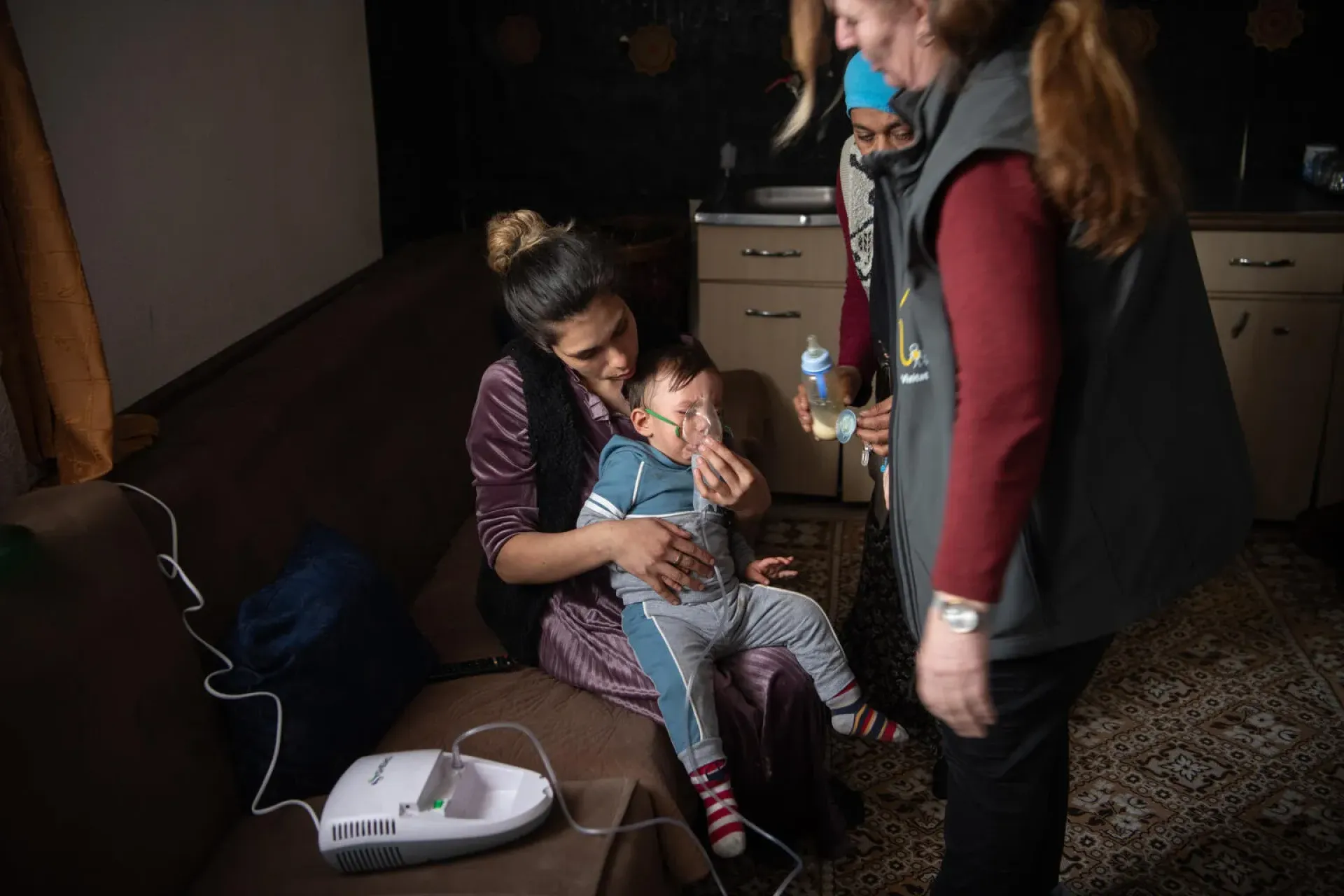
One of the most important initiatives was the expansion of the Home Visiting Programme. Focusing on the first 1,000 days of life – a crucial window of time that can set a child’s body and brain up for lifelong health and wellbeing – the programme includes at least two visits during pregnancy, and five after birth, up to age three. Home visitors focus on supporting maternal health, neonatal care and early childhood development. It currently reaches around 80 per cent of all newborns born each year. The impact is particularly clear on more marginalized families, such as poorer households, or those in the Roma, Ashkali and Egyptian communities. These are the families that often have the least ability to go to a primary care office themselves – and where children tend to be most at risk of poorer health and mortality outcomes.
Initially piloted in two municipalities in 2014, the programme was expanded across the country by 2022. To ensure it would be sustained long-term, it was also embedded in both the law and in government budgets.
The results speak for themselves. In 2024, the country had a neonatal mortality rate of 6.6 per 1,000 live births, and an under-five rate of 8.7 per 1,000 – declines of 36 per cent and 39 per cent, respectively.
Belarus
In 2015, Belarus was already a success story. With a neonatal mortality rate of 1.6 deaths per 1,000 live births – and an under-five mortality rate of 4 per 1,000 – it had the lowest child mortality rates in Eastern Europe.
But any infant or child death is a death too many. And so, against the backdrop of an already-strong health system for mothers and children, Belarus built on its successes to bring the rate down further. In particular, the government focused on consistency: sustaining public financing, continuing to implement high-impact interventions, and keeping maternal and child health as priorities within national social standards, guaranteeing free access to essential services and ensuring accountability through high-level oversight.
Today, all pregnant women receive routine medical observation at women's health clinics, with pregnancy management led by obstetrician-gynaecologists from the first consultation to childbirth. Comprehensive prenatal care includes at least eight clinic visits, universal ultrasound screening and medical genetic testing. Psychosocial support for pregnant women and families in vulnerable situations has been strengthened. All births occur in the presence of qualified medical personnel, including obstetrician-gynaecologists and neonatologists. Finally, modern neonatal technologies – such as surfactant therapy, non-invasive respiratory support, therapeutic hypothermia and specialized care for very low birthweight newborns – have all been scaled up.
As a result, today, neonatal mortality is just 0.7 per 1,000 live births, half of what it was a decade ago; for under-fives, it’s 2.3 per 1,000, a 43 per cent drop. Belarus now not only has the lowest child mortality rate in Eastern Europe – but one of the lowest rates worldwide.
[1] All references to Kosovo should be understood to be in the context of United Nations Security Council resolution 1244 (1999).