Children's rights in a changing Europe and Central Asia
A situation analysis of children in Europe and Central Asia in 2025
- English
- русский
Highlights
Children in Europe and Central Asia face sharp contrasts: while some enjoy access to quality services and stable environments, millions face persistent inequalities.
The region’s 196 million children (about 20 per cent of the population) are affected by political shifts, demographic transitions, climate emergencies, conflicts and technological change. While all countries have ratified the CRC, implementation varies. Meanwhile, child rights are hindered by persistent disparities and weak monitoring systems, alongside more recent trends such as policy-level pushbacks, a polarization of public discourse and the spread in online mis- and disinformation.
Files available for download
Children in the region are increasingly affected by the convergence of powerful ‘mega-trends’ – shifting political ideologies, demographic transitions, the climate crisis, conflicts, and rapid technological transformation. While these forces are shaping societies at large, their effects on children are both profound and uneven, magnifying existing vulnerabilities and threatening decades of progress in child rights. Children living in poverty, displacement, institutional care or detention, or those with disabilities or minority status, such as in the Roma communities, are most at risk.
The climate emergency is no longer a distant threat to the region. Heatwaves, floods, wildfires and droughts are becoming more frequent, disrupting access to clean water, education, health services and livelihoods, and disproportionately affecting rural, marginalised and displaced children. Climate shocks are also accelerating migration and urbanisation, increasing the risk of children falling through the cracks of overstretched services and protections.
Most countries in the region face a shrinking child population as birth rates decline, the population ages, and an increasing number of working-age adults migrate. Moreover, a growing number of children are also migrating and fleeing conflicts. Children on the move, including unaccompanied and undocumented minors, often face insecure legal status, limiting access to services and heightening risks of trafficking, exploitation and detention. Demographic imbalances are also straining public services, particularly in receiving countries or underserved rural areas, where resources are already stretched.
While digital technologies offer new opportunities for learning, protection and civic participation, access remains highly unequal. Millions of children lack reliable internet, devices or digital literacy, widening the digital divide between and within countries. At the same time, frontier technologies – including AI and surveillance tools – raise new risks to privacy, safety and access to services for children without connectivity.
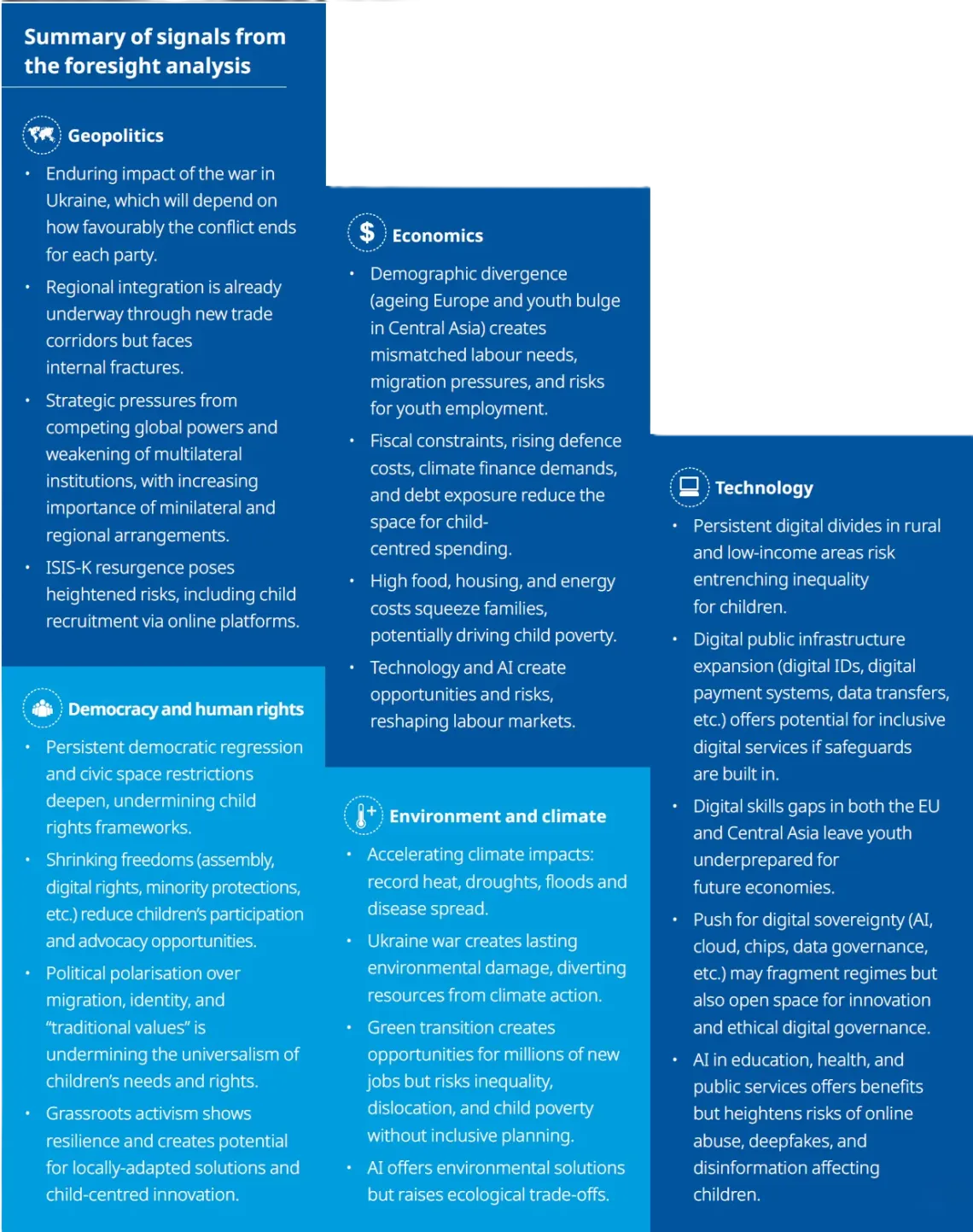
These signals also emerge clearly in the foresight analysis. Technological transformation, particularly artificial intelligence, appears as both promise and peril – offering breakthroughs in social services while threatening job displacement and digital exclusion.
Demographic divergence between ageing Europe and youthful Central Asia creates complex interdependencies that could either deepen vulnerabilities or unlock mutual benefits through strategic cooperation. Populist narratives may position international cooperation, foreign aid and refugee protection as threats to national sovereignty. As a result, policies are increasingly turning inward, with critical implications for international child-focused assistance. Fiscal constraints, driven by higher levels of defence spending, climate change impacts, and debt burdens, squeeze resources for child-centred services. Meanwhile, fragmentation – whether geopolitical, political or digital – challenges rights-based frameworks while potentially enabling more locally relevant solutions.
The youth participants anticipate opportunities and uncertainties: AI saves lives while careers become obsolete; green transitions advance, but vulnerable communities bear the costs; restricted freedoms coexist with stronger cooperation.
These regional trends inform the detailed analysis in the chapters that follow.
Child rights governance
Encouraging developments include increased youth-led policy initiatives, expansion of ombudsperson offices, and growing efforts to align legislation with CRC principles. Yet the overall landscape for child rights discourse and governance is challenging, and may be becoming more so. Most countries have child rights strategies, but coordination and budgeting remain weak. Few conduct regular child rights impact assessments.
Disaggregated data, especially on vulnerable groups, are often lacking. Revenues under 30 per cent of GDP in some countries restrict investment in children. Despite some child rights advancements in the last five years, there have also been pushbacks at the policy level. Declining trust in institutions and the rise of mis- and dis-information on social media mean developments in child rights policies often are framed as threats to cultural identity and traditional family structures. Public discourse around child rights is becoming more polarized, with violations of child rights sometimes reframed as efforts to protect children and uphold family values. Economic arguments are also being used to justify infringements on child rights.
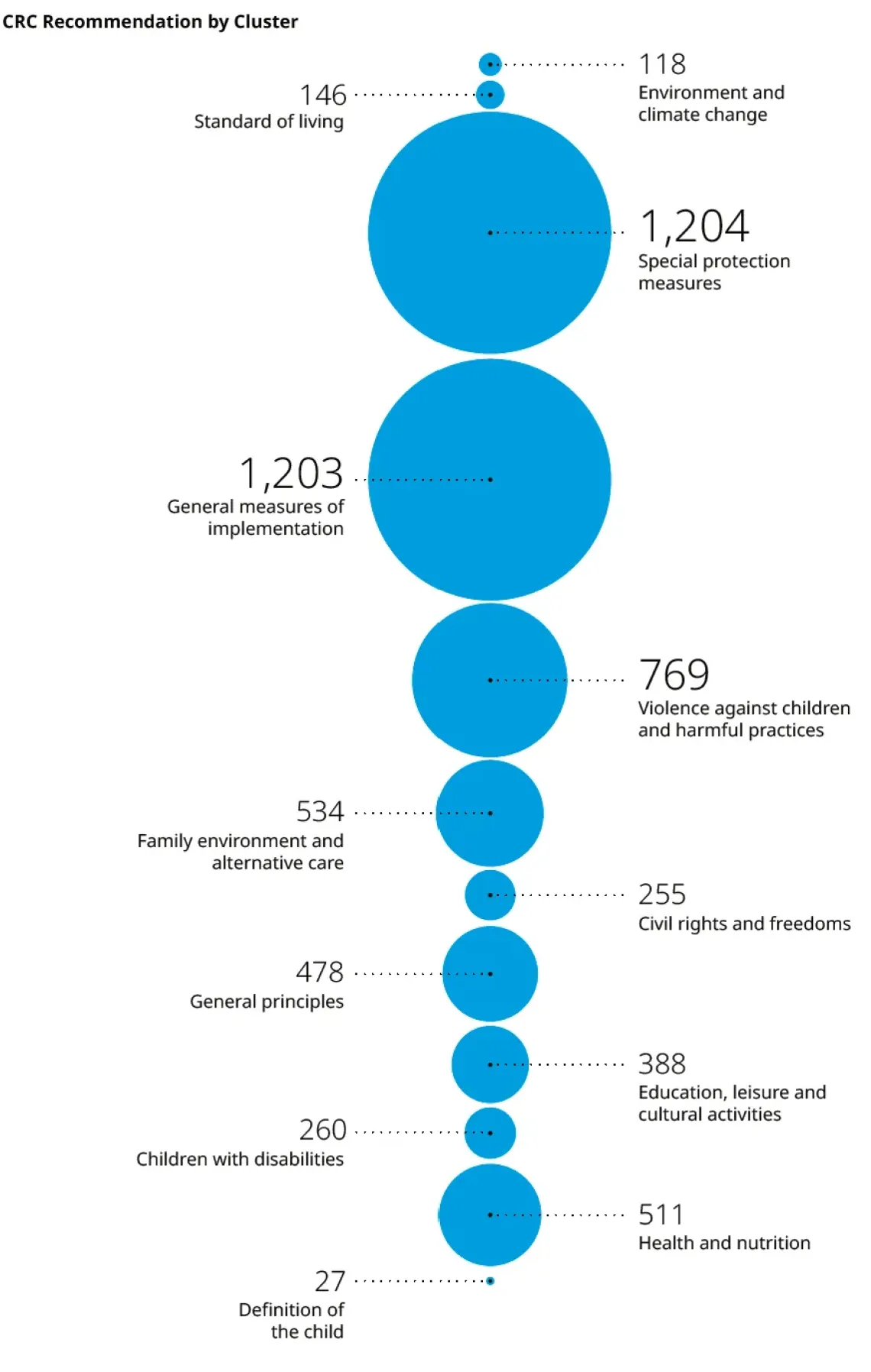
CRC recommendations emphasize integrating child rights in national planning, improving data, and institutionalizing accountability.
Health and nutrition
Health outcomes are good overall, but vulnerable groups fare worse. Under-five mortality is low (~8/1,000), but higher in parts of Central Asia.
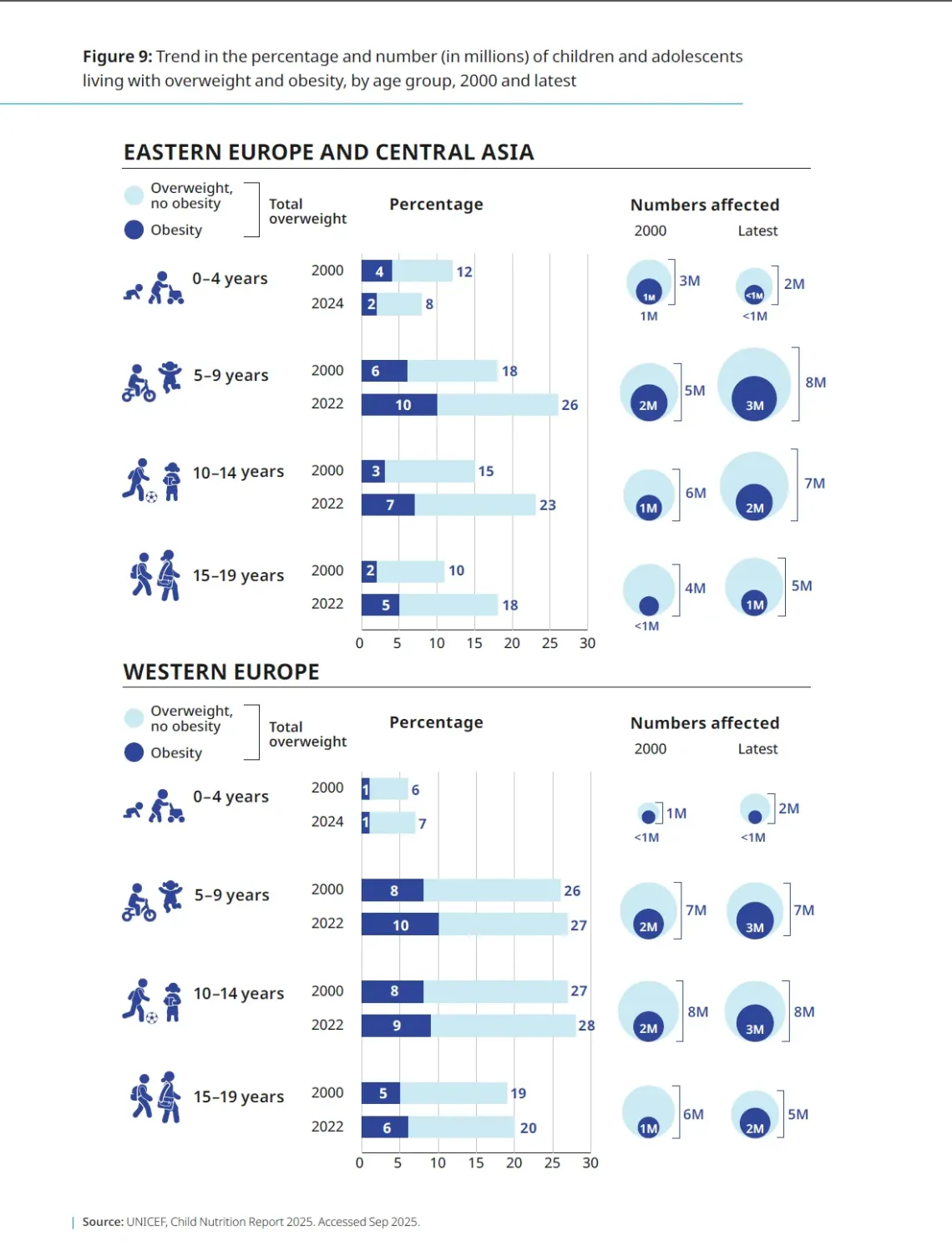
Most countries report high immunization coverage, but targeted efforts are needed to address rising vaccine hesitancy. There are 440,000 zero-dose children in the region. Stunting has declined, but 44 million children are overweight, including 15 million obese. Mental health is worsening; up to
80 per cent of adolescents in some countries report poor mental well-being. HIV infections among adolescents are rising. Primary health care and data on disadvantaged groups need urgent investment.
CRC recommendations stress improving access to adolescent mental health care, maternal care for rural women, and equitable vaccination outreach.
Education, leisure and culture
While early-grade enrollment is nearly universal, pre-primary rates vary widely. Children with disabilities, Roma children and refugees remain vulnerable. Learning outcomes are poor in some areas due to outdated curricula and under-resourced teachers.
About 24 per cent of students in the region did not reach basic proficiency in mathematics, 23 per cent in reading, and 25 per cent in science, highlighting significant learning gaps. Investments in inclusive, play-based learning and digital equity are essential.
CRC recommendations urge attention to marginalized groups and stronger monitoring of quality and access, as well as support for inclusive mainstream schooling, curriculum reform, and access to cultural and recreational spaces.
Family environment and protection
Despite legal bans, corporal punishment persists. Among children aged 1–14 years, one third of boys and one quarter of girls experience physical punishment at home.
Some 420,000 children are living in residential care facilities, many with disabilities, putting them at increased risk of abuse and neglect, with lifelong implications. Alternative care models are growing, but progress is slow. Child labour has declined, yet 2 million children still do hazardous work. Justice systems lack child-friendly practices.
CRC recommendations urge State Parties to invest in family support services, expand foster care, enforce bans on all forms of violence against children and improve child-centred justice.
Participation and civil rights
Almost all children are registered at birth, but disadvantaged groups lag behind. The region accounts for 10 per cent of the global stateless population.
Some countries have youth councils and student parliaments, but adultism and low civic readiness persist. Children’s digital rights, privacy and inclusion require stronger regulation.
CRC calls for universal birth registration, child-inclusive policymaking, and digital protections. Notably, CRC recommendations target expanding access to identity, freedom of expression, and youth participation mechanisms.
Adequate standard of living
42 million children live in monetary poverty in the region when using national poverty measures. That is every fifth child. Child poverty is around 20 to 30 per cent in many countries. Social protection reaches only 40 per cent of children in Central Asia. Rural, Roma, and conflict-affected communities lack basic water and sanitation.
On average, 92 and 80 per cent of the population in the region has access to safely managed drinking services and safely managed sanitation services, respectively. However, the coverage falls below 75 and 50 per cent, respectively, in selected countries. Emergencies (e.g., the Türkiye earthquake and the Ukraine war) exacerbate access issues.
CRC recommendations call for increased benefit coverage, disaster-resilient water and sanitation infrastructure, and services tailored for families with children.

Cross-cutting themes
- Gender: Gains are fragile amid rising anti-rights movements. Girls need support in education, safety and leadership.
- Disability: 11.5 million children face barriers to inclusion. Inclusive education and early intervention are priorities.
- Early childhood development: The early years are critical, yet not all children benefit equally. While 86 per cent of under-5s are developmentally on track, gaps persist for children in poverty, remote areas and with disabilities. Support systems are patchy, and parental support programs remain underfunded. UNICEF’s Bebbo platform and home-visiting models are helping close these gaps. Data on developmental delays are scarce.
- Adolescents: Adolescents are a powerful force for social and economic renewal in Europe and Central Asia, yet they face growing challenges. Nearly 12 per cent of youth are not in employment, education or training (NEET) and many report a skills mismatch that hinders employment. Mental health risks are rising, with half of all disorders beginning before age 14, and suicide rates remain high in parts of the region. Despite these challenges, adolescents are eager to shape their future and contribute to stronger, more inclusive societies.
- Environment and climate change: Nearly half of children face frequent heatwaves. Children are often absent from climate policy.
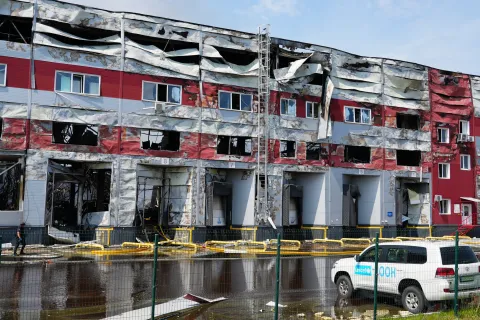
- Disaster, conflict and displacement: 1.5 million Ukrainian children live in war zones.
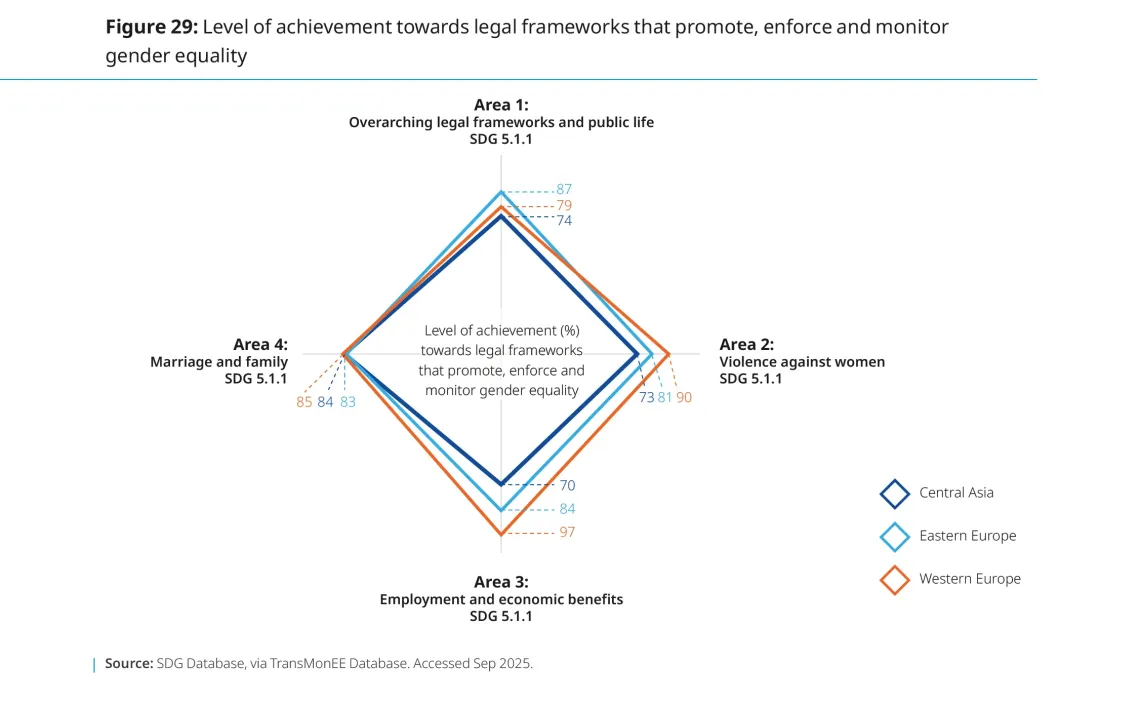
The CRC highlights gaps in addressing gender-based violence and calls for stronger integration of gender equality across sectors.
Recommendations emphasize the importance of accessible, community-based services that reach children with disabilities and their families.
The CRC urges countries to guarantee universal access to responsive caregiving, inclusive early childhood education, and parenting support.
The recommendations call for stronger adolescent-focused health, protection and participation policies, with a focus on mental health, violence prevention, and inclusion of marginalized youth in decision-making.
The State Parties are recommended to step up child-sensitive climate action and resilience-building efforts.
In humanitarian contexts, CRC recommendations focus on child protection in emergencies, including guardianship for unaccompanied and separated children, and the provision of integration services.
Looking ahead
In addition to the CRC recommendations to State Parties highlighted in the summary, the following section outlines key recommendations for both UNICEF and State Parties that emerged from the foresight exercise. It also provides a summary of how adolescents and young people see the future, based on insights gathered during an interactive online foresight workshop
held with youth representatives.
Looking ahead
As countries in the region increasingly engage in diverse cooperation frameworks, both traditional and emerging, UNICEF must adapt its strategies accordingly. This includes embedding child rights considerations across regional and sub-regional mechanisms, ensuring that policy dialogue and cooperation initiatives consistently reflect commitments to children, regardless of the institutional platform.
UNICEF’s effectiveness will depend on its ability to help build resilient systems capable of delivering for children amid political and social change. Priorities include reinforcing youth-led and child-focused initiatives that promote positive social outcomes and counter regressive trends, while maintaining a strong rights-based approach that safeguards children’s participation, protection and well-being.
The region’s economic pressures suggest several strategic priorities. Advocacy should centre on protecting and expanding child-focused investments through legislation and budgeting processes, including during economic downturns. Technical assistance could combine budget analysis tools, real-time child rights monitoring indicators, and operational support to enhance the quality and efficiency of services. Opportunities exist to explore innovative yet realistic financing approaches. UNICEF could also help build coalitions for digital inclusion through community-anchored hubs that bring together researchers, technologists, and policymakers and advance climate resilience by promoting policies that channel revenues from green financing instruments toward child-focused services (e.g., Children’s Climate Dividend).
Investing in digital infrastructure that prioritizes underserved communities can help prevent further widening of the digital divide. Digital and media literacy programmes can support children in safely navigating digital environments, while collaboration with emerging AI governance frameworks offers an opportunity to embed child rights perspectives into evolving regulatory systems. Regional cooperation remains important for sharing good practices and coordinating responses to cross-border digital risks, recognizing that children’s digital rights require both local action and international alignment.
Priorities include promoting child-centred climate adaptation, scaling up green-skills education for children and young people, and supporting environmentally sound recovery in areas affected by conflict. Engagement in regional and global discussions on sustainable technologies and environmental governance can help ensure that transitions to greener economies reflect children’s long-term interests. Regional cooperation will be essential to address the interconnected challenges of climate change, conflict recovery, and green transition.